ADSU Projects
Led by Dr. Mandeep Tamber (Neurosurgeon, BCCH), the broader aim of this project is to improve both patient selection and surgical decision-making in pediatric epilepsy, using AI assisted methods.
To do this, a multimodal approach combining low- and high-dimensional pre-surgical data to predict seizure freedom at 1-year postoperatively is being tried. As part of this, we validated using LLMs to automatically extract clinically relevant features from MRI reports that is then feed into the predictive model — helping clinicians identify the right candidates for surgery and anticipate results.
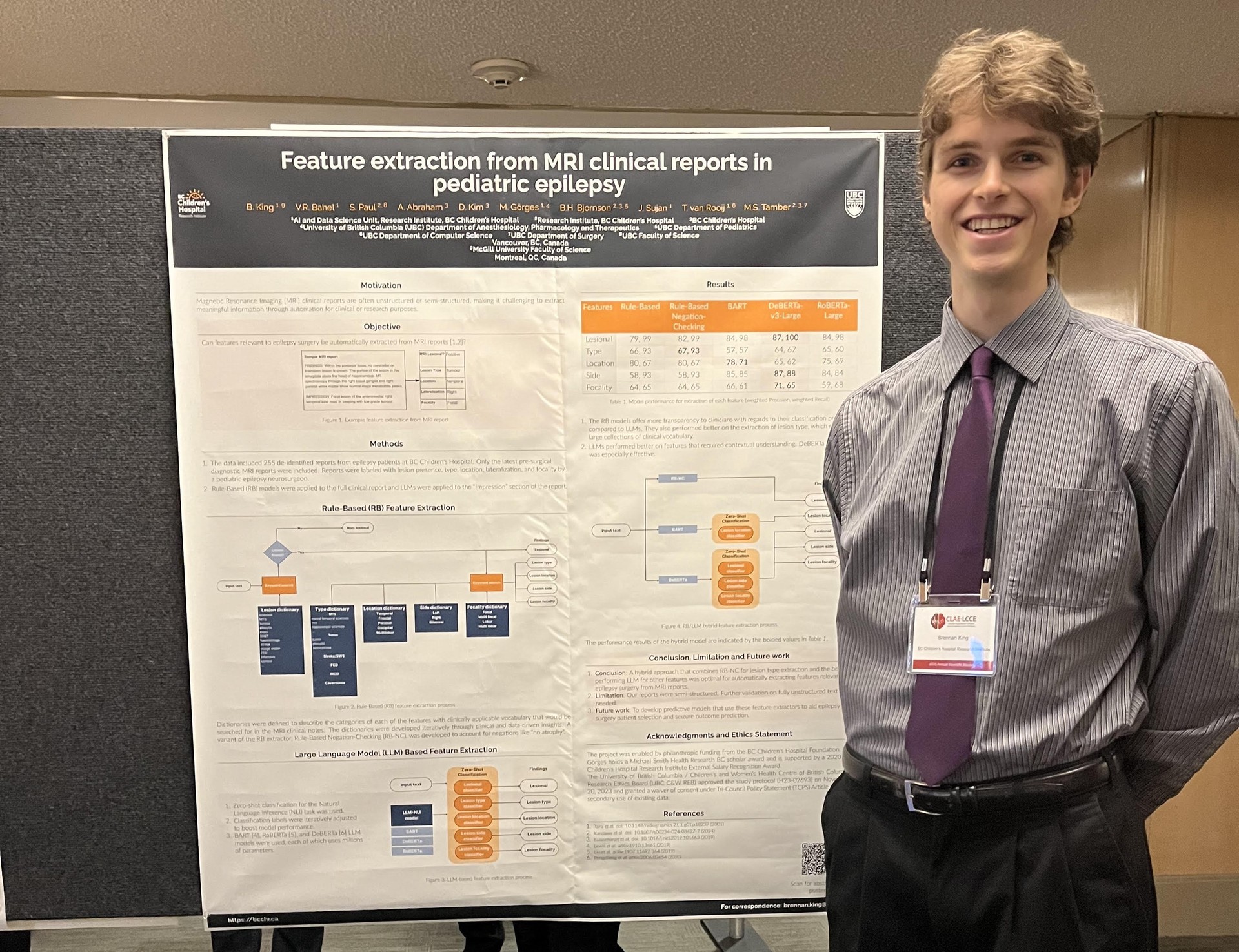
B. King presenting a poster at Canadian League Against Epilepsy 2025 ASM at Calgary
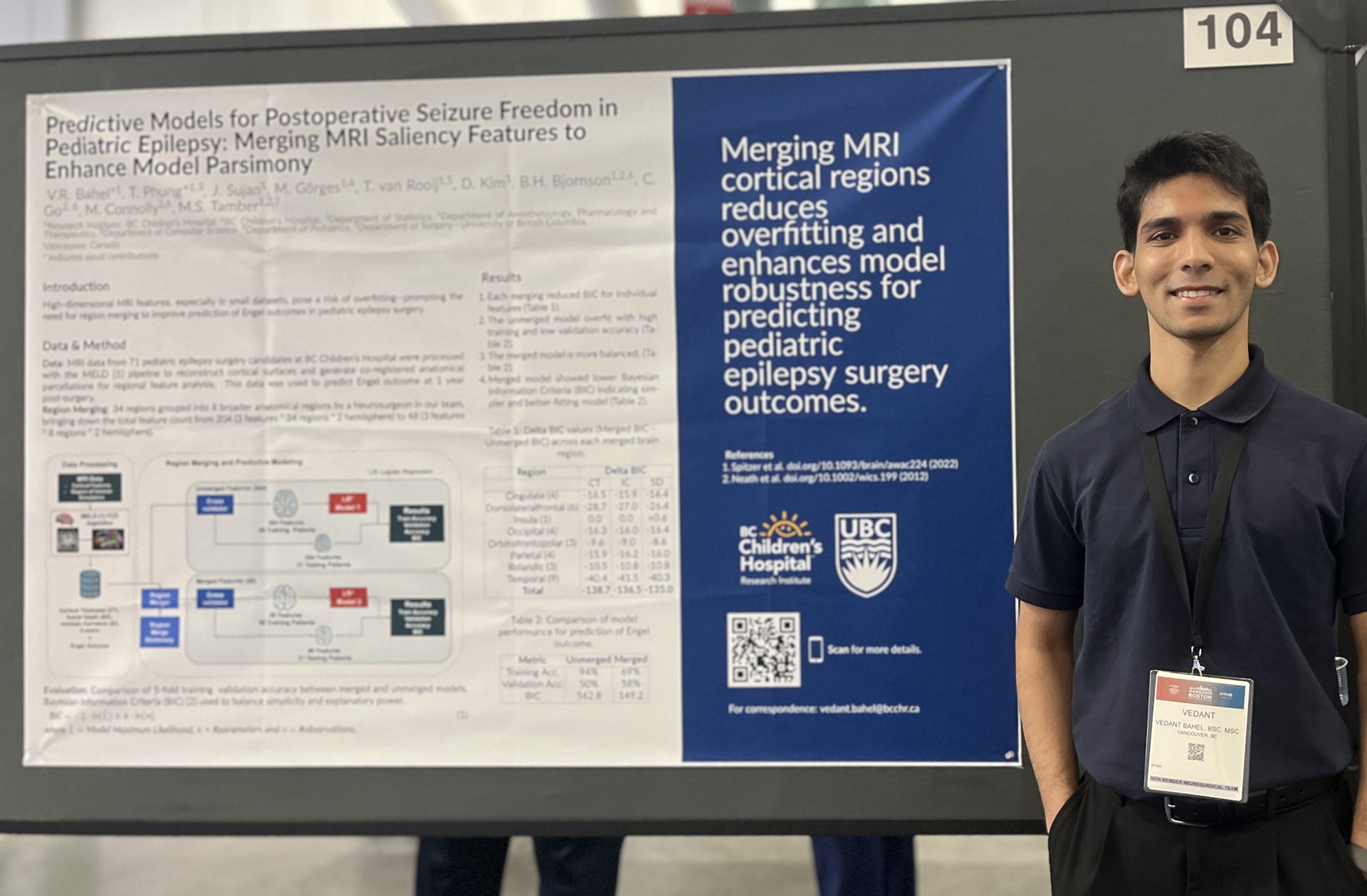
V. Bahel presenting a poster at American Association of Neurosurgeons 2025 ASM at Boston
Posters/Papers:
PO1- Feature extraction from MRI clinical reports in Pediatric Epilepsy: Rule-based, Open-weight LLMs and Hybrid Methods.
King B, Bahel VR, Paul S, Abraham AP, Kim D, Görges M, Bjornson BH, Sujan J, van Rooij T, Tamber MS. In: Proceedings of CLAE 2025 Annual Scientific Meeting. Calgary, AB: Canadian League Against Epilepsy; 2025.
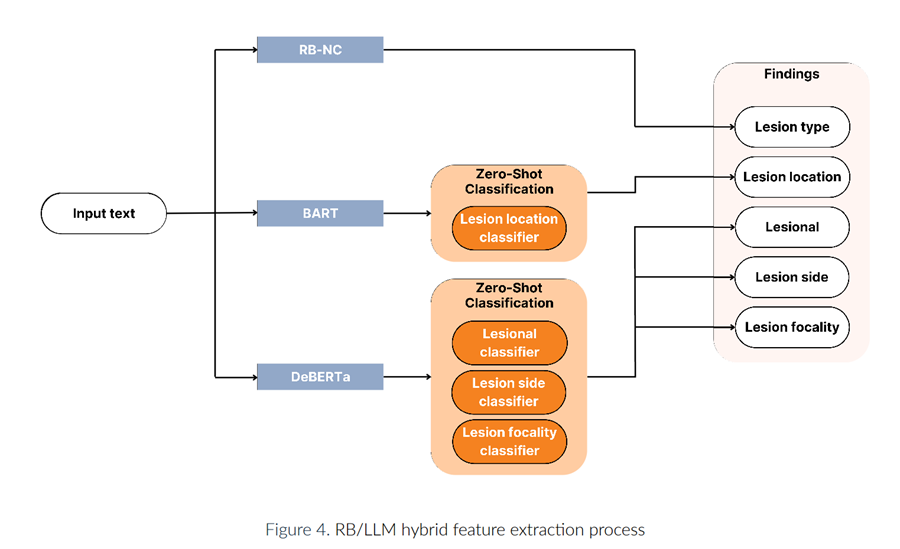
- Key epilepsy surgery details like lesion type, which side of the brain is affected, and whether it’s focal or not can be automatically pulled out of MRI reports using a mix of simple rules and AI language models.
- Rule-based systems, especially those that can spot phrases like “no atrophy,” are easier to understand and are better at capturing specific lesion types that depend on detailed medical wording.
- AI language models are better at details that depend on context (such as figuring out the correct side of the brain), and using them together with rule-based tools gives the best overall results.
PO2 – Predictive Models for Postoperative Seizure Freedom in Pediatric Epilepsy: Merging MRI Saliency Features to Enhance Model Parsimony.
Bahel VR, Phung TAT, Sujan J, Görges M, van Rooij T, Kim D, Bjornson B, Go C, Connoly M, Tamber M. In: Proceedings of the 2025 AANS Annual Scientific Meeting, Boston, MA: American Association of Neurological Surgeons AANS; 2025. P104.
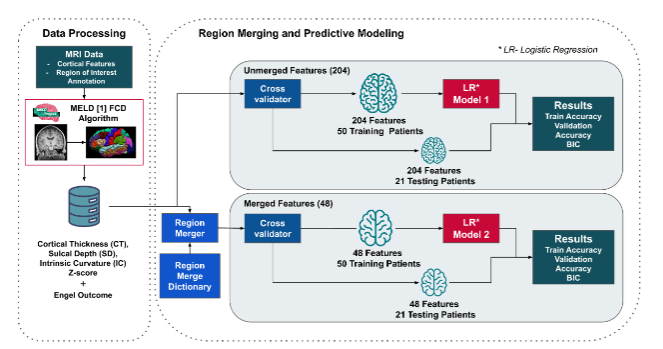
- When using detailed MRI measurements in a small group of kids, the model “memorizes” those patients and then poorly predicts results for new kids
- If we combine many smaller brain areas into a few larger brain areas, we end up with fewer inputs, and the model becomes simpler and tends to work better overall
- After combining regions, the model is less “over‑tuned” to the original data (its performance on training and test sets is more similar), which means it’s more likely to work well on future patients.
PO3 – Comparing the performance of automated feature extraction from medical imaging reports using large language models and rule-based algorithms – a retrospective feasibility study.
Bahel VR, Kim D, Görges M, Bjornson BH, Sujan J, van Rooij T, Tamber MS. [poster]. Presented at: 3rd International Conference on Artificial Intelligence in Epilepsy and Neurological Disorders; 2025 Mar; Colorado, USA.
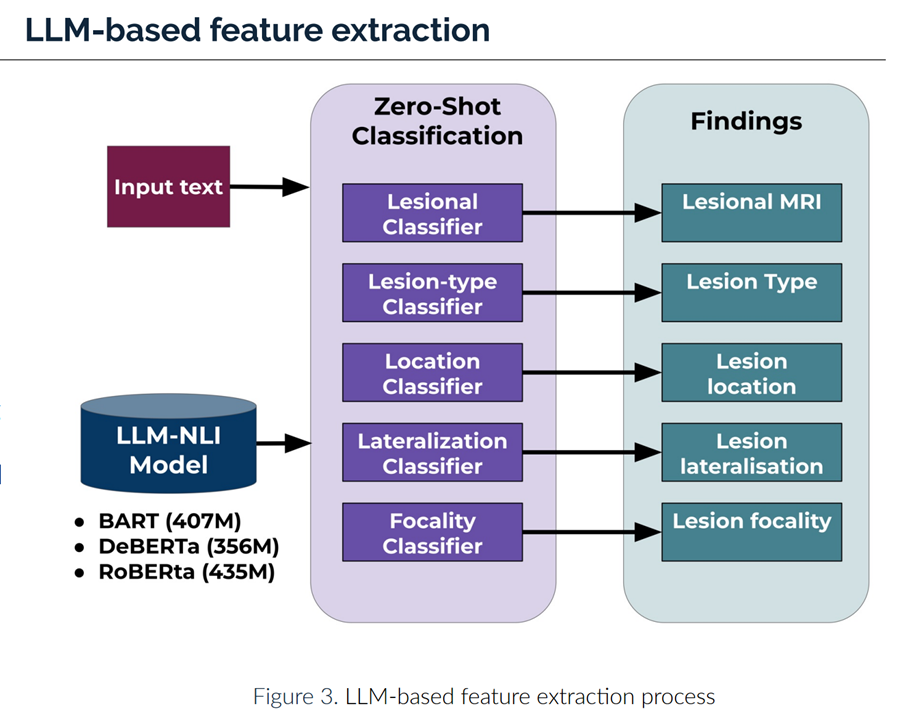
- Computers can reliably grab key epilepsy surgery details (like whether there is a lesion on the MRI and where it is) directly from radiology reports, without someone having to read and code them manually.
- Simple keyword rules pick up almost every MRI that looks abnormal (they are very good at not missing positives) but can make mistakes when the wording is more complex, such as misinterpreting phrases like “no atrophy.”
- AI language models work best when they read the short summary section of the report and can achieve both high sensitivity and high accuracy, so the best choice depends on whether to prioritize not missing cases, being very precise, or keeping the system easy to set up.
In collaboration with Hippy Lab (Dr. Kishore Mulpuri and Dr. Emily Schaeffer) this project utilizes predictive modeling to forecast how long children with Developmental Dysplasia of Hip (DDH) will require follow-up care, supporting more personalized and proactive clinical decision-making.
Using advanced interpretable model on data from the Global Hip Dysplasia Registry, a database spanning across 32 centers on 6 continents with over 10,000 patients, we are trying to develop AI-supported decision making system for DDH.
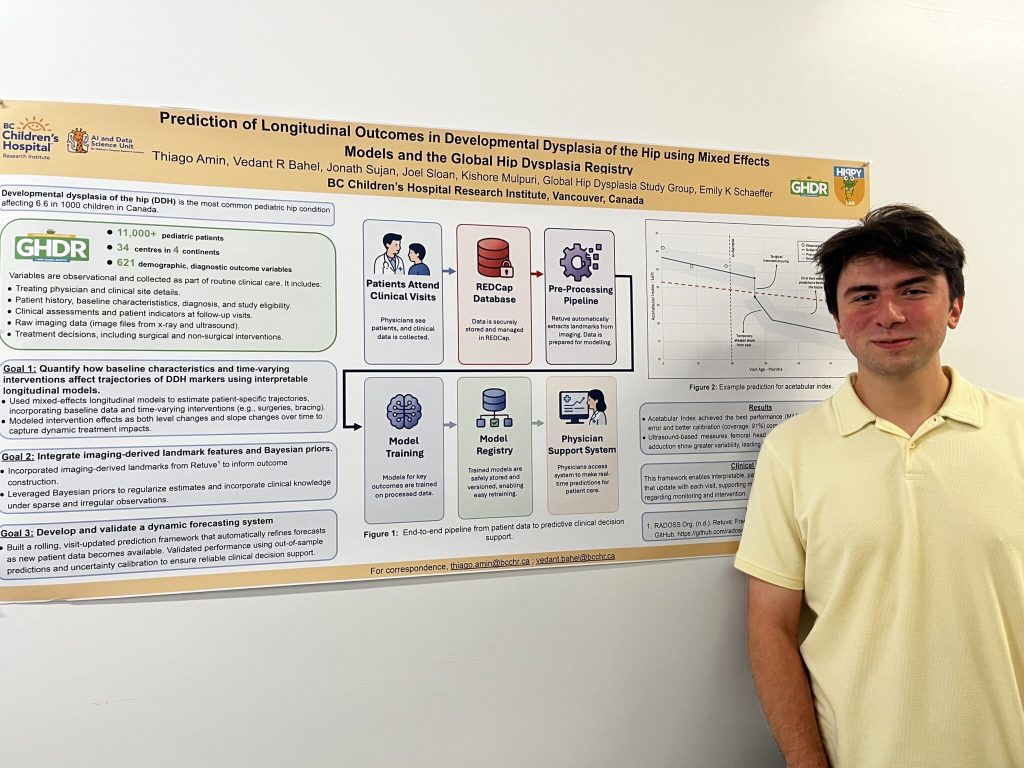
T. Amin presents at UBC Transforming Health Symposium Vancouver, 2026
PO1- Prediction of longitudinal outcomes and follow-up duration in developmental dysplasia of the hip using joint modeling techniques and the Global Hip Dysplasia Registry.
Amin T, Ujlain G, Sujan J, van Rooij T, Bahel V, Sloan J, Mulpuri K, Global Hip Dysplasia Study Group, Schaeffer E. [poster]. Presented at: Evidence2Innovation Symposium, BC Children’s Hospital Research Institute; 2024 Nov 21; Vancouver (BC), Canada.
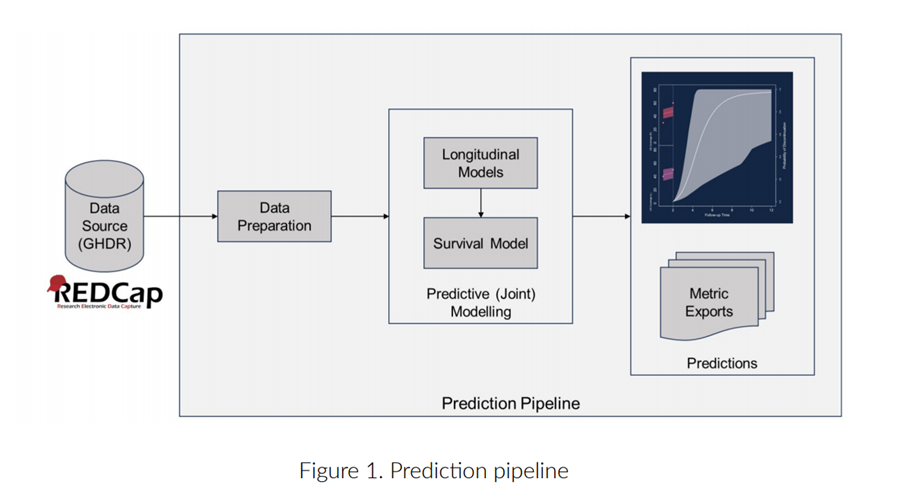
- For children with developmental dysplasia of the hip (DDH), it’s often unclear how long they will need follow-up. Using routine registry data, we show it’s possible to start predicting how long follow-up is likely to last.
- By using a joint modeling approach that connects repeated clinic measurements (like hip angles and ultrasound coverage) with the time until discharge, we can track each child’s progress fairly well, especially after accounting for differences between patients.
- The early predictions look encouraging but are still not adequately precise, and adding more data and key events (such as surgery or cast treatment) will likely make the predictions more accurate and useful for planning clinic resources and giving families clearer timelines.
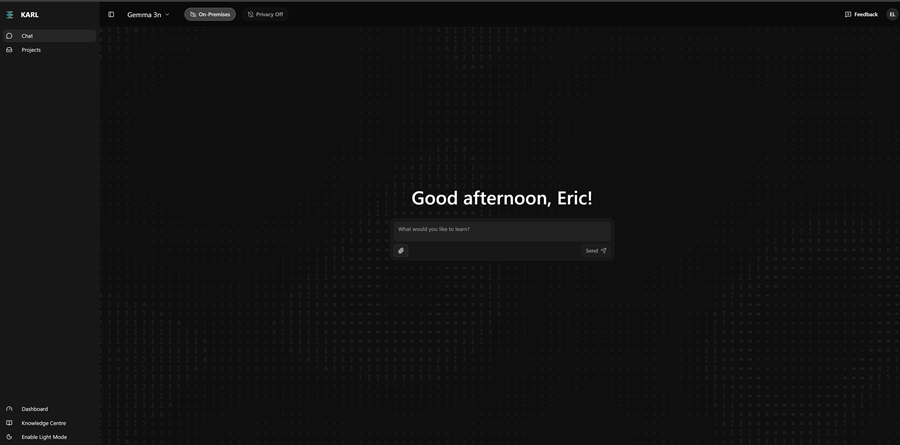
A secure, on-site AI assistant built for BC Children’s Hospital Research Institute that allows researchers and staff to interact with a large language model chatbot, search internal files and datasets, and redact sensitive information, without data ever leaving BCCHR’s internal network. An ongoing user experience and interface evaluation is being conducted to ensure accessibility and practical use of the tool.
The Shared Health Organizations Portal (SHOP) is the primary access point for clinical and administrative policies, guidelines, procedures, protocols, clinical decision support tools, and standards. The current SHOP search mechanism relies on matching exact words in the title of the documents to the search query, which can perform poorly when users do not know the document title or when relevant terms appear within the body of a document.
ADSU along with the PHSA Provincial Digital Health and Information Services team refined the SHOP search using AI-based semantic and vector search. We also ran a user study to determine whether our custom-built AI-SHOP was superior to the keyword-based current SHOP search engine in terms of accuracy and the time taken to find the necessary documents and to evaluate the experience of users with this new search tool.
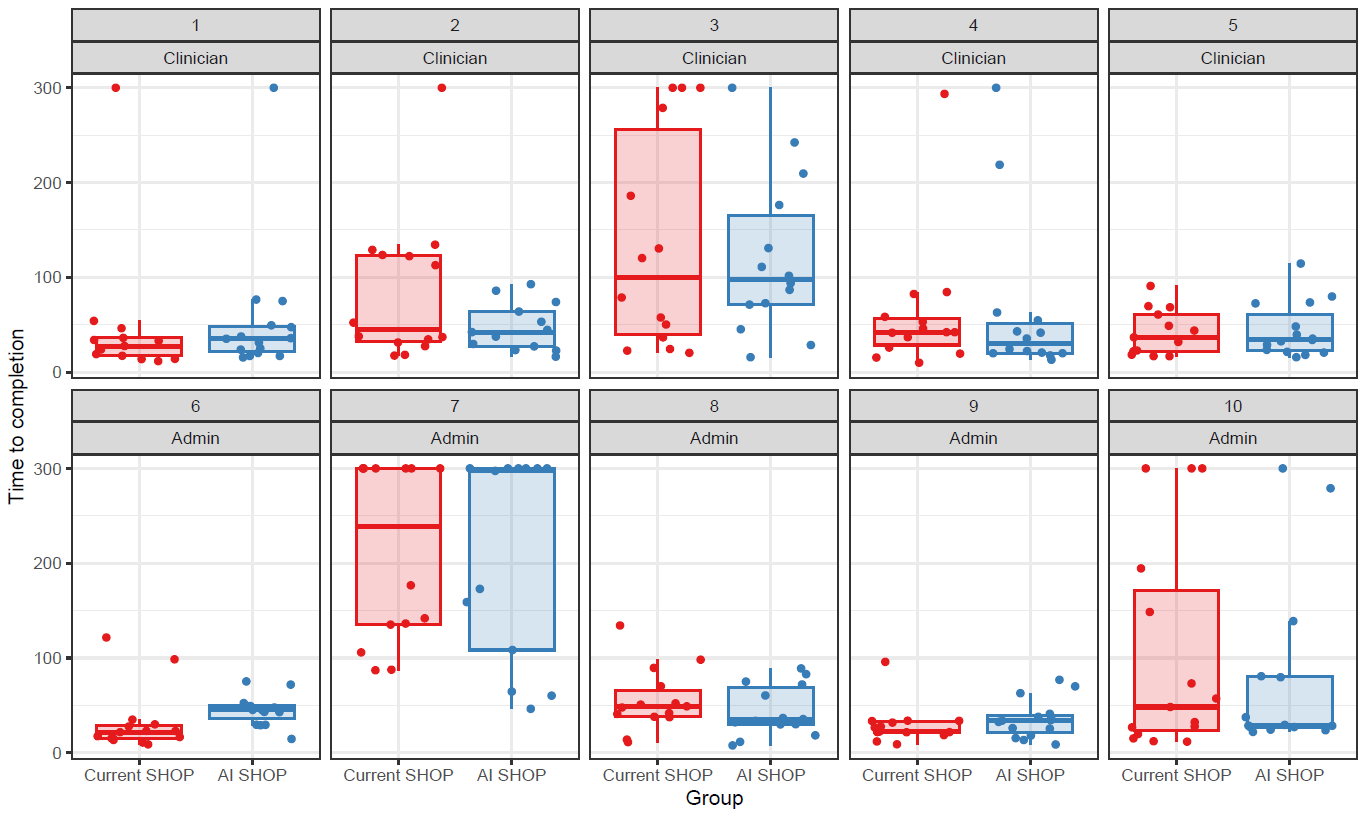
Task completion time by interface, stratified by role and scenario for both current SHOP and AI-SHOP.
We host, present and attend AI and data science related workshops and seminars throughout the year at BC Children’s Hospital Research Institute and in the AI and data science community. We aim to develop capacity and train new skillsets and capacity at the institute to harness AI and data science for research.