Current Research Projects
KidsAction Coaching
This study is actively seeking community-based physical activity programs for children with disabilities/exceptionalities, to partner with our team to implement the KidsAction Coaching approach. If interested, contact Kate Ortwein: kate.ortwein@ubc.ca.
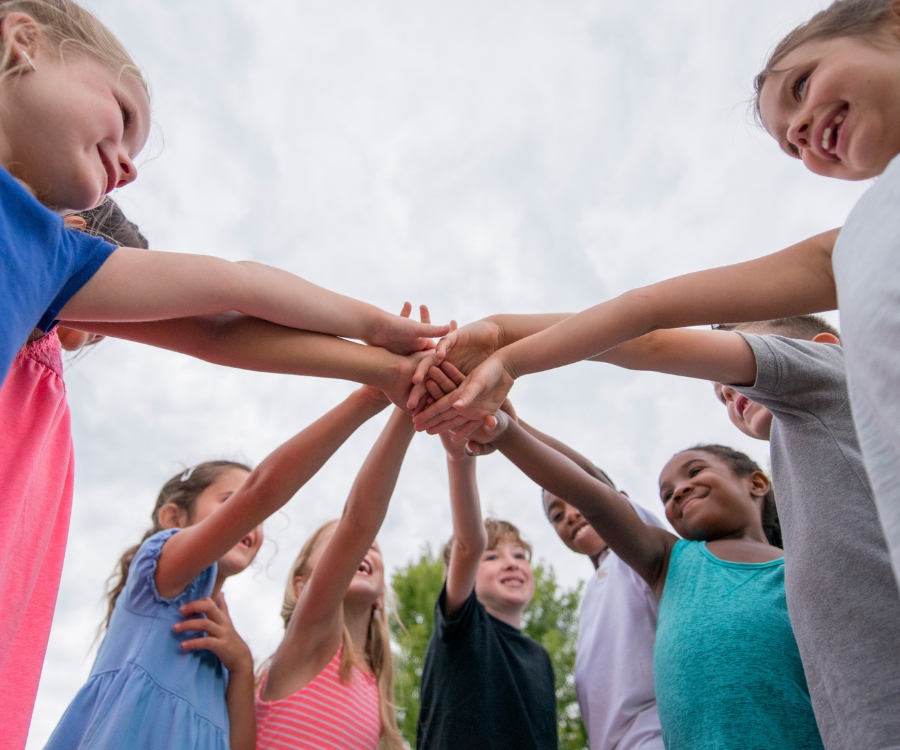
KidsAction Coaching is designed to support coaches and families at existing community-based physical activity programs to meet the needs of children with exceptionalities (medical model: neurodevelopmental/intellectual disabilities (NDID)). The KidsAction team tailors the approach to each site and supports staff/volunteers throughout the implementation process. Core components of the KidsAction Coaching approach include:
- An existing community-based physical activity program
- Personalized, child-centered coaching
- Home-based activity component
- Social networking for children and families
- Evaluation of all components
- An Indigenous cultural lens
The KidsAction Coaching approach aims to break down physical, emotional, economic and accessibility barriers in partnership with existing physical activity programs in the community through a personalized approach that collaborates with family members and their networks.
More information about KidsAction Coaching can be found here.
Knowledge Mobilization Program, CHILD-BRIGHT SPOR Network
The CHILD-BRIGHT Network is a Strategy for Patient Oriented Research (SPOR) initiative that brings together partners with lived and living experience, researchers, clinicians, policymakers, and other key groups to improve outcomes for children with brain-based disabilities. Its Knowledge Mobilization (KM) Program aims to accelerate the uptake of research into practice through a variety of strategies, including three collaborative hubs – family, clinician, and policy – as well as broader engagement and partnership-building efforts. The goal is to strengthen connections between researchers and knowledge users to support meaningful knowledge exchange.
Co-led by Dr. Keiko Shikako, Dr. Stephanie Glegg, and parent co-lead Connie Putterman, the team developed strategies to build engagement with their KM activities from 2016-2022. Phase 2 (2022-2026) focuses on influencing healthcare and policy through infrastructure that brings together families, health care providers, decision makers, and policy makers. This phase embeds equity, diversity, inclusion, decolonization and Indigenization principles while advancing patient-oriented research, implementation science, and knowledge mobilization.
More information on the CHILD-BRIGHT Network can be found here and details on Phase 2 can be found here. KM resources can be found in the KT library here.
CHILD-BRIGHT Parent Voices
Children born prematurely are closely monitored in neonatal follow-up clinics, but these visits often focus on medical outcomes that may not reflect what matters most to families. In this study, we spoke with parents to better understand the outcomes they find meaningful, and with healthcare professionals to explore how these priorities can be integrated into clinic care. We’ve now identified key Family Important Outcomes (FIOs) and are moving into the next phase: implementing evidence-based interventions that reflect these priorities and ensuring follow-up care aligns with the real-life concerns of families. This national parent-participatory project is co-led by Dr. Thuy Mai Luu, Dr. Stephanie Glegg and Dr. Jehier Afifi, with coordination by Genevieve Sutherns.
More information on the project can be found here.
Publications:
- Rebecca Pearce, Anne Synnes, Mei Mei Lam, Lindsay L. Richter, Fabiana Bacchini, Melissa Jones, Thuy Mai Luu, Annie Janvier, Parents’ Voice Network: Partnering with parents to change measurement and reporting of preterm birth outcomes. Pediatrics November 2024; 154 (5): e2024067093. doi:10.1542/peds.2024-067093
- Synnes A, Lam MM, Ricci MF, Church P, Simard M-N, Zwicker JG, et al. How to measure patient and family important outcomes in extremely preterm infants: A scoping review. Acta Paediatr. 2024; 113: 1228–1235. doi:10.1111/apa.17228
Supporting the implementation of asthma action plans in Richmond, BC
Led by Dr. Claire Seaton and in collaboration with Child Health BC, the Knowledge to Action Lab is supporting the Pediatric Asthma: Guidelines to Action project that aims to implement provincial asthma action plan guidelines in Richmond, BC. Expanding on successful implementation of these guidelines at BC Children’s Hospital, this project aims to scale this implementation by first pilot testing at Richmond Hospital Emergency Department and Richmond City Centre Urgent & Primary Care Centre. The overall goals of this project are to (1) decrease pediatric asthma re-admission rates, (2) increase clinician/family awareness and access to asthma best practice education and resources, and (3) inform future implementation efforts at similar sites.
Connecting for Care
Connecting for Care is a collaborative project between the University of Manitoba (and the Children’s Hospital Research Institute of Manitoba) and the University of British Columbia (and BC Children’s Hospital Research Institute), designed to develop our understanding of how different knowledge users in child development and rehabilitation engage in knowledge translation. The overall goal is to improve access to safe and effective health care for families. Findings will be used to implement strategies to move knowledge into action and facilitate knowledge exchange between and across different knowledge users.
The study includes three phases: (1) a national survey; (2) interviews with a subset of survey respondents; and (3) a national consensus process to generate recommendations to support knowledge translation (moving knowledge into action).
This study is led by researchers Dr. Kristy Wittmeier and Dr. Stephanie Glegg, Indigenous Wisdom Translator Symbia Barnaby, and Family Partner Carrie Costello. Connecting for Care is committed to cultural safety and doing no harm. We are receiving guidance from Knowledge Keepers to help leave everyone in a good way, and abide by the First Nations principles of Ownership, Control, Access, and Possession (OCAP, fnigc.ca).
To participate and for more details on our commitment to decolonization, please check out our website.
Publications:
- Glegg S, Costello C, Barnaby S, Cassidy C, Sibley KM, Kingsnorth S, Pritchard L, Kraus de Camargo O, Andersen J, Bellefeuille S, Cross A, Curran, Hesketh K, Layco J, Reynolds J, Robeson P, Straus S, Wittmeier K. Connecting for Care: A protocol for a mixed methods social network analysis to advance knowledge translation in the field of child development and rehabilitation. Implementation Science Communications. 2022;3:127. doi:10.1186/s43058-022-00372-5
POPCORN Evaluation
POPCORN brings together researchers, clinicians, and patient partners to form a pan-Canadian pediatric research platform and answer important questions about child health. Its aim is to provide infrastructure to prepare for future pandemics or child health issues of importance. The Glegg lab is leveraging social network analysis (SNA) as a methodological tool to delve into the individual and network-level impacts of POPCORN membership, assessing its contributions to research collaboration, idea generation, and linkage among its members. Identifying strengths and gaps of the network will assist the team in proposing strategic interventions to strengthen or build relationships, thus optimizing the network’s functionality (e.g., strengthening partnerships, building on the influence of key individuals or identifying which partners are missing from the network). This project is co-led by Dr. Stephanie Glegg and Dr. Janet Curran with additional leadership from Dr. Catherine Demers.
EPOCH: Emerging and investigational Products for Opioid use disorder: Characterizing use in Hospital settings
St. Paul’s Hospital is offering new pharmaceutical treatments for people with opioid use disorder (OUD) to improve care and reduce overdose risk. This work is critical as Canada’s overdose crisis continues, driven largely by an increasingly toxic drug supply. Since November 2019, the hospital has offered a wider range of options, including fentanyl patches and intravenous therapies, within an acute care setting. This is a novel approach in Canada that was initiated with the goal of preventing early discharges, reducing readmissions, and supporting stabilization during hospitalization. Through interviews with clinicians and patients, the study helps us to understand what helped or hindered the successful implementation of these therapies. Findings can help guide other hospitals in adopting similar approaches and inform efforts to scale and sustain these or related interventions more broadly. This project is co-led by Dr. Nadia Fairbairn and Dr. Stephanie Glegg.
Exploring implementation needs at BC Children’s Hospital, including Sunny Hill Health Centre
This study is actively recruiting a wide range of clinical and operational programs to engage with to gather information that can inform the future design of an Implementation Science Hub at BC Children’s Hospital Research Institute (BCCHR). If interested, contact Stephanie Glegg: stephanie.glegg@ubc.ca
Implementation science (IS) and knowledge translation (KT) best practices help turn research into action, so children and their families receive consistent, high-quality care. IS focuses on understanding what affects the adoption of healthcare innovations and tests different ways to support the use of evidence in practice.
We are conducting a needs assessment across Sunny Hill Health Centre and the broader BC Children’s Hospital site. We want to understand the current interest, available supports, and existing gaps related to implementing clinical interventions, improving health service delivery, and adopting new innovations. Our goal is to engage with a wide range of clinical and operational programs to gather information that can inform the future design of an Implementation Science Hub at BC Children’s Hospital Research Institute (BCCHR). This hub will connect researchers with IS expertise to clinical and operational teams interested in partnering on projects to strengthen implementation in their programs.
Indigenous-Driven Community-Based Supports for Disability
Overview & Approach
Indigenous families in rural and remote British Columbia face severe access barriers to culturally safe disability supports; gaps rooted in systemic racism, colonization, and geographic isolation. Understanding Indigenous ways of thinking about disability and advancing community solutions are vital to transforming care to meet their unique needs.
This initiative is co-led by Symbia Barnaby, an Indigenous Wisdom Keeper and community researcher, and Dr. Stephanie Glegg, an OSOT at UBC. Our team collaborates with Indigenous community members, researchers, and community partners (Family Support Institute, Kxeen Community Services Society, BC Aboriginal Network on Disability Society) to improve access to safe, effective supports for children with disabilities and their families.
Grounded in a Two-Eyed Seeing (Etuaptmumk) framework, our work bridges Western implementation science with Indigenous ways of knowing and being to co-design, evaluate, and scale community-driven access innovations across BC. Working in community, with community, we explore how systemic exclusion from policy and health service design maintains inequities. Together, we will enact and evaluate solutions that reflect Indigenous values and advocate to government and health authorities for best-fit care.
Project Lifecycle: Our 4 Phases
Phase 1: Environmental Scan & Asset Mapping: Our environmental scan is mapping out existing disability services across British Columbia (BC). We are making a user-friendly, interactive website to support service navigation for families and service providers.
Phase 2: Community Engagement: We are engaging with Indigenous families across BC by hosting sensory tents at community-led events. We hope to understand how Indigenous families think about disability and their support needs
Phase 3: Testing Co-created Solutions: We will partner with Indigenous communities to test creative solutions (e.g., Indigenous Care Navigators, pooling resources to bring therapists to community) to support their care needs.
Phase 4: Advocacy and Knowledge Sharing: We support advocacy efforts to increase funding and access to culturally safe disability supports for Indigenous families. We commit to sharing back our learning with Indigenous communities.
Connect & Partner With Us: Our team is actively seeking to connect with community partners, service providers, Indigenous leaders, and families across British Columbia who are interested in collaborating or learning more about our project initiatives.
Academic Co-Lead: Dr. Stephanie Glegg (UBC, OSOT)
Community Co-Lead: Symbia Barnaby (Wisdom Keeper, Family Support Institute)
Project Contact: stephanie.glegg@ubc.ca
This research has no connection to the Ministry of Children and Family Development or any other government ministry. It’s community-driven, co-designed, and co-lead by Indigenous people, for Indigenous families.
Collaborating Projects:
-
The Early CP Project: Implementing Best Practices for Earlier Diagnosis of Cerebral Palsy in very Preterm Infants
- Principal Investigators: Drs Thuy Mai Luu, Jehier Afifi, Matthew Hicks
-
Assessing for DCD in Neonatal Follow-Programs
- Principal Investigator: Dr. Jill Zwicker
-
Neonatal Interventions to Prevent Bronchopulmonary dysplasia (BPD)
- Principal Investigator: Dr. Sandesh Shivananda
-
Hospital at Home Scoping Review
-
Principal Investigator: Dr. Tom McLaughlin
-
Principal Investigator: Dr. Tom McLaughlin
Are you interested in collaborating on an implementation science project? Contact us today!
Gleggacy Collaborating Projects:
Ankyloglossia Care Pathway: Team based, infant and family-centered coordinated care experience for all British Columbians. Collaborators: Dr. Sandesh Shivananda, BCCH
Gleggacy Projects
- Virtual reality/active video games & the ADOPT-VR Instrument
The ADOPT-VR Instrument was developed by Dr. Glegg and implemented in her research to highlight and implement Virtual Reality (VR) as a rehabilitation intervention. The instrument is a theory-based measure: the Assessing Determinants of Prospective Take-up of Virtual Reality and is in its’ second version (ADOPT-VR2). In research, the Instrument assesses factors that influence how rehabilitation therapists (OTs and PTs) use VR with their patients and has been tested for validity, consistency and responsiveness4.
The ADOPT-VR2 has 14 additional items on the Likert-scale compared to the first version (54 now, 40 to start), and 11 theoretical predictors/constructs which are evaluated on a 10-point scale. The following three areas are measured in the survey responses: Attitudes (perceived usefulness, ease of use, and compatibility). Social Norms (peer influence, superior influence, client influence) and Perceived Behavioural Control (self-efficacy, facilitating conditions, barriers).
Dr. Glegg co-led national surveys that determined the barriers to implementation of VR in Canada and the United States. Through Dr. Glegg’s research, the ADOPT-VR Instrument has indicated that virtual reality use and adoption in rehabilitation therapy is complicated and therefore needs multiple strategies during implementation to be effective4. Additionally, Dr. Glegg collaborated with researchers in the United Kingdom and Spain to replicate the North American studies (see publications below). The ADOPT-VR Instrument has been used in more than 17 studies globally and included in Dr. Glegg’s implementation research in pediatric healthcare.
Publications:
- Levac DE, Glegg S, Pradhan S, Fox EJ, Espy D, Chicklis D, Deutsch JE. A comparison of virtual reality and active video game usage, attitudes and learning needs among therapists in Canada and the US. 2019 International Conference on Virtual Rehabilitation (ICVR). 2019;1-7. doi:10.1109/ICVR46560.2019.8994624
- Glegg SMN, Levac DE. Barriers, facilitators and interventions to support virtual reality implementation in rehabilitation: A scoping review. Physical Medicine & Rehabilitation. 2018;10(11):1237-1251.e1. DOI:10.1016/j.pmrj.2018.07.004
- Levac DL, Glegg SMN, Miller P, Colquhoun H, Noubary F. Virtual reality and active video game-based practice, learning needs and preferences: A cross-Canada survey of physiotherapists and occupational therapists. Games for Health, 2017;6(4):217-28. doi:10.1089/g4h.2016.0089
- Environmental Scan on Organizational Supports for KT
This environmental scan examined organizational supports for evidence-informed health care (EIHC) and knowledge translation (KT) within Canadian paediatric academic health science centres and affiliated research institutes. Using a national bilingual survey of organizational leaders, the study aimed to identify existing KT resources, services, and structures, as well as perceived facilitators and barriers, to inform the development of KT support programs.
Findings from 17 sites across seven provinces demonstrated substantial variability in KT infrastructure. Common supports included on-site library services, dedicated KT personnel or units, and activities such as education, consultation, resource development, and implementation support. Supports were delivered through a combination of internal expertise, interdepartmental collaboration, and external partnerships, and were categorized using the AIMD framework, highlighting the use of multiple implementation mechanisms rather than single strategies.
Supports perceived as most effective included dedicated KT personnel, leadership support, targeted initiatives, and logistical resources such as protected time and funding. Key barriers included limited funding, time constraints, insufficient KT expertise, and lack of coordinated infrastructure. Overall, the scan emphasized that tailored KT strategies are required to address contextual needs and strengthen evidence use in paediatric health care and research settings.