
Alexander Weber
BSc, MSc, PhD
Investigator, BC Children's Hospital
Biorxiv
Sochan, L. and Archibald, J. and Weber, A.M.
DOI: 10.1101/2025.03.28.645973Pediatric Research
Carmichael, T.G. and Rauscher, A. and Grunau, R.E. and Weber, A.M.
DOI: 10.1038/s41390-025-03966-6NMR in Biomedicine
Zhu, C. and Chan, N. and Chacko, A. and Holsti, L. and Grunau, R. and Weber, A.
DOI: 10.1002/nbm.70065Jessica Archibald and Alexander Mark Weber and Paulina S. Scheuren and Oscar Ortiz and Cassandra Choles and Jaimie J. Lee and Niklaus Zlch and Erin L. MacMillan and John L. K Kramer
DOI: 10.55458/neurolibre.0002912 / 2024
Zenodo
DOI: 10.5281/zenodo.1437526412 / 2024
Zenodo
DOI: 10.5281/zenodo.1437526712 / 2024
MDPI
DOI: 10.48350/199621Frontiers in Human Neuroscience
Malik, M.A. and Weber, A.M. and Lang, D. and Vanderwal, T. and Zwicker, J.G.
DOI: 10.3389/fnhum.2024.1316117Cerebral Cortex
Mella, A.E. and Vanderwal, T. and Miller, S.P. and Weber, A.M.
DOI: 10.1093/cercor/bhae426Frontiers in Human Neuroscience
Malik, M. and Weber, A. and Lang, D. and Vanderwal, T. and Zwicker, J.G.
DOI: 10.3389/fnhum.2024.1276057Topics in spinal cord injury rehabilitation
Weber, A.M. and Nightingale, T.E. and Jarrett, M. and Lee, A.H.X. and Campbell, O.L. and Walter, M. and Lucas, S.J.E. and Phillips, A. and Rauscher, A. and Krassioukov, A.V.
DOI: 10.46292/sci23-00068Nutrients
McWilliams, S. and Hill, O. and Ipsiroglu, O.S. and Clemens, S. and Weber, A.M. and Chen, M. and Connor, J. and Felt, B.T. and Manconi, M. and Mattman, A. and Silvestri, R. and Simakajornboon, N. and Smith, S.M. and Stockler, S.
DOI: 10.3390/nu16152559Journal of Magnetic Resonance Imaging
Aisling Fothergill and Christoph Birkl and Christian Kames and Wayne Su and Alexander Weber and Alexander Rauscher
DOI: 10.1002/jmri.2844806 / 2023
Human Brain Mapping
Olivia Lauren Campbell and Alexander Mark Weber
DOI: 10.1002/hbm.2580106 / 2022
Frontiers in Physiology
Campbell, O. and Vanderwal, T. and Weber, A.M.
DOI: 10.3389/fphys.2021.809943Neuroimage
Bartels, L.M. and Doucette, J. and Birkl, C. and Zhang, Y. and Weber, A.M. and Rauscher, A.
DOI: 10.1016/j.neuroimage.2022.119702American Journal of Neuroradiology
A.M. Weber and Y. Zhang and C. Kames and A. Rauscher
DOI: 10.3174/ajnr.A708607 / 2021
American Journal of Neuroradiology
Zhang, Y. and Rauscher, A. and Kames, C. and Weber, A.M.
DOI: 10.3174/ajnr.A6114NMR in Biomedicine
Alexander Mark Weber and Yuting Zhang and Christian Kames and Alexander Rauscher
DOI: 10.1002/nbm.4222Frontiers in neurology
DOI: 10.3389/fneur.2018.00575 PubMed: 3013175208 / 2018
Neuroimaging clinics of North America
DOI: 10.1016/j.nic.2017.09.005 PubMed: 2915785510 / 2017
Psychiatry Research - Neuroimaging
Weber, A.M. and Soreni, N. and Stanley, J.A. and Greco, A. and Mendlowitz, S. and Szatmari, P. and Schachar, R. and Mannasis, K. and Pires, P. and Swinson, R. and Noseworthy, M.D.
DOI: 10.1016/j.pscychresns.2014.02.004Progress in Neuro-Psychopharmacology and Biological Psychiatry
Weber, A.M. and Soreni, N. and Noseworthy, M.D.
DOI: 10.1016/j.pnpbp.2014.04.001Magnetic Resonance Materials in Physics, Biology and Medicine
Weber, A.M. and Soreni, N. and Noseworthy, M.D.
DOI: 10.1007/s10334-013-0420-5CMAJ open
DOI: 10.9778/cmajo.20120020 PubMed: 2507710201 / 2013
Nature Neuroscience
Weber, A.M. and Wong, F.K. and Tufford, A.R. and Schlichter, L.C. and Matveev, V. and Stanley, E.F.
DOI: 10.1038/nn.2657Nature Neuroscience
Gardezi, S.R. and Weber, A.M. and Li, Q. and Wong, F.K. and Stanley, E.F.
DOI: 10.1038/nn0809-957aI am looking for graduate students and postdoctoral fellows to join my lab. My ideal candidate is someone with experience programming (python, linux/bash, git, matlab, R), a multidisciplinary interest and background, curious, driven, humble, and good communication/interpersonal skills.
I am also looking for exciting new collaborations with other clinicians and investigators.
Currently, my lab is focused on one project:
Since the 1990s, it has been suggested that the brain operates in a critical state between order and disorder. Systems that exist in a critical state exhibit scale-invariance, power-law distributions, fractal geometry, and long-range correlations. Evidence to support the brain criticality hypothesis comes from many different avenues, both spatial (dendritic branching and small-world network connectivity), and temporal (neurotransmitter release, neuronal firing, local field potentials, and MEG, EEG, and fMRI signals), suggesting that in the brain, criticality is the rule, not the exception. It has been further theorized that existing in this state maximizes signalling efficiency, storage capacity, and flexibility. Thus, being able to properly identify and measure criticality is a key component in trying to understand how the brain functions. Unfortunately, in a rush to investigate and publish findings on criticality in fMRI neuroimaging, a rigorous testing of the assumptions and algorithms used for these purposes has not yet been performed.
Specifically, the aim of our study is to investigate how to properly analyze functional MRI time-series using fractal mathematics. This sort of analysis has shown some promise as a biomarker in concussions, Alzheimers, autism and more. Specifically, we hope to develop a signal-processing tool in Python that will: 1) test whether a signal follows a power-law distribution; 2) categorize the signal as either fractional Gaussian noise (fGn) or fractional Brownian motion (fBm); and 3) accurately report the signal’s Hurst exponent (H) value between 0 and 1. Eventually the tool will be used to investigate the nature of fMRI signals and the effects of various preprocessing methods, before being used to investigate physiological and clinical problems. In addition, the software will be made available online for free for other researchers to use.
I also have experience and interest in the following subjects: preterm birth; brain development; cerebral vascular health; quantitative susceptibility mapping; concussion / TBI; obsessive compulsive disorder; brain intoxication; brain networks; resting state networks; diffusion tensor imaging; myelin water imaging; machine learning and deep learning;
NSERC Discovery Grant - Mapping the Structural and Functional Development of the Brain in the First Year of Life: A State-of-the-Art Quantitative MRI Approach - $212,500 – 2024-2029 – PI
CIHR - Brain Connectome and Neurodevelopment in Neonatal Hypoxic-Ischemic Encephalopathy - $615,000 – 2025-2030 – Co-Investigator; PI = Thiviya Selvanathan
BCCHRI Catalyst Grant - Brain and Motor Development of Young Children - $20,000 – 2025-2026 – CoPI with Jill Zwicker
BCCHRI Catalyst Grant - Brain development in infants who receive CALMER - $20,000 – 2025-2026 – CoI; PIs = Liisa Holsti and Manon Ranger
Supervisor Recognition Award - UBC Science Co-op - 2021
BC Children's Hospital Research Institute Child & Family Research Institute M.I.N.D. Postdoctoral Fellowship - $100,000 - July 2016 – July 2018
School of Biomedical Engineering, McMaster University - Dr. David Williams Award in Biomedical Engineering - $1,000 - November 2012
Natural Sciences and Engineering Research Council - NSERC Postgraduate Scholarship (PGS D) - $63,000 – 2010-2012
Neuroscience Program, University of Toronto - UofT Neuroscience Program CAN-2009 Travel Award - $500 - May 2009
University of Toronto – UofT Fellowship - $1,600 – September 2008
Department of Physiology, University of Toronto - UofT Dept. of Physiology Scholarship - $2,000 – September 2007
Department of Chemistry, University of Toronto - David L. Coffen Memorial Scholarship in Organic Chemistry - $800 - February 2006
Natural Sciences and Engineering Research Council - NSERC Undergraduate Student Research Award - $6,500 - Summer 2005
Every day, our researchers work towards breakthroughs to transform the lives of kids in BC and around the world. Learn about our latest innovations and advancements in child health.
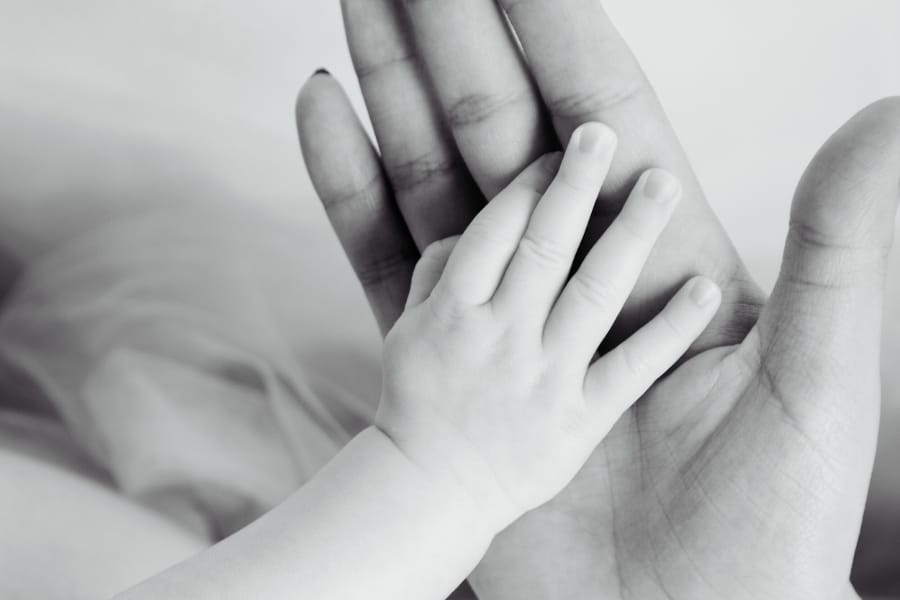
Each year in Canada, thousands of babies are born very prematurely — before 32 weeks gestation — and many require respiratory support in their first days and weeks of life. While this support is often life-saving, researchers are still learning how different types of respiratory care affect the developing brain.
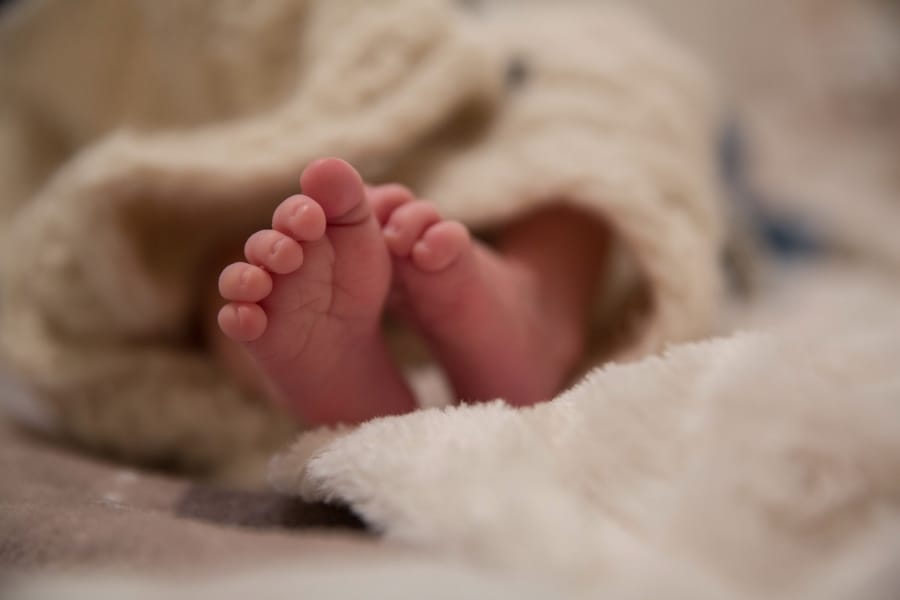
Preterm babies (by definition any infant born before completing 37 gestational weeks) — particularly those born significantly earlier — are at increased risk for sensory, motor, and cognitive challenges. They also experience a higher incidence of developmental impairments. Scientists know that every week a baby spends in the womb is critical for healthy development, but…

Congratulations to the BC Children's and BC Women's investigators who were awarded funding through the Canadian Institutes of Health Research (CIHR) Project Grant Spring 2020 competition. Our research community received over $4 million in new research grants.
At BC Children’s, we are making discoveries that save lives and transform health care for children in our province and around the world. Our research portfolio includes basic, clinical, population, and public health research.
EXPLORE OUR RESEARCH
Sign up for compelling stories about innovative science, the doctors and researchers who turn ideas into discoveries and treatments, and the kids and families whose lives are changed.
BC Children's Hospital Research Institute operates on the ancestral and unceded territory of the Coast Salish peoples — xʷməθkʷəy̓əm (Musqueam), Sḵwx̱wú7mesh (Squamish), and Səl̓ílwətaʔ/Selilwitulh (Tsleil-Waututh) Nations. Further, this acknowledgement, gratitude, and respect extends to all of the First Nations communities on whose territories the Research Institute builds relationships and operates in British Columbia.
© 2026 BC Children’s Hospital Research Institute. All rights reserved.
Crafted with by Forge and Smith