
Christopher Dunham
BSc, MD
Investigator, BC Children's Hospital

Valkanas E and Schaffer K and Dunham C and Maduro V and du Souich C and Rupps R and Adams DR and Baradaran-Heravi A and Flynn E and Malicdan MC and Gahl WA and Toro C and Boerkoel CF
PubMed: 2751383008 / 2016
Ramaswamy V and Hielscher T and Mack SC and Lassaletta A and Lin T and Pajtler KW and Jones DT and Luu B and Cavalli FM and Aldape K and Remke M and Mynarek M and Rutkowski S and Gururangan S and McLendon RE and Lipp ES and Dunham C and Hukin J and Eisenstat DD and Fulton D
DOI: 10.1200/jco.2015.65.7825 PubMed: 2726994307 / 2016
Hendson G and Dunham C and Steinbok P
PubMed: 2723678005 / 2016
Dunham C
DOI: 10.1007/s00381-015-2735-1 PubMed: 2635122610 / 2015
Hasan H and Hendson G and Howard AF and Hukin J and Dunham C and Ahmed T and Lo AC and Goddard K
DOI: 10.1016/j.prp.2015.06.008 PubMed: 2634293810 / 2015
Bader A and Heran M and Dunham C and Steinbok P
DOI: 10.3171/2014.10.peds13634 PubMed: 2595580808 / 2015
Li AM and Dunham C and Tabori U and Carret AS and McNeely PD and Johnston D and Lafay-Cousin L and Wilson B and Eisenstat DD and Jabado N and Zelcer S and Silva M and Scheinemann K and Fryer C and Hendson G and Fotovati A and Hawkins C and Yip S and Dunn SE and Hukin J
DOI: 10.1002/cncr.29198 PubMed: 2558678805 / 2015
Torchia J and Picard D and Lafay-Cousin L and Hawkins CE and Kim SK and Letourneau L and Ra YS and Ho KC and Chan TS and Sin-Chan P and Dunham CP and Yip S and Ng HK and Lu JQ and Albrecht S and Pimentel J and Chan JA and Somers GR and Zielenska M and Faria CC
DOI: 10.1016/s1470-2045(15)70114-2 PubMed: 2588298205 / 2015
Ailon T and Dunham C and Carret AS and Tabori U and Mcneely PD and Zelcer S and Wilson B and Lafay-Cousin L and Johnston D and Eisenstat DD and Silva M and Jabado N and Goddard KJ and Fryer C and Hendson G and Hawkins C and Dunn S and Yip S and Singhal A and Hukin J
DOI: 10.1007/s00381-014-2575-4 PubMed: 2539197901 / 2015
Sheffield BS and Yip S and Ruchelli ED and Dunham CP and Sherwin E and Brooks PA and Sur A and Singh A and Human DG and Patel MS and Lee AF
DOI: 10.2350/14-07-1525-cr.1 PubMed: 25668678Dunbar MJ and Singhal A and Rassekh SR and Dunham C
DOI: 10.1159/000380769 PubMed: 2589619806 / 2014
06 / 2014
06 / 2014
Buczkowicz P and Hoeman C and Rakopoulos P and Pajovic S and Letourneau L and Dzamba M and Morrison A and Lewis P and Bouffet E and Bartels U and Zuccaro J and Agnihotri S and Ryall S and Barszczyk M and Chornenkyy Y and Bourgey M and Bourque G and Montpetit A and Cordero F and Castelo-Branco P
DOI: 10.1038/ng.2936 PubMed: 2470525405 / 2014
Schutz PW and Fauth CT and Al-Rawahi GN and Pugash D and White VA and Stockler S and Dunham CP
DOI: 10.1016/j.pediatrneurol.2013.12.008 PubMed: 2448593004 / 2014
Pambid MR and Berns R and Adomat HH and Hu K and Triscott J and Maurer N and Zisman N and Ramaswamy V and Hawkins CE and Taylor MD and Dunham C and Guns E and Dunn SE
DOI: 10.1002/pbc.24675 PubMed: 2394008301 / 2014
Das S and Yip S and Hukin J and Cochrane D and Dunham C
DOI: 10.5414/np300689 PubMed: 24495348Chau V and Poskitt KJ and Dunham CP and Hendson G and Miller SP
DOI: 10.2174/157339631001140408120336 PubMed: 25055861Manoranjan B and Wang X and Hallett RM and Venugopal C and Mack SC and McFarlane N and Nolte SM and Scheinemann K and Gunnarsson T and Hassell JA and Taylor MD and Lee C and Triscott J and Foster CM and Dunham C and Hawkins C and Dunn SE and Singh SK
DOI: 10.1002/stem.1401 PubMed: 2359249607 / 2013
Birks DK and Donson AM and Patel PR and Sufit A and Algar EM and Dunham C and Kleinschmidt-DeMasters BK and Handler MH and Vibhakar R and Foreman NK
DOI: 10.1002/pbc.24481 PubMed: 2338211807 / 2013
Pugash D and Schrader KA and Dunham CP and Popescu OE and Sargent MA and Lehman AM and Yong SL and Clarke LA
DOI: 10.7863/ultra.32.5.881 PubMed: 2362033105 / 2013
Dunham C and Yip S
DOI: 10.3171/2012.3.peds12168 PubMed: 2339435504 / 2013
Al-Kharazi K and Gillis C and Steinbok P and Dunham C
DOI: 10.5414/np300548 PubMed: 23149336Pugash D and Hendson G and Dunham CP and Dewar K and Money DM and Prayer D
DOI: 10.1002/uog.11164 PubMed: 2261099012 / 2012
Dunham C and Pillai S and Steinbok P
DOI: 10.1016/j.humpath.2011.12.011 PubMed: 2249785110 / 2012
Fleming AJ and Hukin J and Rassekh R and Fryer C and Kim J and Stemmer-Rachamimov A and Birks DK and Huang A and Yip S and Dunham C
DOI: 10.1111/j.1750-3639.2011.00561.x PubMed: 2218846409 / 2012
Lee C and Fotovati A and Triscott J and Chen J and Venugopal C and Singhal A and Dunham C and Kerr JM and Verreault M and Yip S and Wakimoto H and Jones C and Jayanthan A and Narendran A and Singh SK and Dunn SE
DOI: 10.1002/stem.1081 PubMed: 2241596806 / 2012
Yang MM and Singhal A and Rassekh SR and Yip S and Eydoux P and Dunham C
DOI: 10.3171/2012.1.peds11326 PubMed: 2254603005 / 2012
Pillai S and Metrie M and Dunham C and Sargent M and Hukin J and Steinbok P
DOI: 10.1007/s00381-012-1707-y PubMed: 2230782504 / 2012
Birks DK and Donson AM and Patel PR and Dunham C and Muscat A and Algar EM and Ashley DM and Kleinschmidt-Demasters BK and Vibhakar R and Handler MH and Foreman NK
DOI: 10.1093/neuonc/nor140 PubMed: 2194604412 / 2011
Stritzke AI and Dunham CP and Smyth JA and Steinbok P
DOI: 10.3171/2011.7.peds11208 PubMed: 2196154310 / 2011
Pillai S and Singhal A and Byrne AT and Dunham C and Cochrane DD and Steinbok P
DOI: 10.1007/s00381-011-1499-5 PubMed: 2173211909 / 2011
Apel-Sarid L and Cochrane DD and Steinbok P and Byrne AT and Dunham C
DOI: 10.3171/2010.8.peds10248 PubMed: 2088711510 / 2010
Dunham C
DOI: 10.1053/j.semdp.2010.04.003 PubMed: 2091960708 / 2010
Wiltshire KM and Dunham C and Reid S and Auer RN and Suchowersky O
PubMed: 2043793103 / 2010
Huntsman RJ and Lemire EG and Dunham CP
PubMed: 1929490001 / 2009
Hocwald O and McFadden D and Osiovich H and Dunham C
DOI: 10.2350/09-01-0592-oa.1 PubMed: 19883237Dunham CP and Curry B and Hamilton M
PubMed: 19919821Marshall GB and Dunham C and Wiemer C and Lautner D and Gray RR
PubMed: 1853339904 / 2008
Dunham C and Hussong J and Seiff M and Pfeifer J and Perry A
DOI: 10.1097/pas.0b013e3181453451 PubMed: 1830080003 / 2008
“Atypical Teratoid Rhabdoid Tumour” (ATRT) is relatively rare and deadly form of brain cancer that primarily occurs in children less than 2 years old. Despite intensive treatment, most patients only survive 1 year. Until recently, ATRTs were notoriously difficult to diagnose. Armed with a new diagnostic immunohistochemical test called INI-1, my colleagues and I set out to reassess the past incidence of ATRT at BCCH.
Amongst 10 previously unrecognized cases of ATRT in our pathology archives, we identified 3 rare long term survivors. Recently, colleagues at the University of Colorado in Denver discovered a new sensitive marker of ATRTs called claudin-6. Claudin-6 appears specifically overexpressed in ATRT as opposed to other central nervous system tumours. In collaboration with our American colleagues, we found that 11 of our 15 BCCH ATRTs stained positively with claudin-6. Interestingly, amongst the 4 negative cases were all three of our long term survivors. As such, we proposed that claudin-6 may also act as a prognostic marker, wherein immunohistochemical positivity identifies patients likely to incur a poor outcome. Currently, we are attempting to unravel the presumptive biological underpinnings of long term survivorship in ATRT, and in turn translate these findings into improved patient care.
Anencephaly is the most common congenital brain malformation, affecting up to 1% of all pregnancies. Anencephaly is considered to be one of the “neural tube defects” (NTDs), a group of disorders that involve early faulty closure of the fetal neural tube. In particular, anencephaly is thought by some to represent a combination of a lack of closure (by 28 days of gestation) of the rostral neural tube and a lack of formation of the skull cap (ie, calvarium). According to this hypothesis, the bony skull defect exposes the open neural tube to toxic amniotic fluid. The developing brain subsequently erodes, leaving behind a mass of residual tissue called the “area cerebrovasculosa” (AC).
The abundance of autopsy cases at BCCH enticed me to investigate anencephaly more closely. There are no large modern studies that document the microscopic appearance of anencephaly; in particular, an immunohistochemical profile of the “AC” is currently lacking. As such, part of my research is to elucidate the histology of anencephaly using modern techniques.
Although the cause of anencephaly is not known, treatment with folic acid has been found to reduce the incidence of NTDs in general. As such, environmental influences appear partially causal in anencephaly. However, familial cases in the literature also point to a genetic component to anencephaly. Unfortunately, a putative genetic defect is yet to be discovered. In a large series, Norman et al. (1995) stated that routine cytogenetic analysis of anencephaly often reveals a normal chromosomal complement. Using more modern genetic techniques, rare case reports have suggested the potential role for partial chromosome 2p duplication in anencephaly. As such, my colleagues at BCCA and I have sought out to genetically study a large series of anencephalics using single nucleotide polymorphism (ie, SNP) arrays. The SNP platform is a very sensitive technique that can be used to scan the genome (beyond the ability of routine cytogenetics) for characteristic chromosomal abnormalities. Our work is ongoing, and our goal is to uncover any underlying genetic etiology in anencephaly.
Michael Cuccione Childhood Cancer Research Program Brain Tumour Grant - Project: “Personalizing the treatment of pediatric medulloblastoma”
1999- Millennium Scholarship, Government of Canada
2000- Association of Professors of the University of Ottawa (APUO) Bursary
2000- Millennium Scholarship, Government of Canada
At BC Children’s, we are making discoveries that save lives and transform health care for children in our province and around the world. Our research portfolio includes basic, clinical, population, and public health research.
EXPLORE OUR RESEARCH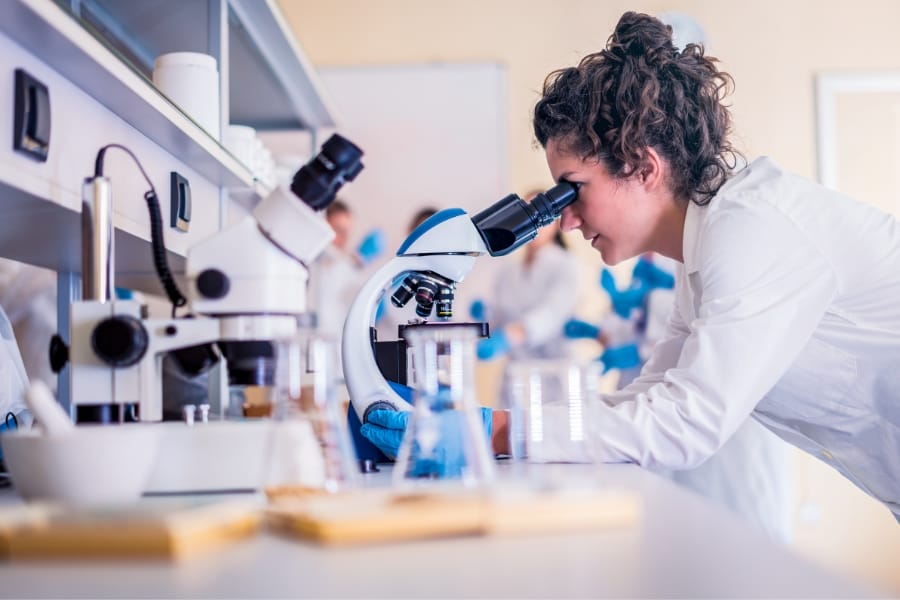
Sign up for compelling stories about innovative science, the doctors and researchers who turn ideas into discoveries and treatments, and the kids and families whose lives are changed.
BC Children's Hospital Research Institute operates on the ancestral and unceded territory of the Coast Salish peoples — xʷməθkʷəy̓əm (Musqueam), Sḵwx̱wú7mesh (Squamish), and Səl̓ílwətaʔ/Selilwitulh (Tsleil-Waututh) Nations. Further, this acknowledgement, gratitude, and respect extends to all of the First Nations communities on whose territories the Research Institute builds relationships and operates in British Columbia.
© 2026 BC Children’s Hospital Research Institute. All rights reserved.
Crafted with by Forge and Smith