
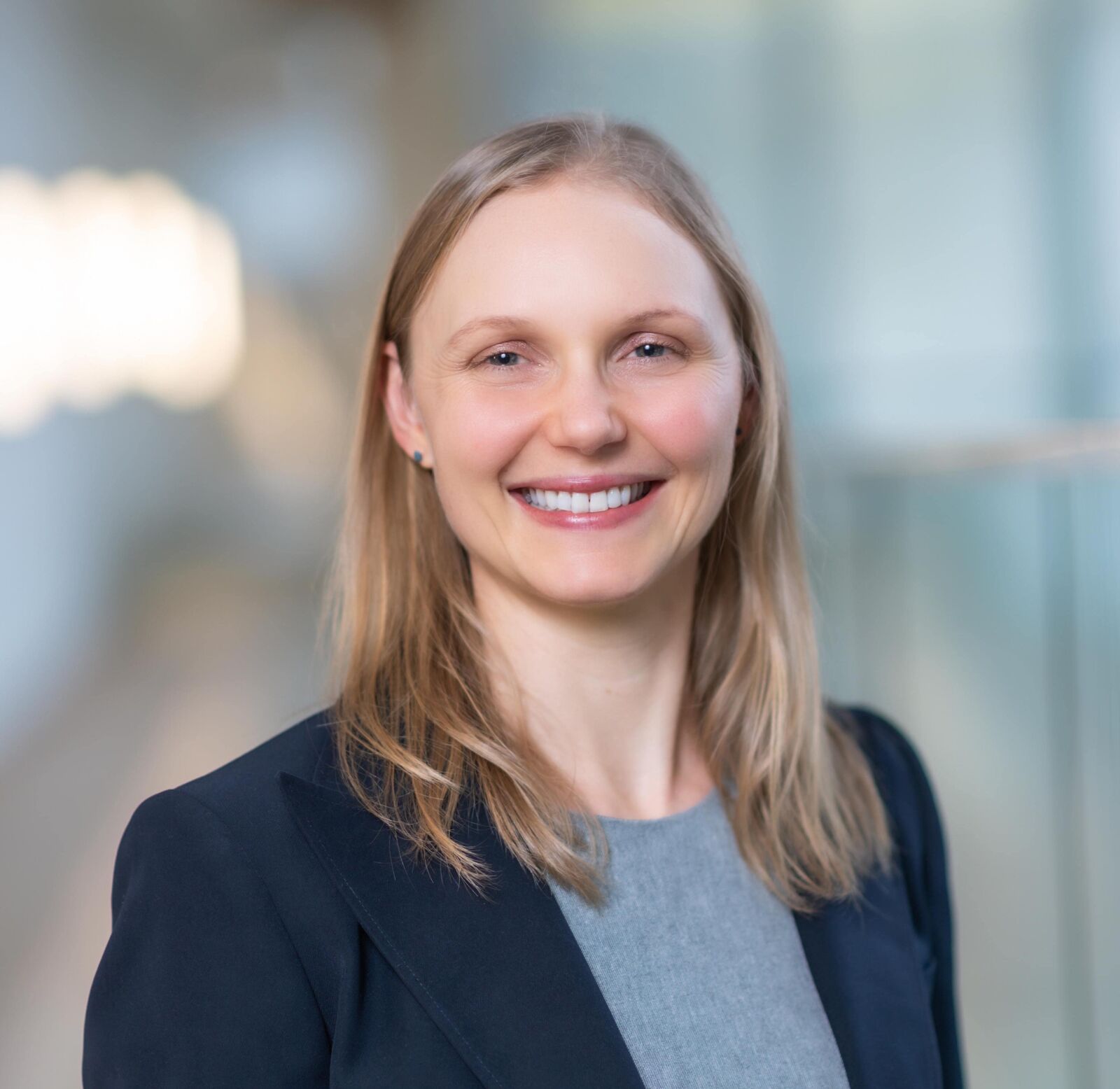
Annie Ciernia
PhD
Affiliate Investigator, BC Children's Hospital
Julian N. Rodefeld and Annie V. Ciernia
DOI: 10.64898/2026.03.16.71222603 / 2026
Communications Biology
Samantha D. Chaney and Allison J. Bauman and Evan-Angelo R. Butlig and Sima Al-Masri and Juliana Montoya Sanchez and Lauren H. McAdams and Peter H. Doan and Meredith S. Gwin and Troy Stevens and Annie V. Ciernia and Mike T. Lin and Amy R. Nelson
DOI: 10.1038/s42003-026-09703-x02 / 2026
Sarah Hewko and Kaarina Kowalec and Laura Anderson and Erin E. Mulvihill and Maria J. Aristizabal and Annie V. Ciernia and Santokh Dhillon and Antoine Dufour and Gareth E. Lim and Maxime Rousseaux and Ayesha Saleem and Lubna Daraz and Grace Lam
DOI: 10.1101/2024.11.13.62271811 / 2024
Biorxiv
Sullivan, O. and Sie, C. and Ng, K.M. and Cotton, S. and Rosete, C. and Hamden, J.E. and Singh, A.P. and Lee, K. and Choudhary, J. and Kim, J. and Yu, H. and Clayton, C.A. and Carranza Garcia, N.A. and Voznyuk, K. and Deng, B.D. and Plett, N. and Arora, S. and Ghezzi, H. and Huan, T. and Soma, K.K. and Yu, J.-P.J. and Tropini, C. and Ciernia, A.V.
DOI: 10.1101/2024.05.23.595618Epigenomics
Rosete, C. and Ciernia, A.V.
DOI: 10.1080/17501911.2024.2419357Cell Reports
Johal, A.S. and Al-Shekaili, H.H. and Abedrabbo, M. and Kehinde, A.Z. and Towriss, M. and Koe, J.C. and Hewton, K.G. and Thomson, S.B. and Ciernia, A.V. and Leavitt, B. and Parker, S.J.
DOI: 10.1016/j.celrep.2024.115069Biorxiv
Kim, J. and Sullivan, O. and Lee, K. and Jao, J. and Tamayo, J. and Madany, A.M. and Wong, B. and Ashwood, P. and Ciernia, A.V.
DOI: 10.1101/2024.04.08.588502Journal of Neuroinflammation
Osman, H.C. and Moreno, R. and Rose, D. and Rowland, M.E. and Ciernia, A.V. and Ashwood, P.
DOI: 10.1186/s12974-024-03106-7Journal of Visualized Experiments
Towriss, M. and Kim, J. and Ciernia, A.V.
DOI: 10.3791/65080Biorxiv
Kim, J. and Pavlidis, P. and Ciernia, A.V.
DOI: 10.1101/2023.11.03.565581International Journal of Molecular Sciences
Towriss, M. and MacVicar, B. and Ciernia, A.V.
DOI: 10.3390/ijms24108967Frontiers in Molecular Neuroscience
Rowland, M.E. and Jajarmi, J.M. and Osborne, T.S.M. and Ciernia, A.V.
DOI: 10.3389/fnmol.2022.805158Biorxiv
Meleady, L. and Towriss, M. and Kim, J. and Bacarac, V. and Rowland, M. and Ciernia, A.V.
DOI: 10.1101/2022.09.08.507183Translational Psychiatry
Hughes, H.K. and Rowland, M.E. and Onore, C.E. and Rogers, S. and Ciernia, A.V. and Ashwood, P.
DOI: 10.1038/s41398-021-01766-0Frontiers in Behavioral Neuroscience
Sullivan, O. and Ciernia, A.V.
DOI: 10.3389/fnbeh.2022.989011Justin Jao and Annie Vogel Ciernia
DOI: 10.1101/2021.06.10.44785406 / 2021
Journal of clinical & cellular immunology
PubMed: 3429557207 / 2020
Cerebral Cortex
A Vogel Ciernia and B I Laufer and H Hwang and K W Dunaway and C E Mordaunt and R L Coulson and D H Yasui and J M LaSalle
DOI: 10.1093/cercor/bhz11503 / 2020
Epilepsia
Hannah K. Kim and Tilo Gschwind and Theresa M. Nguyen and Anh D. Bui and Sylwia Felong and Kristen Ampig and David Suh and Annie V. Ciernia and Marcelo A. Wood and Ivan Soltesz
DOI: 10.1111/epi.1644503 / 2020
Annie Vogel Ciernia and Verena M. Link and Milo Careaga and Janine LaSalle and Paul Ashwood
DOI: 10.1101/2020.02.08.94029602 / 2020
Brain, Behavior, and Immunity
Ciernia, A.V. and Link, V.M. and Careaga, M. and LaSalle, J.M. and Ashwood, P.
DOI: 10.1016/j.bbi.2020.05.058Brain, Behavior, and Immunity
A. Vogel Ciernia and M. Careaga and J. LaSalle and P. Ashwood
DOI: 10.1016/j.bbi.2019.08.04210 / 2019
Human molecular genetics
DOI: 10.1093/hmg/ddy301 PubMed: 3013736712 / 2018
Benjamin I. Laufer and Hyeyeon Hwang and Annie Vogel Ciernia and Charles E. Mordaunt and Janine M. LaSalle
DOI: 10.1101/42848209 / 2018
Nature communications
DOI: 10.1038/s41467-018-05868-0 PubMed: 3012746108 / 2018
Glia
Annie Vogel Ciernia and Milo Careaga and Janine M. LaSalle and Paul Ashwood
DOI: 10.1002/glia.2326103 / 2018
Epigenetics
Annie Vogel Ciernia and Benjamin I . Laufer and Keith W. Dunaway and Charles E. Mordaunt and Rochelle L. Coulson and Theresa S. Totah and Danielle S. Stolzenberg and Jaime C. Frahm and Akanksha Singh-Taylor and Tallie Z. Baram and Janine M. LaSalle and Dag H. Yasui
DOI: 10.1080/15592294.2018.145172003 / 2018
Biorxiv
Kwapis, J.L. and Alaghband, Y. and Kram{\'a}r, E.A. and L{\'o}pez, A.J. and Ciernia, A.V. and White, A.O. and Shu, G. and Rhee, D. and Michael, C.M. and Montellier, E. and Liu, Y. and Magnan, C.N. and Sassone-Corsi, P. and Baldi, P. and Matheos, D.P. and Wood, M.A.
DOI: 10.1101/301135Biorxiv
Ciernia, A.V. and Yasui, D.H. and Pride, M.C. and Durbin-Johnson, B. and Noronha, A. and Chang, A. and Knotts, T. and Rutkowsky, J. and Ramsey, J.J. and Crawley, J.N. and LaSalle, J.M.
DOI: 10.1101/357707Epigenetics
DOI: 10.1080/15592294.2017.1376151 PubMed: 2892581011 / 2017
Rochelle L. Coulson and Dag H. Yasui and Keith Dunaway and Benjamin I. Laufer and Annie Vogel Ciernia and Charles E. Mordaunt and Theresa S. Totah and Janine M. LaSalle
DOI: 10.1101/18478809 / 2017
Human molecular genetics
DOI: 10.1093/hmg/ddx087 PubMed: 2833495305 / 2017
Learning & memory (Cold Spring Harbor, N.Y.)
DOI: 10.1101/lm.044602.116 PubMed: 2841663104 / 2017
Cell reports
DOI: 10.1016/j.celrep.2016.11.058 PubMed: 2797421512 / 2016
Nature reviews. Neuroscience
DOI: 10.1038/nrn.2016.41 PubMed: 2715039905 / 2016
Journal of clinical child and adolescent psychology : the official journal for the Society of Clinical Child and Adolescent Psychology, American Psychological Association, Division 53
DOI: 10.1080/15374416.2016.1138412 PubMed: 2702793503 / 2016
The Journal of Neuroscience
DOI: 10.1523/JNEUROSCI.3682-15.2016 PubMed: 2701368703 / 2016
Neuron
DOI: 10.1016/j.neuron.2014.10.032 PubMed: 2546798311 / 2014
Current protocols in neuroscience
DOI: 10.1002/0471142301.ns0831s69 PubMed: 2529769310 / 2014
Attention, Perception, and Psychophysics
Gayzur, N.D. and Langley, L.K. and Kelland, C. and Wyman, S.V. and Saville, A.L. and Ciernia, A.T. and Padmanabhan, G.
DOI: 10.3758/s13414-013-0554-6Neuropharmacology
DOI: 10.1016/j.neuropharm.2013.10.002 PubMed: 2414058010 / 2013
Proceedings of the National Academy of Sciences of the United States of America
DOI: 10.1073/pnas.1311323110 PubMed: 2387284707 / 2013
Nature neuroscience
DOI: 10.1038/nn.3359 PubMed: 2352504203 / 2013
Learning & memory (Cold Spring Harbor, N.Y.)
DOI: 10.1101/lm.026385.112 PubMed: 2316144711 / 2012
Reviews in the neurosciences
DOI: 10.1515/revneuro-2012-0050 PubMed: 2309610201 / 2012
Attention, Perception, and Psychophysics
Langley, L.K. and Friesen, C.K. and Saville, A.L. and Ciernia, A.T.
DOI: 10.3758/s13414-011-0108-8Gene expression patterns and cellular morphology changes in human post-mortem ASD brain indicate increased microglial activation. However, it is unclear how changes in microglial function contribute to ASD, and if the observed immune signatures are a cause or consequence of altered brain development. To parse the role of microglia in ASD we are examining both genetic and environmental mouse models to address: When do microglial abnormalities arise during brain development? and How do altered microglial-neuronal interactions impact cellular development?
We hypothesize that the microglial transcriptome is altered in ASD mouse models across development and at least a subset of microglial genes are commonly disrupted across models. To test this hypothesis, we are examining changes in microglial gene expression and morphology from genetic and environmental ASD risk mouse models at multiple developmental timepoints. The long-term goal of this work is to identify common pathways of dysfunction that are conserved across different mouse models and in human ASD that can serve as novel biomarkers or therapeutic targets.
The goal of this project is to characterize and causally test the interplay of multiple epigenomic regulatory mechanisms in coordinating microglial maturation during normal brain development. During maturation microglia must coordinate specific patterns of gene expression for migration, differentiation, and establishment of a homeostatic state in the brain. This precise regulation of gene expression requires interactions with the maturing nervous system and is orchestrated by epigenetic mechanisms that allow both dynamic control of gene expression and stable, long-term cellular differentiation. We are utilizing a variety of epigenomic sequencing techniques combined with advanced bioinformatic and statistical modelling to understand microglial gene regulation across development.
Mutations in 12 of the 29 subunit genes that compose the BAF (Brg1 Associated Factor) chromatin remodelling complex have been identified in ASD and Intellectual Disability, making it one of the most common genetically implicated protein complexes in neurodevelopmental disorders. However, it is unclear how mutations in this epigenetic regulator lead to childhood disorders. My lab is examining Baf53b, a subunit that confers neuronal specificity to the neuronal version of the BAF complex (nBAF). Baf53b is expressed exclusively in neurons and is only found within the nBAF complex, making it an ideal target for genetic manipulations to elucidate nBAF’s role in brain development. My lab will test the hypothesis that conditional deletion of Baf53b within specific neuronal populations during brain development in mice disrupts chromatin regulation. We will link the gene regulatory functions of nBAF to the development of relevant behaviours and deficits in neuronal connectivity and synapse maturation, allowing us to pinpoint the cell types, time points and gene targets regulated by nBAF. Our findings will provide mechanistic insight into a unique, neuronal epigenetic mechanism that is critical for normal brain development and highly relevant to therapeutic development for numerous childhood disorders including ASD, ID and epilepsy.
2019-2024: Canadian Institutes of Health Research. Tier 2 Canada Research Chair in Understanding Gene Expression in the Brain. Role: PI Salary Award
2019-2022: SickKids Foundation in partnership with the Canadian Institutes of Health Research. New Investigator Research Grant: The Role of Baf53b in Regulating Neuronal Gene Expression, Synaptic Function and Autism Behaviours Across Development. Role: PI
2019-2024: Canadian Foundation for Innovation. John R. Evans Leaders Fund. Role: PI
2019-2024: UBC Start-up Funding with the Department of Biochemistry and Molecular Biology and the Djavad Mowafaghian Centre for Brain Health. Role: PI
2019-2024: Natural Sciences and Engineering Council of Canada. Discovery Grant: Epigenomic Regulation In Microglia. Role: PI
2020-2021: DMCBH Kickstart Award. Pilot award for examining endotoxin tolerance using in vivo imaging. Role: PI
2019-2020: Natural Sciences and Engineering Council of Canada. Discovery Launch Supplement. Role: PI
2018-2019: Brain and Behavior Research Foundation. NARSAD Young Investigator Award: The Role of MeCP2 Isoform 1 in Rett Syndrome Disease Progression. Role: PI
2018-2019: National Institutes of Mental Health. Research Scientist Development Award: Mapping Multi-Omics Networks in Microglia Across Autism Models. Role: PI
2019: Cold Spring Harbor Laboratory Leadership in Biosciences course fellowship
2018: University of California Davis Postdoctoral Excellence in Research Award
2018: Postdoctoral Research Conference Oral Presentation Second Place Award
2017: Allen Brain Institute Summer Workshop on the Dynamic Brain Faculty Choice Award
2017: Allen Brain Institute Summer Workshop on the Dynamic Brain Fellowship
2017: UC Davis Postdoctoral Scholars Association Travel Award
2017: UC Davis Psychology Conference Oral Presentation Winner
2017: Postdoctoral Research Conference Oral Presentation Winner
2016: Helmsley Scholarship to attend Cold Spring Harbor Laboratory Statistical Methods for Functional Genomics workshop
2014: Autism Research Training Fellowship Program, University of California, Davis MIND Institute
2013: UCI Center for Cognitive Neuroscience and Engineering Graduate Merit Fellowship
2013: James L. McGaugh Award for Excellence in Graduate Research in Neurobiology and Behavior
2013: American College of Neuropsychopharmacology (ACNP) Travel Award
2013: Renee Harwick Advanced CNLM Graduate Student Award
2013: Top Graduate Oral Presentation at the 24th Science Conference of the Graduate Women in Science
2013: ReMIND Outstanding Presentation at the Emerging Scientist Symposium
2012: Second Prize Data Blitz at the CNLM Conference on the Neurobiology of Learning and Memory
2012: Achievement Rewards for College Scientists (ARCS) Fellowship ($20,000 award)
2012: Graduate Student Chapter Travel Award, Society for Neuroscience
2012-2013: Aging Training Grant (T32-AG00096-29)
2012: Roger Russell’s Scholar Award in The Neurobiology of Learning and Memory
2011: Graduate Fellow Award, HHMI-UCI Teaching Fellows Program
2011: Edward Steinhaus Teaching Award
2009-2010: Cellular and Molecular Neuroscience Training Grant (T32-NS007444)
Every day, our researchers work towards breakthroughs to transform the lives of kids in BC and around the world. Learn about our latest innovations and advancements in child health.

Dr. Annie Ciernia’s father worked as a lab technician in plant sciences during her childhood in rural Minnesota.
At BC Children’s, we are making discoveries that save lives and transform health care for children in our province and around the world. Our research portfolio includes basic, clinical, population, and public health research.
EXPLORE OUR RESEARCH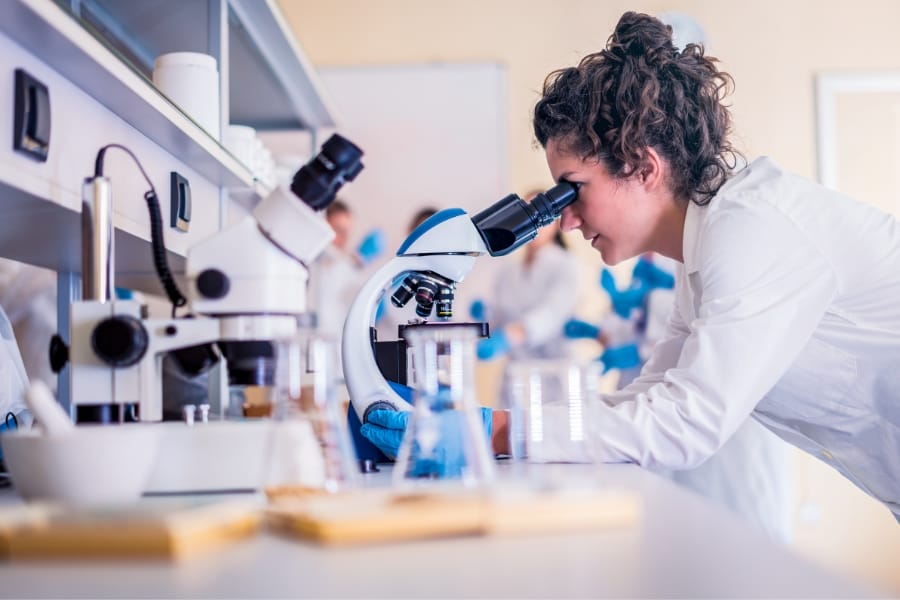
Sign up for compelling stories about innovative science, the doctors and researchers who turn ideas into discoveries and treatments, and the kids and families whose lives are changed.
BC Children's Hospital Research Institute operates on the ancestral and unceded territory of the Coast Salish peoples — xʷməθkʷəy̓əm (Musqueam), Sḵwx̱wú7mesh (Squamish), and Səl̓ílwətaʔ/Selilwitulh (Tsleil-Waututh) Nations. Further, this acknowledgement, gratitude, and respect extends to all of the First Nations communities on whose territories the Research Institute builds relationships and operates in British Columbia.
© 2026 BC Children’s Hospital Research Institute. All rights reserved.
Crafted with by Forge and Smith