
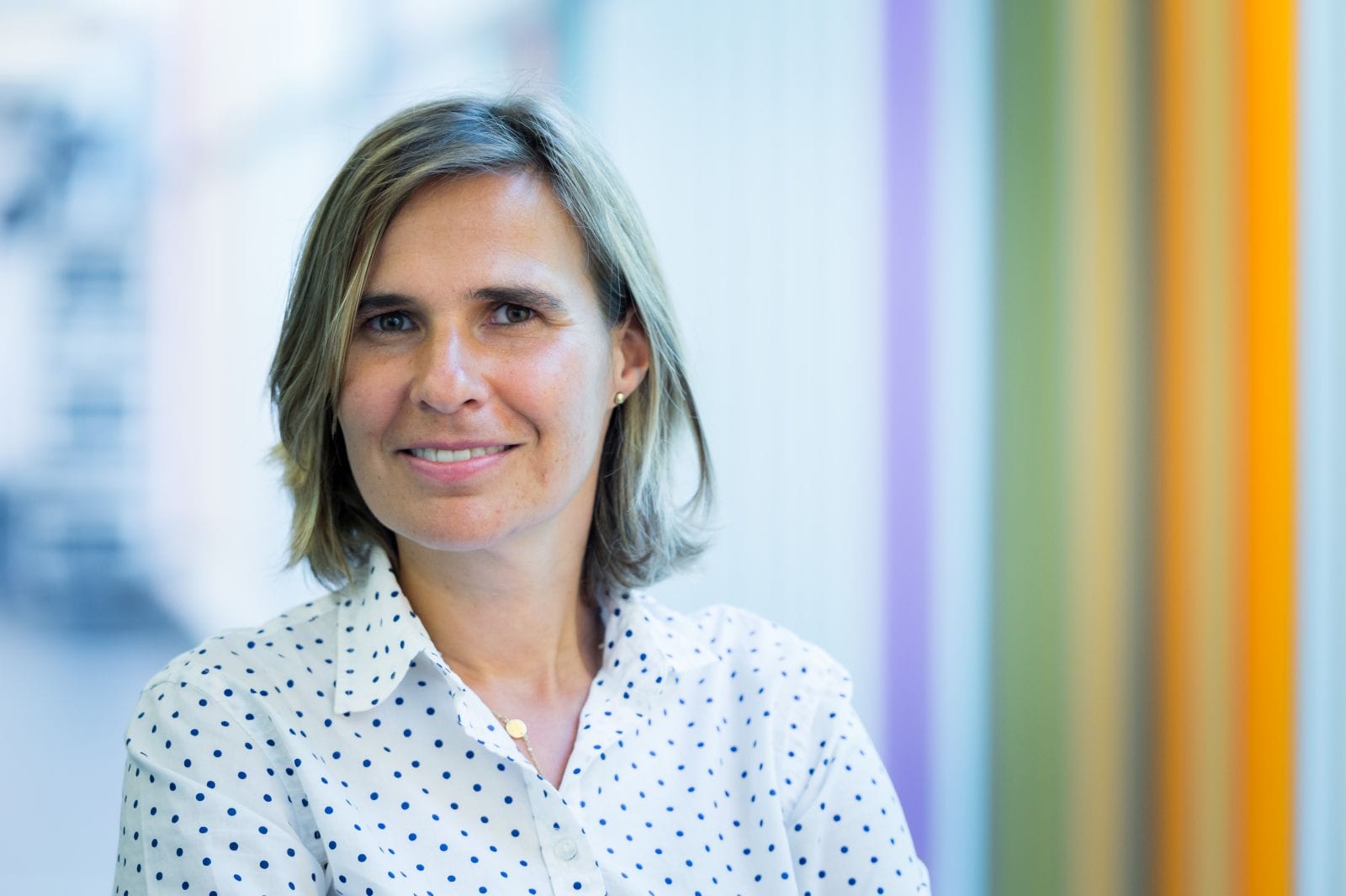
Suzanne Vercauteren
PhD, MD, FRCPC
Investigator, BC Children's Hospital
Karakochuk CD and Barker MK and Whitfield KC and Barr SI and Vercauteren SM and Devlin AM and Hutcheon JA and Houghton LA and Prak S and Hou K and Chai TL and Stormer A and Ly S and Devenish R and Oberkanins C and Phringer H and Harding KB and De-Regil LM and Kraemer K and Green TJ
DOI: 10.3945/ajcn.116.140996 PubMed: 2849051505 / 2017
Tarling TE and Lasser F and Carter C and Matzke LA and Dhugga G and Arora N and Dee S and LeBlanc J and Babinsky S and O'Donoghue S and Cheah S and Watson P and Vercauteren SM
DOI: 10.1089/bio.2016.0077 PubMed: 2815100602 / 2017
Brown T and Kelly DD and Vercauteren SM and Wilson WH and Werner A
DOI: 10.1089/bio.2016.0086 PubMed: 2786947502 / 2017
Karakochuk CD and Whitfield KC and Rappaport AI and Barr SI and Vercauteren SM and McLean J and Hou K and Talukder A and Houghton LA and Bailey KB and Boy E and Green TJ
DOI: 10.1515/cclm-2016-0421 PubMed: 2733774201 / 2017
McGinnis E and Vercauteren SM
DOI: 10.1182/blood-2016-08-729459 PubMed: 2793233012 / 2016
Setiadi A and Owen D and Tsang A and Milner R and Vercauteren S
DOI: 10.1111/ijlh.12535 PubMed: 2733973710 / 2016
Kong CC and Tarling TE and Strahlendorf C and Dittrick M and Vercauteren SM
DOI: 10.1016/j.jadohealth.2015.12.015 PubMed: 2701327304 / 2016
Karakochuk CD and Whitfield KC and Rappaport AI and Barr SI and Vercauteren SM and McLean J and Prak S and Hou K and Talukder A and Devenish R and Green TJ
DOI: 10.3945/jn.115.218636 PubMed: 2649112512 / 2015
Karakochuk CD and Murphy HM and Whitfield KC and Barr SI and Vercauteren SM and Talukder A and Porter K and Kroeun H and Eath M and McLean J and Green TJ
DOI: 10.2166/wh.2014.297 PubMed: 2604298806 / 2015
Karakochuk CD and Janmohamed A and Whitfield KC and Barr SI and Vercauteren SM and Kroeun H and Talukder A and McLean J and Green TJ
DOI: 10.1016/j.cca.2014.12.021 PubMed: 2554298302 / 2015
Karakochuk CD and Whitfield KC and Barr SI and Lamers Y and Devlin AM and Vercauteren SM and Kroeun H and Talukder A and McLean J and Green TJ
DOI: 10.3945/jn.114.198945 PubMed: 2552766801 / 2015
Barnes RO and Schacter B and Kodeeswaran S and CTRNet Management Committee and Watson PH
DOI: 10.1089/bio.2014.0052 PubMed: 2531432410 / 2014
Li SJ and Vercauteren SM
DOI: 10.1182/blood-2014-04-571745 PubMed: 2525939308 / 2014
Ogbogu U and Burningham S and Ollenberger A and Calder K and Du L and El Emam K and Hyde-Lay R and Isasi R and Joly Y and Kerr I and Malin B and McDonald M and Penney S and Piat G and Roy DC and Sugarman J and Vercauteren S and Verhenneman G and West L and Caulfield T
DOI: 10.1186/1472-6939-15-7 PubMed: 2448522002 / 2014
Cheah S and O'Donoghue S and Daudt H and Dee S and LeBlanc J and Braun L and Barnes R and Vercauteren S and Boone RH and Watson PH
DOI: 10.1089/bio.2013.0023 PubMed: 2484559208 / 2013
Dmitrienko S and Vercauteren S
DOI: 10.1182/blood-2011-08-369835 PubMed: 2272414005 / 2012
Vercauteren SM and Starczynowski DT and Sung S and McNeil K and Salski C and Jensen CL and Bruyere H and Lam WL and Karsan A
DOI: 10.1111/j.1365-2141.2011.08872.x PubMed: 2528941202 / 2012
Vawda A and Davis J and Vercauteren S
DOI: 10.1182/blood-2010-11-318048 PubMed: 2207341410 / 2011
Starczynowski DT and Vercauteren S and Sung S and Brooks-Wilson A and Lam WL and Karsan A
DOI: 10.1016/j.leukres.2010.08.003 PubMed: 2080150604 / 2011
Vercauteren SM and Sung S and Starczynowski DT and Lam WL and Bruyere H and Horsman DE and Tsang P and Leitch H and Karsan A
DOI: 10.1309/ajcph27zizejlorf PubMed: 2055127607 / 2010
Vercauteren SM and Bashashati A and Wu D and Brinkman RR and Eaves C and Eaves A and Karsan A
DOI: 10.1016/j.leukres.2009.03.019 PubMed: 1941419312 / 2009
Starczynowski DT and Vercauteren S and Telenius A and Sung S and Tohyama K and Brooks-Wilson A and Spinelli JJ and Eaves CJ and Eaves AC and Horsman DE and Lam WL and Karsan A
DOI: 10.1182/blood-2007-11-122028 PubMed: 1866314910 / 2008
Ezzat H and Filipenko D and Vickars L and Galbraith P and Li C and Murphy K and Montaner JS and Harris M and Hogg RS and Vercauteren S and Leger CS and Zypchen L and Leitch HA
DOI: 10.1310/hct0803-132 PubMed: 17621460Vercauteren S and Zapf R and Sutherland H
DOI: 10.1080/14653240601164042 PubMed: 17453971Vercauteren SM and Sutherland HJ
DOI: 10.1182/blood-2004-01-0204 PubMed: 1523157610 / 2004
Rth A and Vercauteren S and Sutherland HJ and Lansdorp PM
DOI: 10.1038/sj.leu.2403177 PubMed: 1456211412 / 2003
Sutherland H and Blair A and Vercauteren S and Zapf R
DOI: 10.1046/j.1365-2141.2001.02927.x PubMed: 1152984708 / 2001
Vercauteren SM and Sutherland HJ
DOI: 10.1080/146532401317248054 PubMed: 11953029van Dijk AM and Otten HG and Vercauteren SM and Kessler FL and de Boer M and Verdonck LF and de Gast GC
DOI: 10.1002/eji.1830260946 PubMed: 881427809 / 1996
Every day, our researchers work towards breakthroughs to transform the lives of kids in BC and around the world. Learn about our latest innovations and advancements in child health.

BC Children’s Hospital Research Institute is pleased to congratulate the recipients of the 2023 Outstanding Achievement Awards and the Clinical & Translational Research Seed Grant. These programs, generously funded by the BC Children’s Hospital Foundation, play a pivotal role in acknowledging and nurturing excellence within our research community.

Welcome to this month’s Research Roundup, a recurring overview of recent studies published by researchers at BC Children’s Hospital Research Institute (BCCHR) and the University of British Columbia, and their collaborators.

Congratulations to Dr. Megan Levings, recipient of a CIHR Team Grant: Preparation to Trial: Inflammation for Chronic Conditions for the project, "Allogeneic thymus-derived Tregs to prevent chronic inflammation in transplantation."
At BC Children’s, we are making discoveries that save lives and transform health care for children in our province and around the world. Our research portfolio includes basic, clinical, population, and public health research.
EXPLORE OUR RESEARCH
Sign up for compelling stories about innovative science, the doctors and researchers who turn ideas into discoveries and treatments, and the kids and families whose lives are changed.
BC Children's Hospital Research Institute operates on the ancestral and unceded territory of the Coast Salish peoples — xʷməθkʷəy̓əm (Musqueam), Sḵwx̱wú7mesh (Squamish), and Səl̓ílwətaʔ/Selilwitulh (Tsleil-Waututh) Nations. Further, this acknowledgement, gratitude, and respect extends to all of the First Nations communities on whose territories the Research Institute builds relationships and operates in British Columbia.
© 2026 BC Children’s Hospital Research Institute. All rights reserved.
Crafted with by Forge and Smith