Investigators at the BC Children’s Hospital Research Institute (BCCHR) have made a finding in a new study that could eventually lead to therapeutic interventions for sepsis, lung disease, and other complications in premature newborns.
Our immune system is essential for helping us stave off microbes, viruses, and a host of other disease-causing microorganisms. The transition between being safely protected in the womb and being exposed to the outside world is huge for the immune system. Prior to birth, a developing fetus’s immune system seems to be in a “dormant state” so that it won’t react unnecessarily to molecules from the parent. Then, following birth, it ramps up to protect the baby from pathogens in the outside environment.
“Previously, we knew little about what keeps the immune system on this pilot light setting,” says Dr. Pascal Lavoie, BCCHR investigator, UBC Department of Pediatrics professor, and neonatologist at BC Children’s Hospital and BC Women’s Hospital + Health Centre. “Understanding the molecular basis for how the immune system recognizes friend from foe during this crucial period could help clinicians better treat the most vulnerable babies.”
Dr. Lavoie had previously found increased levels of a gene called DDIT4L when immune cells are activated during early gestation. Based on this observation he concluded that this gene may play a role in regulating a fetus’s immune response. This newest study sought to understand the nature of DDIT4L’s role during this crucial time.
We know that immune cells in fetuses are less responsive before 32 weeks of gestation, and that puts babies born very prematurely before that stage at much greater risk of infection. But if there is a purpose to this reduced immune response, then interventions that “turn on” immune response could risk causing other problems.
– Dr. Pascal Lavoie
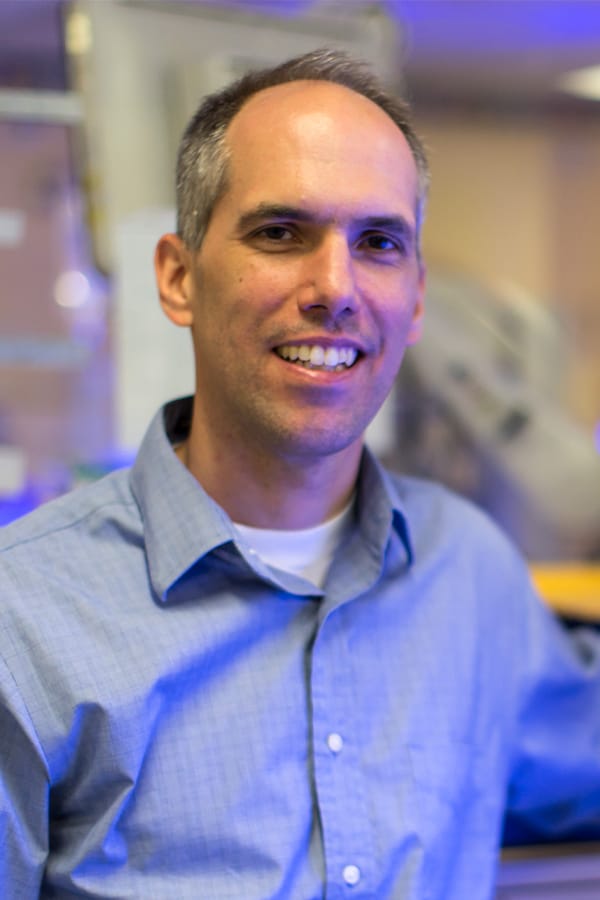

In the early stages of this study, Dr. Lavoie’s team worked with cell models but needed to be sure that the results from those experiments were reflective of what’s actually happening in infants. He suspected that the gene DDIT4L may regulate how cells utilize energy. To understand the role of this gene in early life, Dr. Lavoie saw a need to study cellular metabolism in more detail, so he approached Dr. Ramon Klein Geltink, BC Children’s Hospital investigator and assistant professor in UBC’s Faculty of Medicine. Dr. Klein Geltink is an expert in immunometabolism — a field that examines the relationship between immune cells and the nutrients that fuel them. This collaboration allowed them to combine patient studies and lab-based research to find the first evidence of DDIT4L’s direct role in fetal and neonatal development.
Cellular immune response requires energy which is in shorter supply due to reduced oxygen in the womb. Dr. Lavoie and Dr. Klein Geltink’s teams found that DDIT4L activity increases when immune cells are stimulated in utero, reduces the size of the mitochondria (the powerhouses of the cell) and blunts the immune cells’ ability to respond to bacterial threats. These changes to mitochondrial activity reduce the energy available to immune cells and therefore dampen the effectiveness of any subsequent immune response. Based on these findings, Dr. Lavoie and Dr. Klein Geltink conclude that DDIT4L prevents potentially harmful prenatal immune response and prepares newborns for the transition to the high-oxygen environment after birth. But when babies are born too early, these mechanisms for waking up the immune system may not be ready. Understanding the biology involved in this process can help clinicians to prevent pathological inflammation during the fetal and early neonatal transition period.
“These findings point to promising therapeutic interventions, including developing drugs that target DDIT4L activity to prevent infection and lung disease in the most vulnerable babies,” says Dr. Klein Geltink.
Dr. Klein Geltink and Dr. Lavoie noted that BCCHR is uniquely positioned to enable collaborative discoveries like this. Not only were they able to use BCCHR’s state-of-the-art core platforms like the BioBank, Flow Cytometry, Imaging and Histology facilities, and the Analytical Core for Metabolomics and Nutrition, their findings would not have been possible without approaching this problem from both Dr. Lavoie’s clinical perspective and Dr. Klein Geltink’s fundamental science perspective.
It was also really powerful for my team to work with this intricate molecular mechanism that is driving a difference in an energy-generating pathway that can be directly applied to a clinical problem for babies right across the road at the hospital.
– Dr. Ramon Klein Geltink

Sepsis is a leading cause of death for infants younger than three months: in 2022, the North American fatality rate was about 20 per cent. According to Dr. Lavoie, the risk of infection for preterm babies is 1,000 times greater than for adults and 500 times greater than for full-term babies. One in 10 premature babies born at 28 weeks die from sepsis and those who survive face long-term health consequences. Sepsis occurs when a person contracts an infection and their immune system has an overactive and toxic response. Because the immune system of a premature infant is still dormant at birth, these babies are at increased risk of an uncontrolled infection which, in turn, can cause a dangerous sepsis response.
Next steps for this research include a deeper investigation into how DDIT4L operates and working on ways in the lab to restore immune activity in preterm infant cells in a safe way. Dr. Lavoie will also be drawing on the findings of this study to inform pediatricians of the extent of the difference between the immune pathways of full-term and premature babies and how they are at a greatly increased risk of sepsis: “You can’t treat a full-term baby in the same way as a premature one.”
Read more in: “DDIT4L regulates mitochondrial and innate immune activities in early life”
This study was funded by the Canadian Institutes of Health Research, the Canadian Cancer Society, the Natural Sciences and Engineering Research Council of Canada, and by salary grants from Michael Smith Health Research and the BC Children’s Hospital Foundation.
Top photo by Brian Erickson on Unsplash.