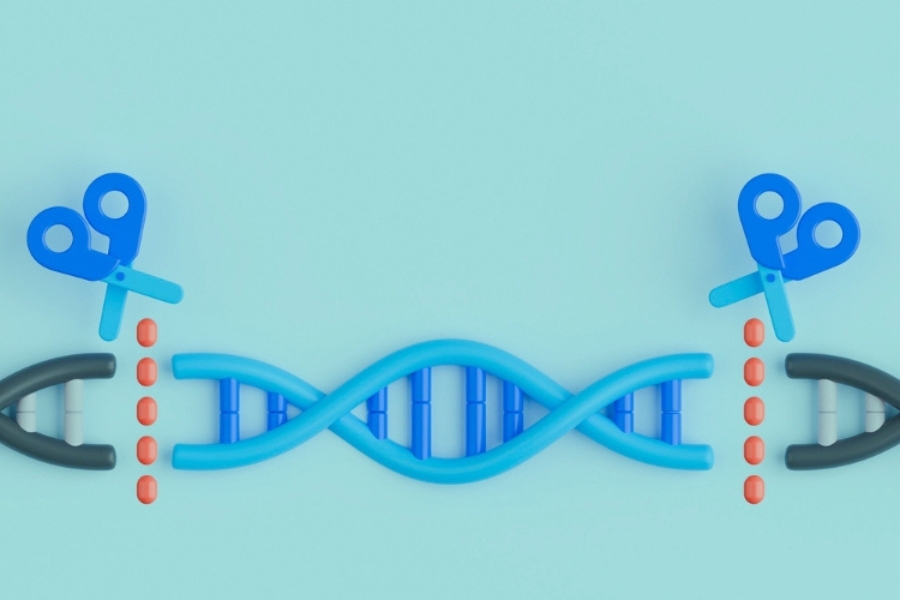

Cheek swabs — they’re painless, simple, and commonly used in pediatric research. But how reliable are they across different developmental periods? And what can they really tell us about children’s health?
We spoke with Dr. Sarah Merrill, a former postdoctoral fellow in the Kobor lab at BC Children’s Hospital Research Institute (BCCHR) now leading the Epigenetics and Psychosocial Interventions Lab at the University of Massachusetts Lowell, and Dr. Chaini Konwar, a bioinformatician in the Kobor lab at BCCHR. They co-led a study that explores how the cells collected from cheek swabs — specifically, buccal epithelial cells — change as children grow, and why that matters for understanding pediatric health.
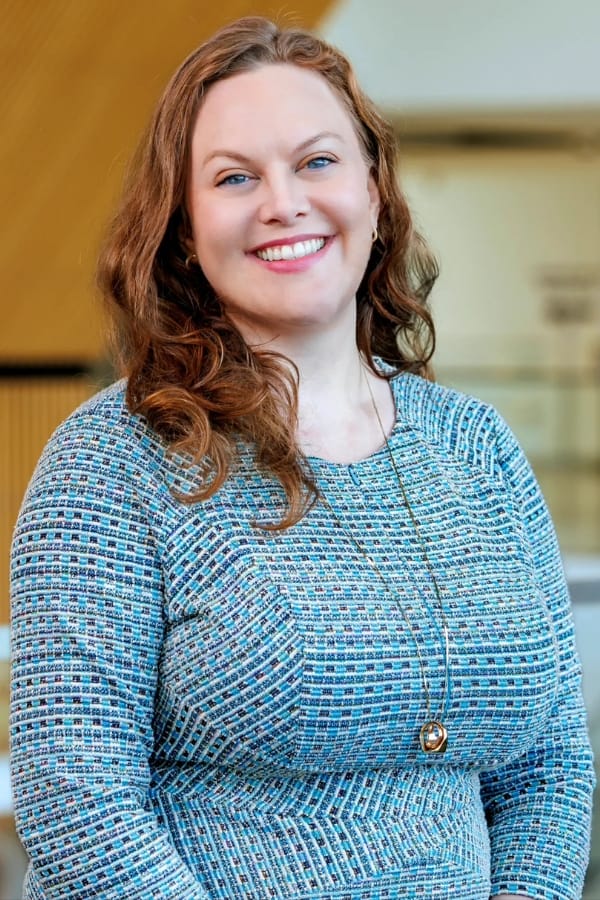
Dr. Sarah Merrill co-led a recent study examining how the proportions of cells in cheek swabs change as children grow — a key step in improving how scientists interpret pediatric epigenetic data.
In this Q&A, adapted from the Best Lives podcast episode called, “Cheek swabs, epigenetic clocks, and kids,” Dr. Merrill and Dr. Konwar discuss their findings. Their research was published in Nature Communications in January 2025, and can help scientists design better tools to study development, health risks, and even the impact of early-life adversity.
Why are cheek swabs such a valuable tool in pediatric research?
SM: Cheek swabs are easy and stress-free — no needles are involved. That makes them ideal for kids, even babies. Cheek swabs also avoid some of the potential cultural or religious sensitivities around blood or saliva samples.
But what makes them really exciting is what they can tell us about children’s health at the molecular level. From a small cheek swab, we can extract DNA and measure epigenetic changes — chemical markers on the DNA that don’t change the genes themselves but affect how the genes behave. These epigenetic markers can reveal past exposures to things like stress, trauma, pollution, or poor nutrition, and they may even help predict risks for diseases like cancer or heart disease.
Why do epigenetic markers matter in child health research?
SM: Epigenetic markers help control how cells function and how the body develops. In children, epigenetics helps explain how early-life experiences can leave biological marks that influence health, sometimes long before symptoms appear.
One common type of epigenetic change that we study is DNA methylation, which adds small chemical tags onto DNA. These tags help control whether genes are “active” or “silent” — shaping everything from immune function to brain development.
Your study looked at nearly 5,000 cheek swab samples from children aged two months to 21 years. What did you discover?
CK: We found that the proportion of buccal epithelial cells — the skin-like cells inside the cheek — steadily drops from infancy through childhood, but that trend levels off in adolescence. At first, we expected a straight-line decline with age, but a closer look revealed a turning point around age 10. That surprised us!

“Our epigenetic age can reflect life experiences, like stress or trauma, and may differ from our actual age. Your particular set of experiences and adversities can make your cells older than what would be expected at your age.” — Dr. Chaini Konwar
Why is the developmental period around age 10 so important?
SM: It highlights the fact that children are developing, not simply aging. For younger kids, buccal cell proportions are tightly linked to age, but that link disappears as children enter adolescence and it becomes much more variable. This has big implications for interpreting epigenetic data, especially when cheek swabs have been used to collect samples.
CK: From a research perspective, if you’re looking at associations between cell-type proportions and age, it’s very important to consider the developmental period when you’re building your study and deciding how you’ll analyze your data.
You work with “epigenetic clocks.” What are those, and how do they apply to children’s health?
SM: Epigenetic clocks estimate biological age, or how “old” your cells behave based on the epigenetic markers on your DNA. In adults, being biologically older than your actual age can signal increased health risks. But in kids, it’s more complicated. Children are still developing, so being “older” or “younger” than your chronological age might indicate that something’s off. Our work helps fine-tune these clocks so they’re more accurate and meaningful in pediatric populations.
CK: You can think of epigenetic clocks as measuring the wear and tear on a favourite pair of shoes. The more you walk, the more signs of use. What’s important is the number of steps that you’ve taken and the types of terrain you’ve walked on, not the calendar date of when you bought them. In a similar way, our epigenetic age can reflect life experiences, like stress or trauma, and may differ from our actual age. Your particular set of experiences and adversities can make your cells older than what would be expected at your age.
How does this connect to real-world health or medical care?
SM: Our epigenetics research is helping us understand how early-life adversity can age kids biologically. In some of our recent work, we found that interventions like child-parent psychotherapy helped buffer the effect of trauma. Kids who received the therapy didn’t show the same biological age acceleration as those who didn’t. That’s powerful! It really shows that early intervention might not just help at the emotional level, but the biological level, too.
Should other researchers and clinicians think differently about cheek swabs now?
CK: Yes. We found that oral hygiene, dental visits, and orthodontic appliances like braces can all affect the mix of different cell types in a cheek swab. These are factors we need to consider and account for in our models. If we don’t, we might mistake those differences for something else — like an effect of stress or disease — when really, it’s about oral health and access to dental care.
SM: And that’s especially important when studying links between health and socioeconomic status. Access to dental care, for instance, can be income-related, and we don’t want that to skew our findings.
How does your research help children live their best lives?
SM: We’re helping build tools that will one day guide more personalized, accurate, and fair approaches to pediatric health. These are the building blocks for future medicine.
CK: We’re just at the beginning. There’s so much potential to apply these insights across a range of childhood conditions. The more we understand, the more we can support healthier outcomes.