
BCCHR’s People in Focus Series
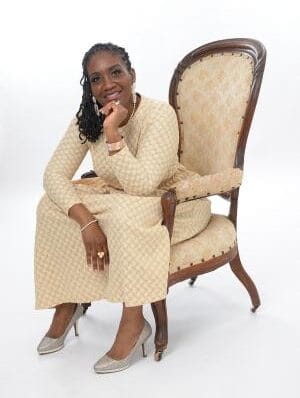
Dr. Paula Littlejohn received her PhD in microbiology and immunology from the University of British Columbia (UBC) under the supervision of Dr. Brett Finlay. She is currently a postdoctoral research fellow co-supervised by Dr. Michael Kobor and Dr. Bruce Vallance at BC Children’s Hospital Research Institute (BCCHR).
When asked what she does for a living, Dr. Littlejohn tells people that she works in translational research. “This basically means using the findings from lab-based research to develop actual therapies or changes to health-care practices,” she explains.
She is currently using human tissues in the lab as a way to better understand the molecular mechanisms of inflammatory bowel disease (IBD), with the goal of developing new treatments.
Dr. Littlejohn is especially interested in helping kids with IBD. “I met a little girl this summer and learned that she was just diagnosed with Crohn’s disease. She’s only six! I started thinking about all the things she’ll have to contend with for the rest of her life.”
Children with IBD face decreased quality of life, absenteeism and missed social activities, along with sometimes intense physical and emotional pain.
My research is powered by the thought of all the patients who may someday benefit from it.
– Dr. Paula Littlejohn

Unlikely inspiration to pursue medical science
Dr. Littlejohn was born and raised in Kingston, Jamaica, and it was here where her interest in medicine first began.
“I was sick one time when my uncle was visiting from Canada. He gave me a box of over-the-counter painkillers,” she recalls. “I held onto that little container for years, long after it was empty and I was fully recovered. I was so awed by the fact that some tiny pills could make me feel better. That’s when I fell in love with health, and when my mind awakened to the possibilities of medicine.”
Throughout elementary and high school, Dr. Littlejohn focused on the sciences and social science, which made her a well-rounded student. By the time she was in the second year of her undergraduate degree, she was already working in animal research.
“We were working with bull testicles. It was gross,” she recalls, wrinkling her nose at the memory. “But it was my first foray into research and I was hooked by the end of that semester.”
The following summer, Dr. Littlejohn applied for a research internship at the Johns Hopkins School of Medicine’s otolaryngology lab where she worked with a research team aimed at treating deafness.
“I remember sitting on the floor of the Johns Hopkins library during those hot summer months, before the internet was the main place to go for information, and just immersing myself in health science publications. I remember thinking to myself, ‘I really love this. Like I really love this.’”
After completing her undergrad at Pennsylvania State University and a short stint in Florida, Dr. Littlejohn returned to the Johns Hopkins School of Medicine in Baltimore, Maryland. In January 2000, she worked with a research team there to determine whether metformin or lifestyle changes were more effective at delaying the onset of type two diabetes (T2D).
“To many people’s surprise, the lifestyle cohort proved most effective at preventing T2D. Our findings were covered in Time Magazine and ultimately changed the scope of practice for T2D,” she says.
Fast forward a few years, and Dr. Littlejohn found herself working in the pharmaceutical industry, where she stayed for a decade.
“I knew by six years into that work, however, that it wasn’t going to sustain me. It wasn’t going to fuel my passion or curiosity. I knew I needed something more. Also, I didn’t care about the six-figure income, the company car, or any of that. I’ve never been driven by those things.”
So, in 2017 — excited by new-to-her topics related to the gut microbiome and nutrition’s influence on gene expression — she decided to pursue a PhD.
When I learned we have microbes in our bodies that play a role in our metabolism, immune system function, and overall health, I knew I needed to know more. I knew I had to go further with research and that these topics would become my research focus.
– Dr. Paula Littlejohn
Seeking support and breaking barriers as a Black female academic
Dr. Littlejohn says she’s fortunate to have had several mentors along the way throughout her journey in science. Her mentors saw her passion, and gave her the information and support she needed to pursue the research of her dreams.
“As a Black female in academia, I felt it was important to also have a Black female mentor in academia with more experience than myself — someone I could talk with about specific experiences and shared struggles,” Dr. Littlejohn says.
But before that, Dr. Littlejohn recalls feeling extremely lonely at times. One day during her graduate training, she arrived early to TA a class. And, to fill the time, she decided to walk down a hallway showcasing portraits of the graduating classes from several decades past.
I was a busy teaching assistant, stopping for a few moments to look at the photos lining the walls, and it just hit me: I don’t see anyone who looks like me in these graduating classes. This is not good.
– Dr. Paula Littlejohn
Dr. Littlejohn, being the type of person to look for or develop a solution, jumped into gear to address the problem. As one of the original members of the UBC Black Caucus as it was just forming, she reached out to a couple members to brainstorm first steps.
“We wanted to have a fireside chat and invite a speaker, but we had no funds. So I reached out to a couple of friends and colleagues and, before we knew it, we had raised $25,000! We went from having just one speaker to a seven-part speaker series. We called it Where Are All the Black People?”
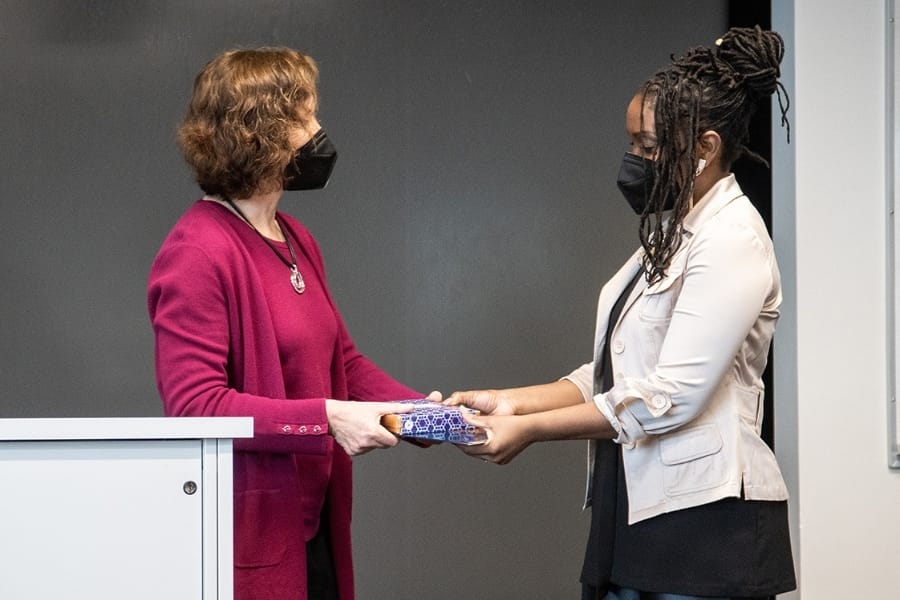
The speaker series brought together Black academics, deans, and faculty members from across Canada and the United States, to provide actionable strategies to increase Black representation in academia. Dr. Littlejohn received a Faculty of Science Excellence in Service Award for her exemplary leadership and dedication in developing the Where Are All the Black People? speaker series.
Around the same time, Dr. Littlejohn learned about the Canadian Black Scientists Network and the Black Microbiologists Association from her growing list of colleagues. “These are affinity groups where I don’t feel like I’m the only Black person in the room anymore,” she says.
When she’s not researching
Although she’s tried to find a hobby for the past five or six years, Dr. Littlejohn says this attempt has proved to be unsuccessful.
“My ‘hobbies’ always seem to get attached to an objective, usually related to health in some way. For example, I’ll go for a walk and start thinking about how the action of walking is helping my microbes and cells. Or I imagine what it’s doing for me on the inside. I haven’t found one thing where this doesn’t happen! I’m open to suggestions,” she says with a laugh.
However, Dr. Littlejohn loves spending time with her five children and her husband. They enjoy listening to music, playing tennis, going for walks, and riding bikes together.
With the type of work I do, people are always pulling me in a million different directions. You have to just maintain that space of being able to put on some sweatpants, pile your kids around you, and watch movies, you know.
– Dr. Paula Littlejohn
As far as next steps once her postdoctoral position is complete, you’ll be able to find Dr. Littlejohn in a university near you, passionately teaching and mentoring the next generation of scientists and pediatric clinicians.
“I’ve been in research for more than 20 years now, and there’s nothing else I’d rather be doing. My goal is to get a faculty position, teach, have my own lab, and continue doing research until I can no longer think.”