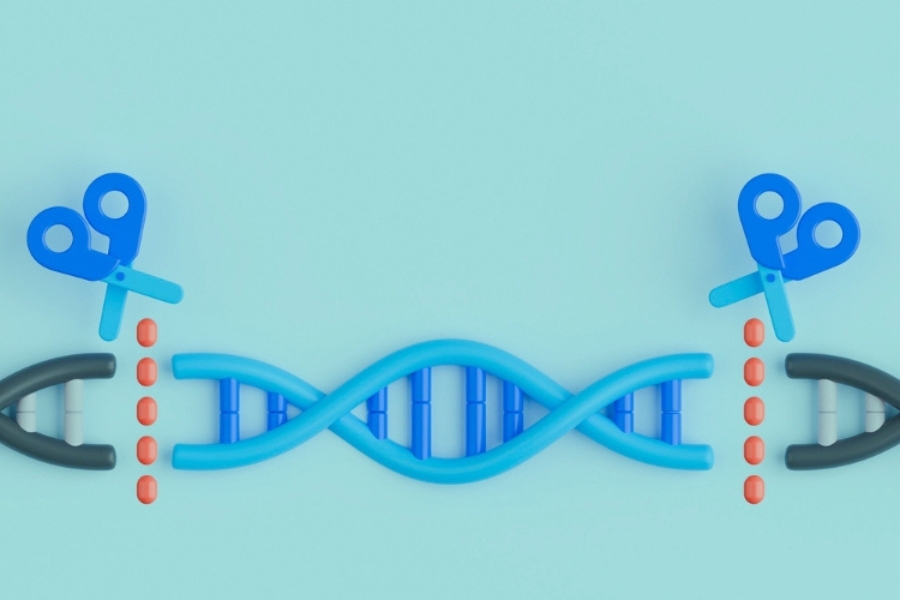
The world of genomic sequencing has changed dramatically in the last few decades. When the world attempted to sequence the very first human genome in the 1990s, the project took years and billions of dollars. Today, with the emergence of next-generation sequencing, a complete human genome can now be sequenced within a few days for less than $1,000.
One of the advantages of this leap in sequencing power is its ability to massively increase the capacity to determine the genetic basis of disease — even years after an initial diagnosis. Dr. William Gibson is an investigator at BC Children’s Hospital Research Institute (BCCHR) whose research and clinical work uses this technology to identify the cause of rare genetic diseases in families.
For about half of my patients, typical genetic sequencing can find a molecular diagnosis.
– Dr. William Gibson


“For about half of my patients, typical genetic sequencing can find a molecular diagnosis,” says Dr. Gibson. “This involves genomewide sequencing and then checking for rare variations in the select few genes that already match up with the patient’s features. However, for those patients whose symptoms are not explained in this way, the rest of the sequence needs to be reviewed by special request.”
His team recently published a paper that made the cover of the April issue of American Journal of Medical Genetics. In this case report, the researchers managed to solve the mystery behind a family of three siblings whose genetic cause could not be determined at the initial diagnosis.
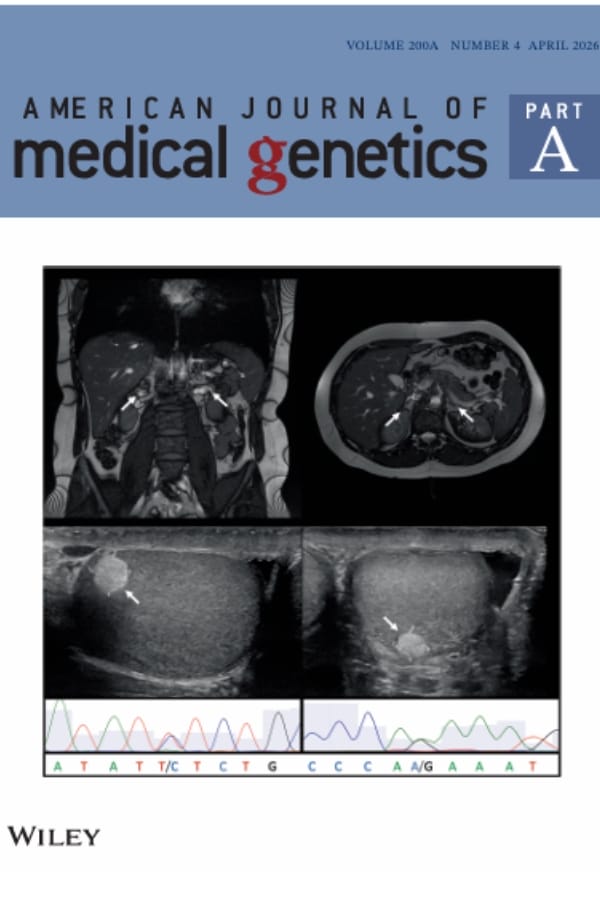
Cover image featuring the research team’s paper in the American Journal of Medical Genetics
In the 1990s, three siblings were diagnosed with adrenal insufficiency at BC Children’s Hospital, a serious condition that can lead to life-threatening complications if untreated. The adrenal glands are located above the kidneys and produce hormones responsible for many bodily functions, including stress response, metabolism, and the immune system. In this family’s case, three out of four siblings experienced symptoms as toddlers and needed to be treated with lifelong steroid therapy. For 35 years, the genetic cause of their condition remained unknown as earlier genetic tests did not find any answers.
When the first sequencing tests came back with uninformative results, Dr. Gibson dove in and reviewed clinical-grade sequence data for two out of the three affected members of this family. With a more detailed look at their genetic data, the research team was able to identify a mutation in a gene called CYP11A1. This gene is essential for the process of making steroids in the body, and disrupting it can lead to the type of adrenal insufficiency reported in the family.
We are grateful to the PHSA Health Records Department for having retained the original paper records for more than 30 years, even after the patients had graduated to adult care.
– Ana Acosta Bedón, first author on the paper

“We eventually had to go line by line in the code to identify what was different, as the gene was not previously included in the genetic panel tests,” says Dr. Gibson.
The breakthrough was the result of collaboration between the family’s doctors, who provided ongoing care and guided testing and treatment, and researchers from the Gibson Lab and collaborators who found and characterized the genetic changes.
“We are grateful to the PHSA Health Records Department for having retained the original paper records for more than 30 years, even after the patients had graduated to adult care,” says Ana Acosta Bedón, who worked on the project by testing whether the genetic variations identified could be validated in the lab, and is first author on the paper. “Their careful record keeping is what ultimately led to a diagnosis for this unsolved family case many years later.”
By analyzing the data in this way, the team had discovered a previously unrecognized genetic variant, finally giving the family an explanation for their condition. The case study shows how revisiting patient data over time can lead to new answers and help families with rare diseases who have been searching for a diagnosis for many years.
Note: Copyright for researcher images remains with BCCHR, and all rights remain with BCCHR. Use of these images to train AI systems, and the creation of derivatives of these images in any form by any means is expressly prohibited