Mini Med School Prince George is now full!
Click here to add yourself to the program waitlist. If a spot becomes available, we will contact you directly. Spots will be filled on a first-come, first-served basis.
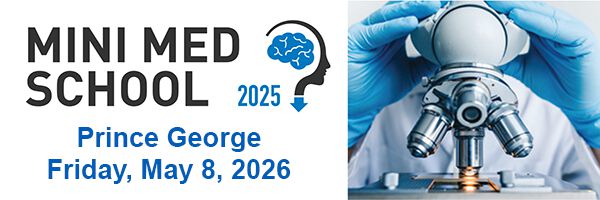
Are you a Northern BC grade 10-12 student with a passion for science and health research?
Join us for Mini Med School Prince George!
Dive into a day of discovery with scientists and health professionals from BC Children’s Hospital as we explore the latest in medical research.
Friday, May 8, 2026 | 9:00 am – 2:30 pm
Ramada Plaza Prince George
444 George Street, Prince George, BC
Event Poster
What’s in store at Mini Med School Prince George? Prepare for an exciting day filled with:
- Presentations from top BC Children’s Hospital researchers and health experts
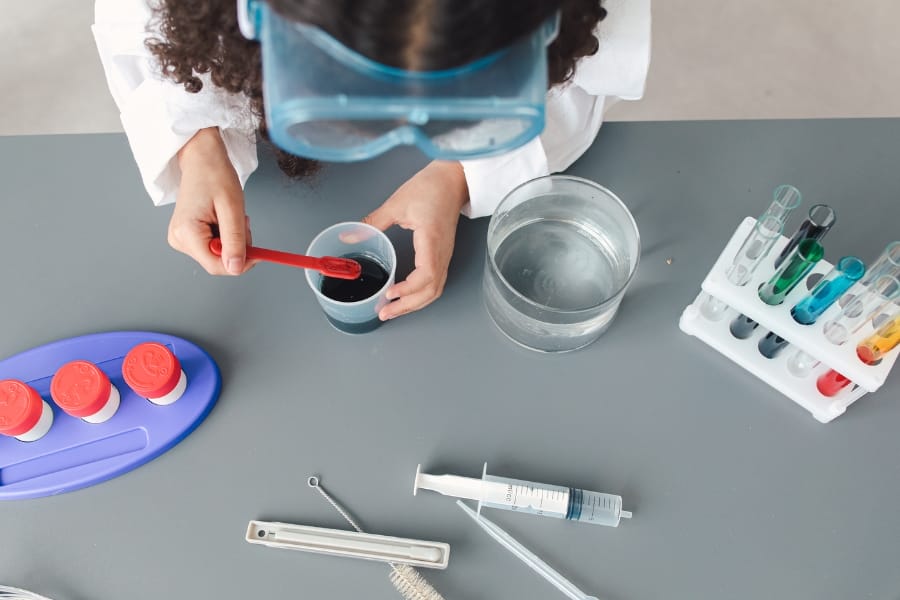
- Hands-on activities covering various health science topics
- Insights into careers in research and health care
- Opportunities to connect with students from across Northern BC
- Chances to win door prizes, trivia prizes, and BC Children’s Hospital gear
Registration is free, with snacks and lunch included – but spots are limited!
Interested in attending?
Students currently enrolled in grades 10–12 at a Northern BC secondary school are eligible to register. Space is limited to 70 students, and registration is first come, first served.
Mini Med School is a special event held outside the classroom and will be hosted on a school day. Students will be expected to:
- Get permission from their parent/guardian and school to attend
- Arrange their own transportation to and from the Ramada Plaza Prince George
Registration
Mini Med School Prince George is now full!
Click here to add yourself to the program waitlist. If a spot becomes available, we will contact you directly. Spots will be filled on a first-come, first-served basis.
Who Can Register?
Students currently enrolled in grades 10 to 12 at a secondary school in Northern BC are eligible to register. Space is limited to the first 70 students, and registration will remain open until all spots are filled.
Teachers are welcome—but not required—to attend Mini Med School. If you’re interested in joining the event, please contact researchevents@phsa.ca to register.
What Do You Need to Register?
Before you begin your registration, make sure you have the following information ready:
- Your name, email address, grade and school name
- Your parent/guardian’s name and email address
- A brief answer (150 words or less) to this question: “Why are you interested in attending Mini Med School? What do you hope to gain from participating?”
What Do You Need to Attend?
- Permission from your parent/guardian and your school to miss class on Friday, May 8, 2026
- Transportation to and from the Ramada Plaza Prince George (444 George Street, Prince George). Mini Med School runs from 9:00 am to 2:30 pm.
How Do You Register?
On Tuesday, February 17 at 4:00 pm the link to the registration form will be posted on this page. Registration is first come, first served, so be ready!
FAQs
Who can attend Mini Med School? Mini Med School is open to all grade 10–12 students currently enrolled at a Northern BC secondary school.
Is there a cost to attend Mini Med School? No, Mini Med School is a free event for all participants. However, students are responsible for arranging their own transportation to and from the venue.
How are students selected? Mini Med School is a popular program and spots fill up quickly. To keep the process fair, registration is first come, first served. If all spots are filled, additional students will be placed on a waitlist and contacted if space becomes available.
We are committed to fostering an equitable and inclusive learning environment. Additional spaces are reserved for students who identify as First Nations, Inuit, or Métis. Students will have the opportunity to self-identify as Indigenous on the registration form.
Do I need high marks in science to participate? No, you don’t need top grades in science to join, but a passion for health sciences is important!
What is the learning environment like? The curriculum is tailored for high school students and includes lectures and hands-on activities, similar to a university style seminar. Some students might find this format challenging, please consider your own learning style before registering.
Does Mini Med School include any assignments or tests? No, you won’t have to complete any assignments or tests. While some students like to take notes, it’s optional.
Will students receive a certificate of participation?
Yes, all students who attend the full day will receive a certificate of participation, which can be a great addition to your résumé or post-secondary applications.
Still have questions? Email us at researchevents@phsa.ca.
Schedule
Our Mini Med School Team is hard at work putting together a dynamic schedule just for you. The content below is only a draft and subject to changes.
8:30 am – Registration and Welcome Activity
Connect with other students as you get ready for the day. Refreshments will be available
9:00 am – Welcome and Introductions
Discover more about Mini Med School and the BC Children’s Hospital researchers and doctors who are driving groundbreaking discoveries and translating their research into life-saving medical advancements.
9:15 am – Research Presentation
Healthcare in the Fast Lane
Pediatric emergency medicine is a fast-paced, high-stakes field where compassion, quick thinking, and science come together. Hear from a pediatric emergency doctor as she shares her career journey and takes you inside a real shift. Discover what doctors diagnose and treat, and how research is seamlessly woven into real-time care at BC Children’s Hospital. Presented by Dr. Quynh Doan.
9:45 am – Research Activity #1
Get ready for some hands-on science! Participants will work in groups on a selection of the following activities:
Brick by Brick: Building Blood
Have you ever thought about how your blood carries oxygen, and how iron makes it all possible? In this hands-on activity, you’ll model hemoglobin with LEGO blocks to see how its structure depends on iron. Along the way, you’ll explore why hemoglobin levels vary between males and females and how iron deficiency affects oxygen transport and performance. By the end, you’ll understand how crucial iron (Fe) is for keeping your body active and healthy. Presented by Ailish Babicki-Moore.
Tell Me More: Listening to Understand Health
Experience what it’s like to be a qualitative researcher! Instead of running experiments or analyzing large data sets, qualitative researchers explore people’s experiences, behaviors, and perspectives to understand the why behind human actions. In this activity, you’ll discover how methods like interviews, observations, open-ended surveys, photos, and creative tasks can reveal deeper insights into how people think, feel, and act. Learn more about a scientific approach that helps us investigate the social and psychological aspects of health. Presented by Anguli Bharmota.
NeuroBuilders: Crafting Brain Cells in Action
Dive into the fascinating world of the brain by building your own “mini brain” network! Get hands-on with different brain cells – neurons, astrocytes, microglia, and oligodendrocytes, explore each cell’s unique role in keeping the brain healthy and functioning, and uncover key neuroscience concepts in a fun and interactive way that brings the brain to life. Presented by Dr. Inês Caldeira Brás.
Designing a Better Patient Monitor – What Does it Mean to Visualize Data?
Become a biomedical engineer as you design a patient monitor to help healthcare providers track vital signs. In this session, you’ll explore how key measurements (heart rate, breathing rate, temperature, blood pressure, and oxygen saturation) are used in patient care, then work together on a case study to design your own patient monitor that communicates vital changes clearly and discretely. Presented by Rosalyn Carr.
Hold the Line: How Immune Cells Protect Us
Step into the immune system and discover how immune cells work together! In this session, you’ll work in teams to see how regulatory T cells, the “peacekeepers” of immunity, act together with effector T cells to keep the immune system in balance. Compete for prizes while exploring how these important cells team up to keep us healthy in different situations! Presented by Dana Lao.
Mystery Case Files: Mapping the Mind
Step into the world of neuroscience and uncover real brain mysteries! Working in teams, you’ll explore MRI scans and patient stories to see how different brain injuries can affect behavior. Learn how clinicians use critical thinking and evidence-based reasoning to solve these “brain mysteries” and get a first-hand look at how scientists link the brain’s structure to its function to understand symptoms and improve patient care. Presented by Cynthia Li.
Adapt or React? The Science of Everyday Health
Have you ever wondered how your daily choices around food, sleep, stress, and physical activity affect your energy, mood, and overall well-being? In this interactive session, you’ll explore real-life scenarios to see how everyday decisions impact your life. By the end, you’ll discover how small, realistic changes can make a big difference, empowering you to take charge of your health. Presented by Cristian Massaro.
What Lies Beneath: A Collaborative Genomic Oncology Puzzle
We often see just the “tip” of a case, symptoms on the surface, but the real answers hide below. In this hands-on session, you and your team will sift through a patient story, paper-based lab visuals, and a plain-language genetic snapshot to uncover what’s underneath. Working like clinicians, researchers, geneticists, and pharmacologists, you’ll connect clues, choose a care plan, and submit a one-page consult note to reveal the solution. Come see how collaborative science turns hidden patterns into real help for kids and families. Presented by Pariya Yousefi.
10:15 am – Break
— 15 minute break —
10:30 am – Research Activity #2
Time for more hands-on science! Participants will continue to work in groups on the research activities from earlier.
11:00 am – Ex-quiz Me?
Put your health sciences knowledge to the test! This interactive game offers a chance to compete for prizes while gaining deeper insights into the latest advancements in science
11:15 am – Health Pros Tell All!
Explore diverse career opportunities and engage with health science experts. This interactive discussion will be guided by participants, so come prepared with your questions!
11:45 am – Lunch
Lunch will be provided. Please note, Mini Med School is not a nut-free event. We cannot guarantee that there will be no cross-contamination by catering. Participants with any food allergies or dietary restrictions are asked to bring a lunch. We apologize for any inconvenience
12:45 pm – Are You Smarter Than a Researcher?
Think you’ve got what it takes to outsmart a BC Children’s Hospital researcher? Test your skills by teaming up to create questions that challenge our Mini Med School Faculty. We’ll see how these experts fare against high school students and find out just how much they remember from their own high school science classes!
1:00 pm – Research Presentation
Closing the Gap Between Research and Care for Kids’ Respiratory Illnesses
Studies show that it can take about 17 years for new medical discoveries to become part of everyday healthcare, what’s often called the implementation gap. Together we’ll explore how researchers work to close this gap for common respiratory illness, which are one the leading cause of hospital admissions for children in BC and around the world. Presented by Dr. Claire Seaton.
1:30 pm – Break
— 15 minute break —
1:45 pm – Research Activity #3
Time for more hands-on science! Participants will continue to work in groups on the research activities from earlier.
2:15 pm – Closing Remarks
Participants will at dismissed at 2:30 pm
Optional: Talk with a Scientist
Engage with our health science experts! After the session, the Mini Med School Team will be available to chat and answer questions one-on-one for any interested participants.
Meet the 2026 Mini Med School Team
Interested in learning more about the Mini Med School team? Click on the button below to learn more.
2026 Mini Med School TeamFor any questions, contact researchevents@phsa.ca.
Mini Med School is a BC Children’s Hospital youth outreach program that takes a unique approach and has the reputation of being “anything but mini”. This popular series uses big ideas, big discoveries and big names to engage high school students, teachers and the general public in learning and discussing health research topics. Click here to learn more about Mini Med School.