While growing up, Abisola Kehinde was fascinated by biology, one of those courses she didn’t have to study much to easily understand. It was natural to her, so choosing a career in science was a no-brainer. She was never told that, as a woman, there wasn’t space for her in this field. But there were other challenges related to gender biases.
“I heard that, if I reached a certain level of education or role in my career, I wouldn’t be able to build a family,” says Abisola, currently a PhD candidate in Dr. Seth Parker’s lab at BC Children’s Hospital Research Institute (BCCHR) and the University of British Columbia (UBC). “I heard that women are not as intelligent and focused on the job as men are.”
In Nigeria, Abisola’s home country, medicine and pharmacy are the most popular science careers, but she fell in love with biochemistry and completed her undergraduate studies at the University of Lagos. Already in Canada, she earned her MSc in biochemistry from UBC. She’s interested in how nutrients can be used to reduce or treat metabolic diseases, and her current research aims to track the metabolism of nutrients that cancer cells and tumours use to thrive.
Being a woman is one aspect of Abisola’s identity that can hold her back in a science career. Being a Muslim woman is another, due to the perception that science and religion may not be able to coexist.
These different layers of discrimination remind us that our individual identities intersect in ways that impact how we’re viewed and treated.
This phenomenon is explained by the concept of intersectionality, a term coined by Professor Kimberlé Crenshaw in 1989. “As a Muslim woman, I don’t lose my identity for having a career in science,” Abisola says.
Science is exciting and, if you love it, you’ll find joy and fulfillment.
– Abisola Kehinde
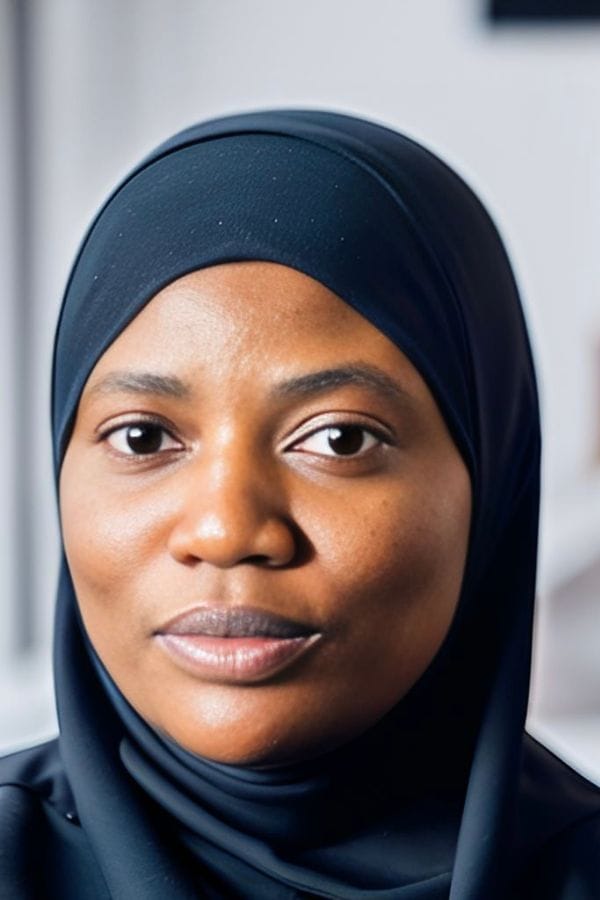

Abisola is empowered by her passion for this field and her supportive parents to face adversities and play simultaneous roles without having to choose. “We just have to be good at what we do,” she says. To girls and women considering similar careers but having doubts due to the underrepresentation of women, Abisola says, “Science is exciting and, if you love it, you’ll find joy and fulfillment.”
That’s what she feels whenever she’s working on an experiment, knowing her work can impact lives. “Find women mentors, and you’ll be surprised to see how well they’re doing in their personal and professional lives.”
Abisola will be one of the six panelists at the Women in Science event on February 8, 2024. The event honours the International Day of Women and Girls in Science.