Faith Carrie doesn’t mince words when asked how these past two years have been. “COVID has definitely been a pain in the butt!!” she exclaims.
The 14-year-old has missed out on a lot, just like her peers. But she has endured much more. In the middle of the pandemic, in December 2020, Faith received a kidney transplant. She was born with one kidney that was too small and was diagnosed with stage 4 chronic renal failure when she was three weeks old.
Since the transplant, Faith has been taking a twice-daily regimen of heavy immune suppressing drugs to keep her body from rejecting her new kidney. But those same drugs also make her especially vulnerable to COVID-19 and other infections.
“To be honest, it’s been kind of rough,” says Faith’s mom Patricia. “We were scared of COVID-19, especially when they didn’t have a vaccine and didn’t know how to treat it. We were worried that if all these people who are completely healthy are dying all over the world, what would happen if our daughter got it? What chance would she have?”
Children with organ transplants not included in other studies
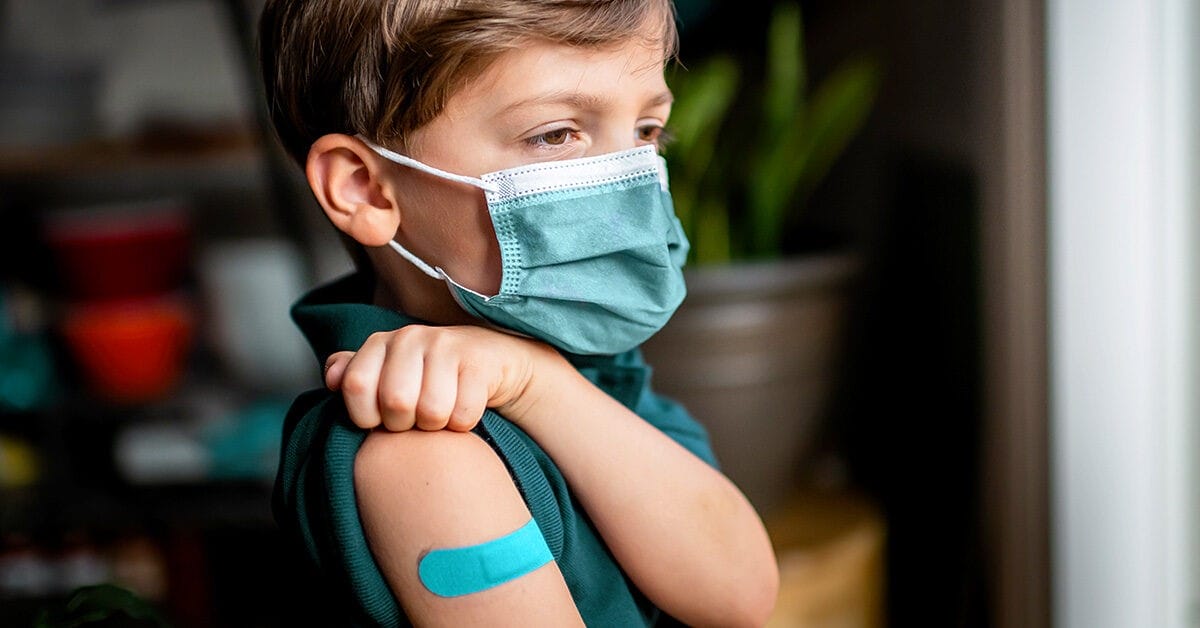
Faith was one of the first in line for the COVID-19 vaccine when it was made available to children and youth. She has received three doses now, and will soon be eligible for a fourth, but she and her mom still don’t know how much protection she actually has. Vaccine studies in adult transplant recipients have found they have lower levels of immune protection compared to adults without transplants. There isn’t a lot of data yet to show if this is also true for children, especially those with organ transplants.
BC Children’s researchers Dr. Hana Mitchell and Dr. Tom Blydt-Hansen are hoping to find some answers. They are part of a Canada-wide study investigating how transplant recipients of all ages respond to the COVID-19 vaccine. Faith is one of the kids enrolled in the pediatric arm of the study.
“Children are, of course, different from adults, and their immune systems are different from an adult’s immune system,” explains Dr. Mitchell, a pediatric infectious disease specialist. “Our study is important because we are also including children aged five to 11 who have only recently become eligible for a COVID-19 vaccine and have not been included in the studies published so far.”
Dr. Blydt-Hansen is the director of the pediatric multi-organ transplant program at BC Children’s Hospital. He emphasizes, “Studies in kids are too often after the fact. That isn’t right. Kids respond to illness and treatment differently than adults, so research involving kids should always ideally be done in parallel, not after the adult studies.”
Study will look at in-depth immune response of transplant kids
Researchers are looking at both antibody and T cell-mediated immunity in children and youth with a transplant compared to kids without a transplant. T cells are a type of white blood cell that develop from stem cells in bone marrow. They play an important role in the immune system and help protect the body from infection. Many COVID-19 vaccine studies to date have only looked at levels of antibodies, which are easier, cheaper and faster to test, but T cells provide a more detailed way to evaluate vaccine protection.
“We hope to answer what amount of antibodies and T cells is sufficient to protect these vulnerable kids from severe disease. We also want to see how levels of antibodies and T cells change with subsequent vaccine doses and how long the protection lasts,” adds Dr. Mitchell.
Research is improving care
The knowledge gained from this study could help provide more information about vaccines in general for this priority population. Many kids require an organ transplant when they are very young, before they are able to receive their usual childhood vaccines. Limited studies with other vaccines show transplant recipients receive some protection, but it’s lower compared to people without a transplant. In addition, historically live vaccines, such as chickenpox (also known as varicella or VZV) and measles-mumps-rubella, were not recommended for children with transplants because of safety concerns. However, recent research, including another study at BC Children’s, has shown the chickenpox vaccine is safe and effective in many transplant kids.
“There has been a big shift, and this is really exciting for our transplant patients,” says Dr. Blydt-Hansen. “We never used to give the VZV vaccine before. It’s not that we were ‘wrong,’ we just didn’t know enough to know if it could be done safely. But now we know better.”
No ‘return to normal’ yet for transplant kids
Even with three vaccines, Faith and her family have continued to be very cautious. She hasn’t stopped wearing a mask to school. Faith says, “It’s kind of annoying to have a mask on the whole time, but at the same time, I feel more safe.”
The family has also had to stop seeing friends who are hesitant about getting vaccinated until they know whether or not Faith has protection from the virus. “These are sacrifices we are willing to make to keep our child safe,” remarks Patricia. “Faith is our main priority in life.”
At the same time, Patricia has a lot of hope for the future, especially with so much ongoing research that will hopefully make a difference for her daughter and other kids.
“I think for a while, we will always hold a lot of anxiety around COVID-19 because of everything we’ve seen, heard, read and experienced. But slowly and surely, we are taking baby steps back to things we love to do and bringing everyone back together. We will all make it to the other side and learn and grow from this.”
Do you have a question about this article or other BCCHR news?
Contact BCCHR Research Communications.