Mini Med School
About Mini Med School
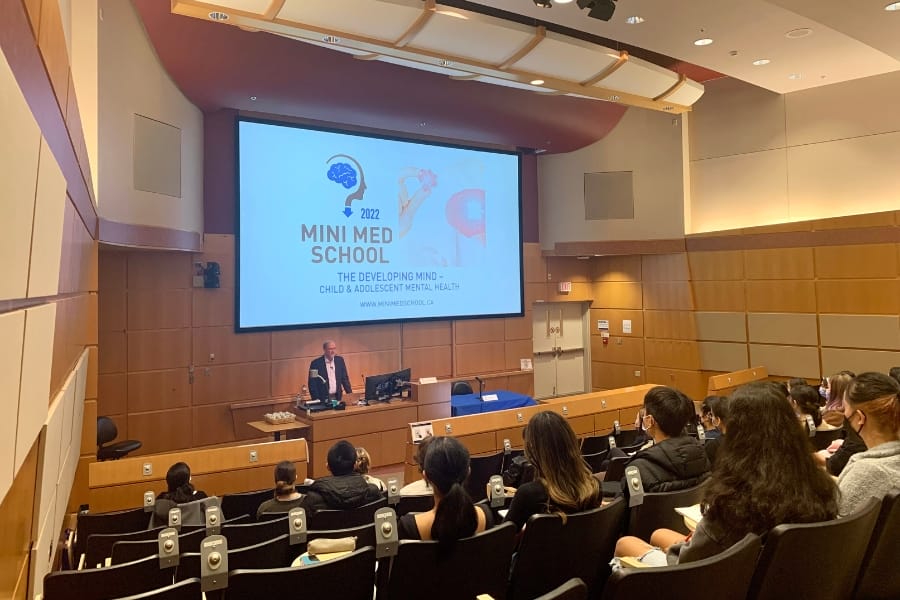
Mini Med School (MMS) is an award-winning health science outreach and public education program. Attendees have the opportunity to hear from scientists, interact with expert researchers, and participate in hands-on activities.
Each year’s curriculum is designed to give a basic understanding of the field while exploring the latest research and clinical applications, as well as social and ethical implications. Supported by BC Children’s Hospital Foundation, this popular series uses big ideas, big discoveries, and big names to engage high school students in learning and discussion about health research topics.
Mini Med School strives to empower youth and promote an equitable and inclusive learning environment. Further space is available for BC students from Grades 10-12 who identify as First Nations, Inuit, or Métis. Students will be asked to self-identify as Indigenous at registration.
Available Mini Med School Formats
High school students across British Columbia have two ways to participate in Mini Med School!

for grades 11-12 students
Mini Med School Vancouver
Engage with researchers and clinicians at BC Children’s Hospital Research Institute in person or virtually. As a participant, you have the opportunity to ask questions directly to the presenters, receive a weekly newsletter to keep you informed on program updates, and receive an electronic certificate of program completion if you participate in all four sessions. Grade 12 students are eligible to apply for the Mini Med School Scholarship.
Can’t attend? Don’t worry! Through Mini Med School On-Demand, you can participate when it works for you.

For Grades 10-12 students
Mini Med School BC
Mini Med School will be on the road for years to come! We want to give as many communities as possible the opportunity to interact with BC Children’s Hospital’s world-class researchers and clinicians. For 2026, Mini Med School BC will be in Prince George, BC!
Can’t attend? Don’t worry! High school students throughout BC and the Yukon can now experience Mini Med School online at any time and from anywhere through Mini Med School Self-Directed.

for grades 8-12 Students
Mini Med School Self-Directed
Any student in Grades 8-12 throughout BC and the Yukon can now experience Mini Med School online at any time and from anywhere. Participants in our self-directed program are eligible to receive an electronic certificate of participation by completing the Mini Med School Self-Directed program form. Participants will need access to a computer, tablet, or smartphone and a stable internet connection to watch pre-recorded Mini Med School videos. Participants will also need to have a sponsor teacher or parent/guardian to support their program form.
How to participate — Check out the Mini Med School videos below and select a series you’re interested in exploring. Complete the Mini Med School Self-Directed program form. Submit the form. If you’re eligible, the Mini Med School team will follow up with an electronic certificate of participation.
Mini Med School 2026
Mini Med School 2026: details to come.
Sessions will be held from 6:30 pm to 8:00 pm, in person at BC Children’s Hospital or virtually. Registration will be open to students in Grades 11-12.
The Mini Med School application process is competitive! We’re looking for motivated and inquisitive students who demonstrate interest in being part of this one-of-a-kind program.
Mini Med School 2026 Session Dates
- Session 1: TBD
- Session 2: TBD
- Session 3: TBD
- Session 4: TBD
Mini Med School Prince George
Mini Med School Prince George is now full!
Click here to add yourself to the program waitlist. If a spot becomes available, we will contact you directly. Spots will be filled on a first-come, first-served basis. Learn more about Mini Med School Prince George.
Questions or concerns? Contact the Research Education team.
email research education
Mini Med School 2026 Curriculum
Details to be announced.
Details to be announced.
Details to be announced.
Details to be announced.
Details to be announced.
Mini Med School FAQs
If you don’t see your question answered here, please email the Research Education team.
We encourage you to consider your own learning style before registering to attend Mini Med School. While high marks in sciences are not required, participants should have a passion for health sciences.
The Mini Med School course curriculum has been designed for a senior high school audience. With only four sessions to explore new scientific concepts, participants should expect a fast-paced learning environment. Similar to a post-secondary seminar, Mini Med School is lecture-based with a small selection of hands-on activities. Some students may find this learning format challenging.
Unfortunately, no. Each student may only register once. During registration, you will need to indicate your preferred method of participating: In-Person, Virtually Live OR On-Demand.
Before applying you will need to find a Sponsor Teacher. They are not required to write a letter of recommendation or personally attend the event. Your Sponsor Teacher may sponsor more than one student applying to Mini Med School.
Who should your Sponsor Teacher be? Your Sponsor Teacher should be someone who:
- Knows you well — ideally a teacher who understands your personality, work ethic, and learning style. If needed, they should be able to confirm that you’re a good fit for this kind of extracurricular learning opportunity.
- Is a teacher with experience teaching a science, technology, engineering or mathematics course, or is a career counsellor.
- Is a current or former teacher — your Sponsor Teacher doesn’t have to be someone who is teaching you this year. If you had a strong connection with a teacher from a previous grade, you can ask them instead.
What does the Sponsor Teacher need to do?
Your Sponsor Teacher will NOT be required to write a letter of recommendation or attend the event. However, they should be aware that:
- We may contact them if we have any questions or concerns about your application. For example, if something in your form needs clarification, they might be asked to verify details.
- If you are accepted into the program but we have concerns about your participation or attendance, we may also contact them. This is just to ensure that you are well supported.
- This is not a personal reference, and the teacher is not responsible for your performance in the program — they’re simply a trusted adult in your school who can help verify your academic performance if needed.
For the application, what information do we need about the Sponsor Teacher?
- Name
- Email Address
Should I ask the Sponsor Teacher before listing their name on my application?
Yes! Please make sure to speak with the teacher before listing their name on your application. Let them know about the Mini Med School program and that they may be contacted by email only if we need to verify or clarify any information in your application.
If you’re unable to attend, please email us at researchevents@phsa.ca as soon as possible so we can offer the space to someone on the waitlist.
Mini Med School participants will not be required to complete any assignments or tests. Occasionally students do like to take notes during lectures, but it is not required.
Nothing is required. If you’re interested in taking notes, a notebook and pen is recommended.
All students registered for Mini Med School (In-Person, Virtually Live OR On-Demand) are expected to participate in all available sessions. If your schedule doesn’t allow for this, we do not recommend registering. With limited capacity, we want to ensure everyone participating is fully engaged in the curriculum.
By early January, all sessions will be posted on the BCCHR website’s Video Library for anyone to access. You can also apply for an electronic Certificate of Participation if you have viewed at least three sessions after the October-November curriculum has ended.
Yes! Students who are interested, and have attended at least 3 sessions, will be provided with an electronic certificate of participation upon request.
For On-Demand participants to be eligible, students must watch the full recording of each session; partial watch times will not count.
Teachers are welcome, but not required, to attend. Teachers interested in registering should contact researchevents@phsa.ca directly.
Mini Med School could be classified as an unpaid career-related work experience that includes career investigation. Some schools will consider the hours spent attending Mini Med School (either In-Person or Virtually Live) as being eligible for your work experience hours. We encourage students to verify this with your school or career counsellor.
The Mini Med School team cannot sign any Work Education Agreements, Work Experience Placement Forms or any similar forms/contracts on the day-of. Forms can be sent to researchevents@phsa.ca for electronic signature before or after the event.
We realize various school districts have different requirements for tracking hours. Unfortunately, the following cannot be provided:
- Employer or student assessment/evaluation
- Onsite safety orientation, including a training plan or safety checklist. This should be covered in school
- Letter of reference verifying student participation or duties performed. An electronic certificate of participation will be issued if the student completes at least 3 sessions
To be added to the waitlist after the initial registration period, contact researchevents@phsa.ca. Please note, Mini Med School is a very popular program with limited capacity each year. It is unlikely additional space will become available.
For those who are unable to attend, check out our video library to explore previously recorded Mini Med School lectures on a variety of health topics.
No, the curriculum for Mini Med School has been designed for a senior high school audience and space is limited. We encourage those in younger grades to check out our Mini Med School Self-Directed program.
No. Previously, each school could only nominate 3 students to attend, but that has recently changed.
The Mini Med School application process is now competitive and comparative. We’re looking for motivated and inquisitive students who show a demonstrated interest in being part of this unique program.
Yes, assuming you continue to meet all the eligibility requirements, you can register for Mini Med School again.
Mini Med School Self-Directed FAQs
If you don’t see your question answered here, please email the Research Education team.
No. Once you’ve watched the entire series, you can submit the Mini Med School Self-Directed program form whenever you’re ready.
Mini Med School Self-Directed participants will not be required to complete any assignments or tests. Occasionally students do like to take notes during lectures, but it is not required.
It can take up to two weeks for the Mini Med School Team to review your program form and email your electronic certificate of participation.
Yes! For every recent series you watch, you can complete the Mini Med School Self-Directed program form for an electronic certificate of participation. Please submit a new program form for each series you watch.
While students can still watch older Mini Med School series from the Video Library, only the more recent series from the last 5 years will be eligible for an electronic certificate of participation.
No. Mini Med School Self-Directed does not have a deadline. Videos are not in real-time; participating is like watching a video on YouTube. You also have the opportunity to start and stop videos on your own schedule.
As Mini Med School Self-Directed is not in real-time, you will not have the opportunity to ask presenters questions.
Mini Med School 2025 Videos: Exploring Rare Diseases — Discovery to Treatment
Watch Mini Med School presentations. You will be redirected to a Zoom registration page to access the recording.

Technology in Rare Disease Diagnosis and Care
Uncover how current and emerging technologies are reshaping the way we understand, diagnose, and treat rare diseases.
Watch video
Collaboration in Science and Healthcare
Learn about the impact of interdisciplinary teamwork in tackling the complex challenges of rare diseases.
Watch video
Navigating the Future of Rare Disease Care
Investigate how cutting-edge research in rare diseases is driving global policy changes, and learn about the importance of preparing for scientific breakthroughs while ensuring fair access for all patients.
Watch videoMini Med School 2024 Videos: From Data to Diagnosis — Navigating Digital Health
Watch Mini Med School presentations.

Health Informatics Basics + Using Data Analytics in Pediatric Health Care
Health informatics uses technology and data to improve pediatric care and enhance decision-making for better patient outcomes.
Watch video
Personalized Cancer Care + Childhood Diabetes Care in British Columbia
Precision medicine, AI, and technology are leading to personalized cancer treatments and proactive diabetes management.
Watch video
AI-Driven Personalized Medicine + Generative AI Research in Health Care
Artificial intelligence is transforming medicine and health-care research, bringing us closer to truly personalized care.
Watch video
Immersive Technology in Medical Training + the Science of Concussions
Technology is transforming medical training and concussion education, from immersive learning tools to evidence-based concussion care.
Watch videoMini Med School 2023 Videos: Infectious Diseases and the Immune Response
Watch Mini Med School presentations.
Vaccine Hesitancy: How Do We Get More People Vaccinated?
Dealing with the COVID-19 “infodemic” and navigating the world of online information.
Watch video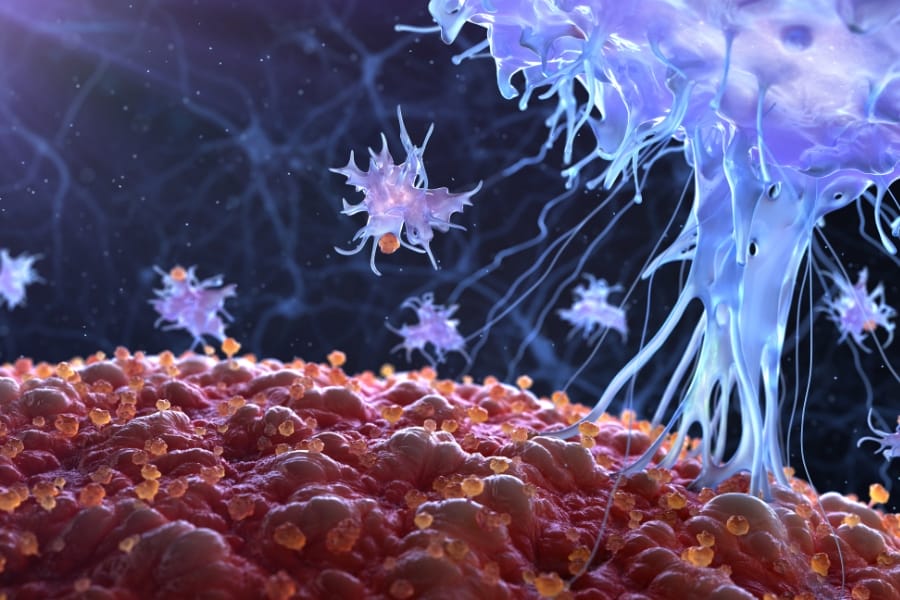
Immune Response: Why Do Some Kids Get Sick and Others Don’t?
Inherent errors of immunity and the role of genetics and microbiota in intestinal infections.
Watch video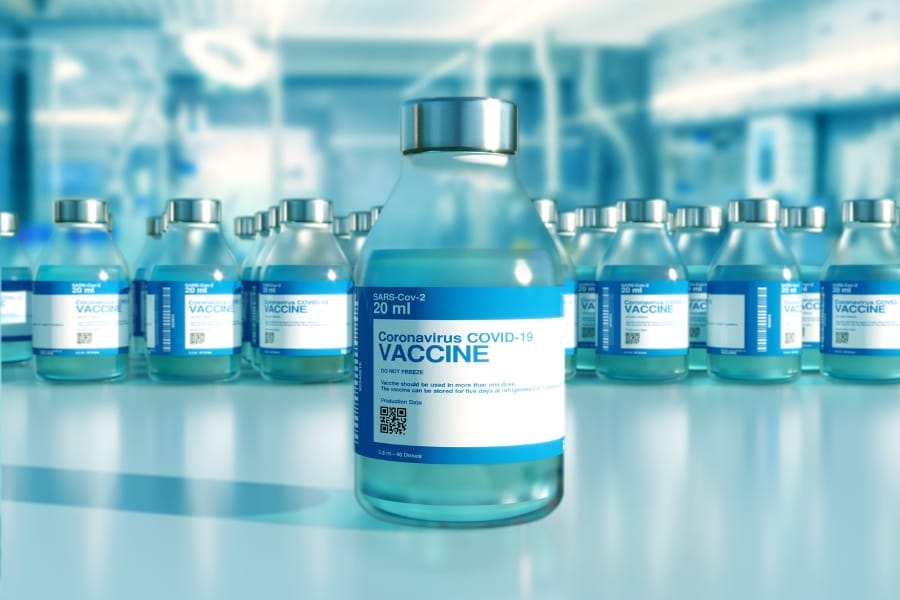
Vaccine Development: How Are Vaccines Made and How Do We Know They Are Safe?
The life cycle of vaccine development and what happens after they get approved for use.
Watch video
Antibiotics: Is Antibiotic Resistance the Biggest Threat We Have?
How antimicrobial resistance increases illness and complicates health care.
Watch videoMini Med School 2022 Videos: The Developing Mind — Child and Adolescent Mental Health
Watch Mini Med School presentations.
Intro to Mental Health and Attention Deficit Hyperactivity Disorder
Learn about mental disorders in young people, prevention, and treatment programs.
Watch video
Somatization and Risky or Self-Damaging Behaviours
Somatization involves the physical experience of emotions.
Watch video
Obsessive-Compulsive Disorder and the ‘Omic’ Spectrum of Autism
Improving care for kids and youth with OCD and subgrouping autism types via “omics”.
Watch video
Stigma, Resilience, Family Intervention, and Drug Interactions
How does stigma affect health? How can certain interventions help? And how do drugs cause specific effects?
Watch videoMini Med School 2021 Videos: Discoveries in Diabetes — A Century of Innovation
Watch Mini Med School presentations.

Diabetes 101: Beta Cells, Living With Diabetes, Indigenous Health in T2D
Diabetes causes, treatments, life experience, and factors that influence Indigenous health.
Watch video
History of Insulin Discovery and Pancreatic Beta Cells in Diabetes
The history of diabetes research, effects of insulin on the body, beta cells, and more.
Watch video
Reshaping Immunity in Diabetes and Islet Transplantation
The immune system in type 1 diabetes and pancreatic islet transplantation.
Watch video
The Role of Nutrition in Treating Diabetes and Stem Cells for T1D
Diabetes and nutrition and the current research on stem cell therapy for T1D.
Watch videoMini Med School History
We celebrated the 20th anniversary of Mini Med School in 2023! Created by Dr. David Speert, Mini Med School was introduced in 2003 as an eight-part lecture series on infectious disease.
Each year, Mini Med School presents knowledge that captures the imagination and fosters public dialogue, engages students in participatory learning of scientific research topics, provides BCCHR researchers with opportunities to share their work and its implications, and inspires high school students to pursue careers in science and medicine.
The feedback we receive from Mini Med School participants continually mentions the engaging presenters, inspiring subject matter, and unique opportunities to explore careers in health sciences.
What do participants say about Mini Med School?
- “I really appreciated the opportunity to gain so much exposure to the medical world.”
- “I liked listening to the presentations and connecting everything to what we’re learning in school.”
- “I really enjoyed learning about cutting-edge treatments that could change the future of medicine.”
Research News
Every day, BCCHR researchers work towards breakthroughs to transform the lives of kids in BC and around the world. Learn about our latest innovations and advancements in child health.
-

Research supports BC families in building healthy habits to prevent childhood obesity
Read moreUnhealthy eating patterns, low physical activity, and a lot of sedentary or screen-related habits are linked to childhood obesity risk, which can lead to elevated blood pressure, sleep problems, orthopedic issues, and mental health challenges. Obesity-prevention resources that only focus on providing information often fall short because many families already know the basics. The biggest…
-
First-in-world BC patient successfully treated for rare immune disease
Read moreA new paper published in New England Journal of Medicine details how an 18-year-old patient being treated at BC Children’s Hospital (BCCH) for a rare disease called chronic granulomatous disease (CGD) became the first person ever to receive and be cured by a gene modification treatment known as “Prime Editing.”
-
Prescribing ice cream and countering misinformation: Q&A with Dr. Alastair McAlpine
Read moreBorn and raised in Johannesburg, Dr. Alastair McAlpine, a researcher with the Vaccine Evaluation Center (VEC) at BC Children’s Hospital Research Institute (BCCHR), is passionate about pediatric palliative care and infectious diseases. He received his medical training in South Africa, but limited vacancies to pursue a specialization in his desired field brought him to Vancouver. After meeting a…