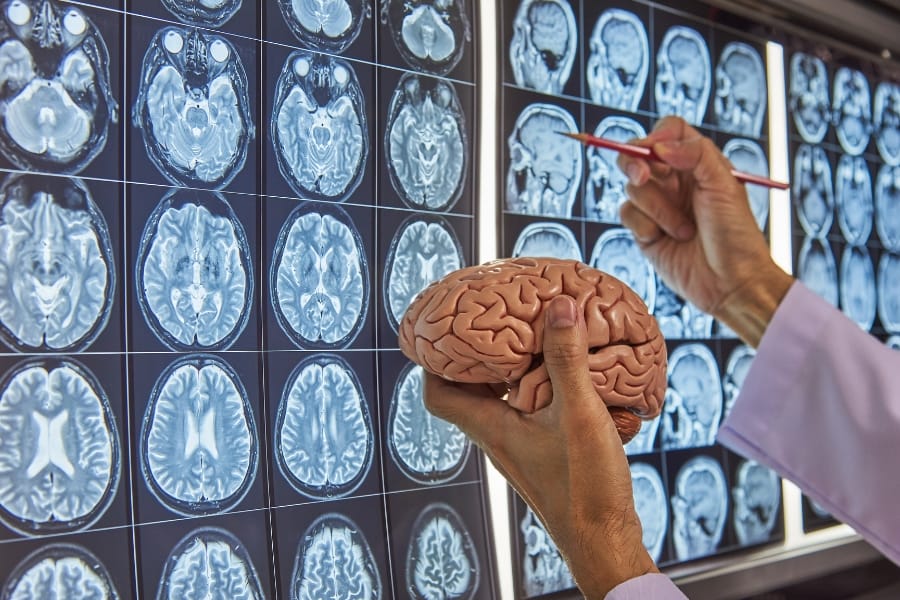
Central nervous system (CNS) tumours are growths of abnormal cells residing in either the brain or spinal cord. Not all tumours are necessarily cancerous; if a tumour lacks the ability to spread to other tissues then it is considered non-cancerous (benign). However, even benign tumours can still be dangerous in the brain or spinal cord if they press on sensitive body tissues or block the flow of blood or other fluids in the brain.
Approximately 150 children per year are diagnosed with brain and spinal cord tumours in Canada. While there has been progress in improving survival outcomes for these tumours, it is imperative that clinicians are able to improve quality of life as well.
Dr. Sylvia Cheng is an investigator at BC Children’s Hospital Research Institute (BCCHR) and clinical associate professor in the Division of Hematology, Oncology and Bone Marrow Transplant in the Faculty of Medicine at the University of British Columbia (UBC).
In addition to her clinical work, Dr. Cheng focuses on understanding the biology of childhood CNS tumours, as well as how best to manage the late effects of treatment.
Dr. Cheng is also part of the Children’s Oncology Group (COG), a North American multi-institutional collaboration of treatment in childhood cancer and clinical supportive care trials. She earned her medical degree from UBC and completed her postgraduate pediatric and subspecialty pediatric hematology and oncology training at The Hospital f or Sick Children (Sick Kids) in 2014. She returned to Vancouver and BC Children’s Hospital in 2014 and became a researcher with BCCHR in 2017.
For Childhood Cancer Awareness Month, we sat down to talk to Dr. Cheng about her work and what the future looks like for children with CNS tumours.
Dr. Sylvia Cheng is a clinician-researcher who studies the biology, management and late effects of childhood brain and spinal cord tumours.

Can you share your research focus?
In addition to treating children with CNS tumours, I also conduct research on how we can best improve standard treatments. At the moment, chemotherapy is still the backbone of care for these types of cancers, but figuring out how we can optimize these treatment regimens to stop the cancer’s spread — while minimizing long-term effects — remains an essential goal. One of the focuses of my research is in maximizing the benefit of treatment while minimizing the toxicity and late effects.
In a clinical setting, this is what is needed most to help choose the therapies that stop or reverse tumour growth while preserving brain function.
Although the research community has made significant progress optimizing the benefits of conventional chemotherapy in the treatment of pediatric malignant brain tumours, there is still much work to do to reduce the potential of relapse, and improve drug delivery to the brain.
How have things changed for CNS tumours?
My entire practice has completely changed in the 12 years I have been in this field. New treatments, such as targeted drugs and immunotherapies — which may help improve survival or reduce long-term side effects — are gaining approvals quickly. The world of pediatric CNS tumours is changing very rapidly.
Some childhood CNS tumours respond well to chemotherapy and, in those cases, doctors are trying stronger combinations. However, some aggressive tumours don’t respond well to chemotherapy, and these new treatment types may prove to be better alternatives. Other studies are comparing standard chemotherapy mixed with newer treatments to find the best approach.
It is an exciting time to see so many new treatments being developed, but there is still much work to do to determine the best possible care for each child. For very young children with specific subtypes of brain tumours, researchers have seen some success in improving survival with intensive, high-dose chemotherapy approaches. However, other tumour types require new therapies, as they remain resistant or refractory to conventional chemotherapy.
As these new treatments become available, one of the big tasks ahead of us is to determine what they mean for patients and how they can be incorporated into the current standard chemotherapy regimens.
We still need to figure out what the impacts of these new treatments will be on children five or ten years down the road and what will be required from their families.
Frequent return visits to the hospital for follow up or regular treatments can be an enormous burden. For me, one of the biggest factors of the job is taking into account the entire clinical journey and how it impacts the whole family. It’s no longer just about survival — it’s finding ways to help these children thrive.
What are you excited about working on now?
One of the trials I am working on, the Defeating Embryonal Cancer in Young People Together (DECRYPT) trial, is for children under six years of age with embryonal brain tumours. Approximately 60 per cent of these tumours are considered high risk and almost all have high risk for fatality. This trial aims to better understand and combat these difficult cancers by avoiding radiation — which can have devastating side effects if given at a young age — and instead use an intensive chemotherapy approach with the addition of drugs delivered directly to the fluids surrounding the brain and a longer period of maintenance therapy. Importantly, the trial will also bring together a multidisciplinary group of health-care professionals, research experts, and patient partners across Canada to assess each case — establishing a platform to launch similar trials in the future.
It’s a great example of using our growing knowledge of cancer biology to identify the best possible combination of treatments using an increasing array of tools and approaches. For the time being, I continue to work with colleagues across the childhood CNS field to improve the lives of the children in our care and cannot wait to see the benefits that future treatment options will bring.