Mutations in the Breast Cancer 1 (BRCA1) gene or Breast Cancer 2 (BRCA2) gene are well-known to substantially increase a woman’s risk of developing breast and ovarian cancer. They have also been implicated in the development of cancer in other tissues, including some childhood cancers such as neuroblastoma, brain tumours and acute lymphoblastic leukemia (ALL).
Dr. Christopher Maxwell and his team seek to understand how the BRCA1 protein functions within the cell believing that an increased understanding of its biological roles will yield new insights into how to detect or treat hereditary cancers associated with BRCA1 mutations.
Dr. Maxwell and colleagues made key discoveries on how the BRCA1 gene affects cell growth and cancer development in two manuscripts recently published in Nature Communications (Modification of BRCA1-Associated Breast Cancer Risk by HMMR Overexpression and Pathogenic BRCA1 Variants Disrupt PLK1-regulation of Mitotic Spindle Orientation).
Dr. Maxwell is an investigator at BC Children’s Hospital Research Institute and the Michael Cuccione Childhood Cancer Research Program and interim director, Pediatric Hematology and Oncology Research, BC Children’s Hospital. He is also an associate professor, department of pediatrics, at the University of British Columbia.
We spoke to Dr. Maxwell about these recent discoveries.
Can you explain what you were hoping to find?
It has been known for decades that some variants of the genes BRCA1 and BRCA2 are strongly associated with increased risk of breast and ovarian cancer as well as some other cancer types, including childhood cancers. The mechanism by which BRCA variants increase the risk of cancer developing in the breast and other tissues however, is less understood.
In these two Nature Communications papers, we set out to understand at a molecular level how this gene BRCA1 might impact the early origins of a tumour. A better understanding of these mechanisms could yield important insights into how tissues grow and develop, how tumours arise and, potentially, identify early markers for tumours or identify new treatments.
What did you aim to do in each study?
In the first paper, “Modification of BRCA1-Associated Breast Cancer Risk by HMMR Overexpression,” we set out to understand how the presence of a BRCA1 mutation can influence the development of tumours in tissues at high risk of developing cancer. By constraining cells from these tissues in the lab from dividing in a stable way, we found that they can affect the tissue environment in a manner that made tumour development more likely.
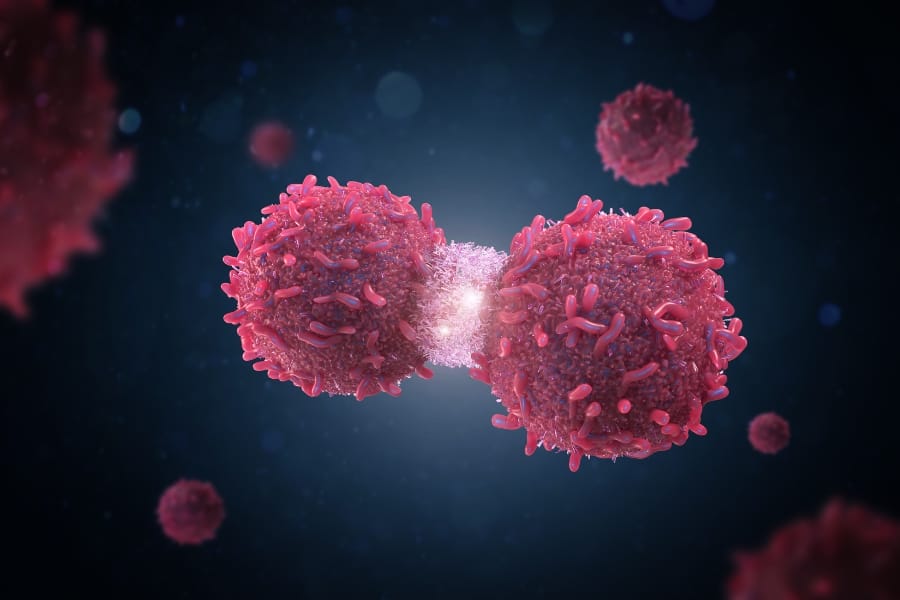
In the second paper, “Pathogenic BRCA1 Variants Disrupt PLK1-regulation of Mitotic Spindle Orientation,” we looked at how certain cells grow and divide and, specifically, how those cell divisions affect the environment that guides the daughter cell’s function. This is called ‘oriented cell division’ and we were interested in how a BRCA1 mutation impacts the cell’s ability to divide in an oriented manner. We found that certain mutations in BRCA1, those that associate with an increased risk to develop cancer, blocked the cell’s ability to divide in an oriented way.
Cancer is basically a disease of uncontrolled cell division. How are BRCA genes related to early cell division?
Women with an inherited BRCA1 mutation can have an overall risk of breast cancer between 40 and 87 per cent depending on the variant, the genetic makeup of the individual, and other lifestyle risk factors. Part of the reason why people who inherit these BRCA variants are more likely to develop cancer, particularly breast cancer, is because these genes are involved in DNA repair and help fix DNA mutations when they occur.
But BRCA1 has other functions within the cell that are not nearly as well studied, including controlling how a cell divides into two daughter cells. Prior work from our group and other groups discovered genes that change the risk for developing cancer in carriers of BRCA1 mutations and these genes were frequently found to control the process of cell division. In one prior study, we found that a change in a gene called hyaluronan mediated motility receptor (HMMR), can further increase the risk of cancer in women that already carry a mutation in BRCA1. Working with collaborators using a mouse model, we found that a cell expressing too much HMMR will not undergo a stable cell division and will also send out signals to the environment that cause other cells to infiltrate the tissue, which seems to promote the growth of tumours in these mice.
Understanding these environmental factors — and not just the genes — is critical to learning how these cancers might develop in children or adults and, eventually, how we might stop them.
How does your second paper build on the findings of the first?
In our first paper, we looked at how changes to the tissue environment may increase the process of tumour development in BRCA1-mutant tissue. In our second paper, we dive further into the precise mechanisms of how BRCA1 is needed to ensure that each cell division produces two daughter cells in a correct and oriented manner, which is absolutely essential for the growth and function of tissues.
We found that human cells that carry a BRCA1 variant enter cell division very quickly, but fail to correctly orient their division axis; that is, the two daughter cells that are produced are not likely to be oriented with respect to their surrounding basement membrane. This is important because these cells’ orientation plays a key role in the architecture and function of the tissue. These results show how small changes to this particular gene can cascade into fundamental shifts in the cellular environment and promote the development of cancer.
Together, these papers show in far greater detail the biological processes affecting the early development of hereditary cancer. Findings from these papers may allow us to spot the early warning signs of cancer, including for childhood cancers.