

Dr. Quynh Doan has a difficult but rewarding job. When sick kids and their families come to the BC Children’s Hospital emergency department, she gets them the help they need as fast as she can. Often, many emergency situations happen at the same time and prioritizing what to do first is difficult.
Emergency physicians’ work is unpredictable by nature, and rising to that challenge is what they’re trained for. And Quynh, Senior Executive Director and Associate Dean of Research at BC Children’s Hospital Research Institute, thinks there’s a better way to assign patients to doctors. If emergency departments can measure, monitor, and anticipate the workload for each visitor, they can reduce risks and prevent staff burnout.
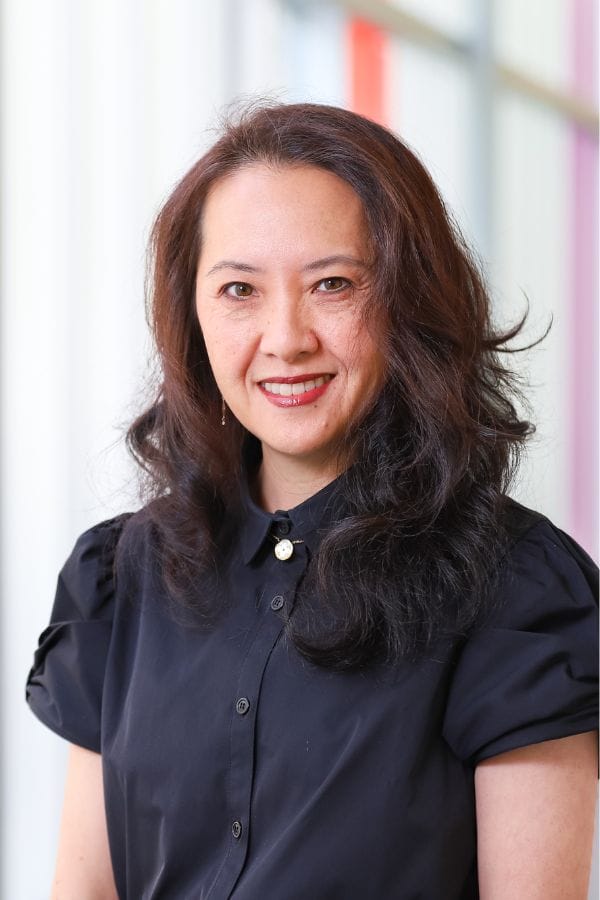
Dr. Quynh Doan, Senior Executive Director and Associate Dean, Research, BC Children’s Hospital Research Institue; Congdon Family Hospital Chair in Research at BC Children’s Hospital.
Hospitals don’t currently have a clear way to measure doctors’ workload. Decisions are often based on educated guesses of those working in the department. Quynh believes patients checking in for emergency care deserve an assignment process backed by evidence.
That’s why she worked with emergency medicine specialists, digital health experts, and patient partners to develop the Standardized Workload Assessment Metric for Pediatric Emergency Departments (SWAMPED). It’s a set of validated, standardized scores to rank the difficulty and time commitment of tasks doctors perform in the emergency department.
Sending someone home with a prescription is described as relatively straightforward. It scores lower than a more intense task. Resuscitating a patient or providing mental health supports carry higher scores, because they take more work.
Health Research BC supported Dr. Quynh Doan with match funding through the Canadian Institutes of Health Research’s Institute Community Support Planning and Dissemination Grant – Supporting & Strengthening the Health Workforce stream.
This goes beyond existing triage, which tells medical teams which patients to see first. But sometimes, people with urgent medical issues can be easily treated. Whereas patients who aren’t first on the triage list may have a complex condition that needs more time to manage.
The number of patients seen in an emergency department is another metric currently used to make long-term resource and planning decisions. But it doesn’t tell the whole story.
On today’s shift, someone could say that I worked less hard than last shift, because I saw 12 patients instead of 20,” Quynh explains. “But last shift, I could have seen 20 patients with simple presentation – like stubbed toe or cuts. They only needed cleaning and reassurance. Today, however, one of my patients had a mental health crisis. And it required more time and effort to appropriately support them.
– Dr. Quynh Doan

Measuring workload accurately means emergency departments can make better moment-to-moment assignments. It also enables better staffing. Emergency departments able to anticipate workload using historical trends to guide planning can ensure patient safety and prevent staff burnout.
As the tool gets closer to being used in children’s emergency departments, Quynh’s team is finalizing the score framework after working with doctors across Canada.
Next, Quynh plans to work with software experts to build a program incorporating artificial intelligence to automatically score workload using information from a patient’s emergency visit. In the future, AI could predict workload based on a patient’s reason for coming to the emergency department along with their previous medical history. It’s all part of an effort to better use available resources and streamline how a patient is assigned to a doctor.
The SWAMPED tool was developed for pediatric emergency departments. But Quynh envisions it being implemented across healthcare settings to measure workload, such as for nursing teams.
Quynh hopes a standardized measure of doctor workload will make emergency visits better, safer, and more efficient for patients.
Credit: Michael Smith Health Research BC