Clinical trials are the cornerstone of health care as we know it today. Nearly every treatment, drug, or therapy that is incorporated in clinical settings first had to undergo a clinical trial involving human participants to determine safety and efficacy. Clinical trials can also be conducted to compare and determine the most effective treatments or to understand if certain populations respond to specific treatments better than others.
Before any drug or treatment even makes it to trials, years of research and preclinical studies are first conducted to ensure it is as safe as possible before it is even given to a person. Once considered safe and promising enough to be used in clinical trials, there are then four phases. The first phase examines if the treatment is safe and has any side effects in healthy volunteers. This gives way to the second and third phases, which evaluate how well the treatment targets the specific condition and what the safest most effective dose would be. The fourth phase of the trial would study the intervention after it has received approval and is available for public use. A clinical trial is what bridges the gap between the research taking place in labs and real-world application in clinical settings.
Prior to the first phase of clinical trials in humans, a large base of safety data is made available due to years of research and preclinical work.
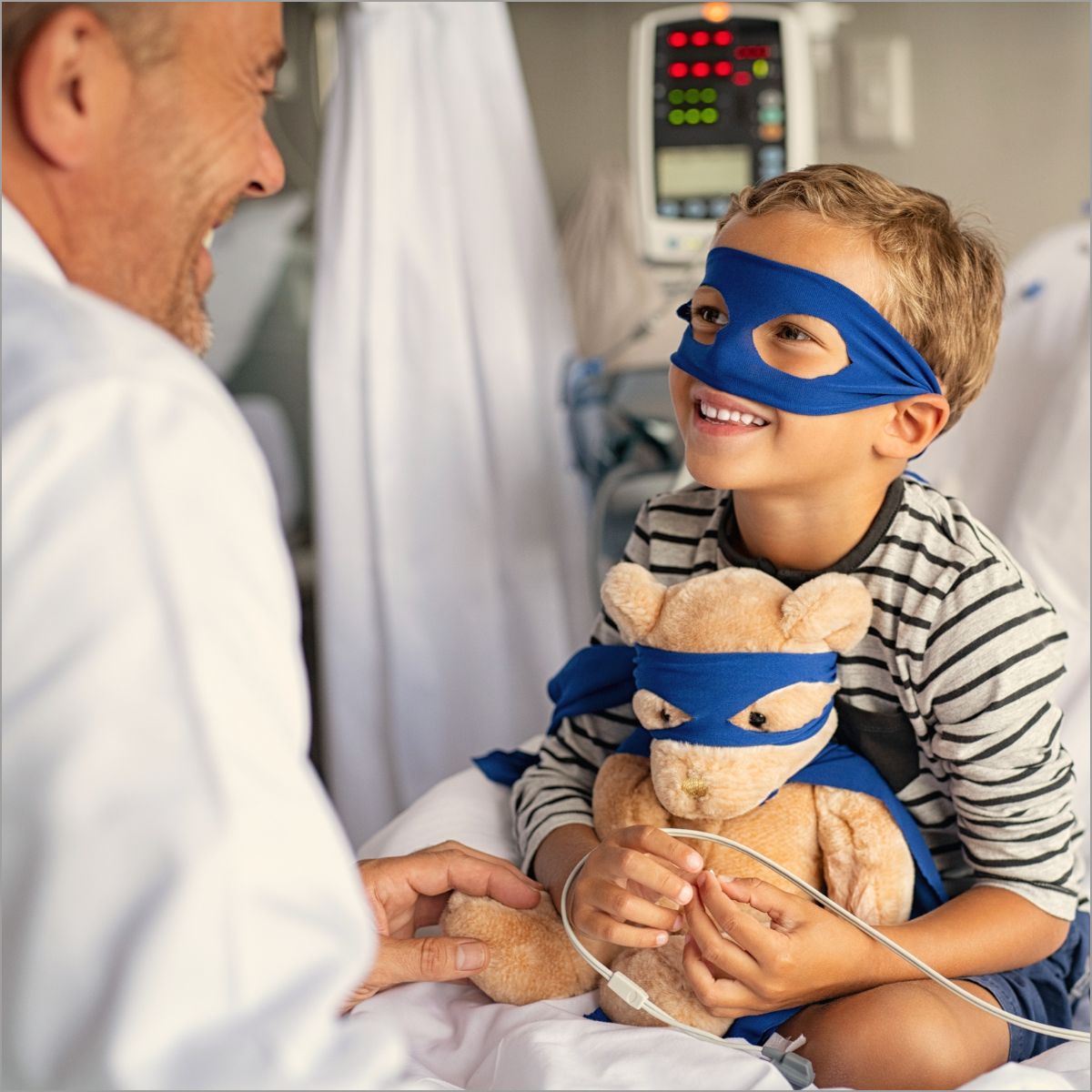
Clinical trials for adults are fairly common, however it is often more difficult to do so for children because they’re constantly growing, and there are stricter rules in place for children participating in research work. As a result, the treatment for adults is often used for kids — after correcting the dose to be in accordance with age. But for a variety of illnesses, including cancer and diabetes, children’s changing bodies means that the manifestation of their illness and symptoms are much more complex — and what works for adults does not necessarily work for children. It is vitally important to have clinical trials for pediatric health interventions that are distinct from trials for adults.
BC Children’s Hospital Research Institute (BCCHR) is dedicated to enabling more trials that specifically benefit kids and addresses this gap in care. As one example, in 2020, BCCHR led a clinical trial for a faster way to detect Group A Streptococcus (GAS), also known as strep throat. Strep throat is a bacterial infection that can cause inflammation of the throat and tonsils, along with sore throat, fever, chills, and headaches. In severe and untreated cases, children can develop rheumatic fever, a condition where your immune system will mistakenly attack healthy cells. This could lead to rheumatic heart disease, which damages the heart valves.

Strep throat is an infection caused by the Group A Streptococcus bacteria. Common symptoms include sore throat, fever, and chills.
Prior to the trial, strep throat was tested for via bacterial culture, which could take up to three days for results. Alternative rapid testing options were quicker, but not sensitive enough, and often yielded false negatives and positives, still requiring bacterial culture for confirmation. When parents would bring their kids to the emergency department with signs of strep throat, physicians would provide a prescription to parents to be filled later on if the culture test was positive for GAS. However, this strategy was not ideal, as it would result in prescriptions being filled for negative tests and families whose children had a positive test being difficult to contact. Having a rapid molecular test that was quick enough to be administered on the spot and sensitive enough to provide an accurate diagnosis was necessary for earlier treatment and to avoid the overuse of antibiotics.
In a 2024 study conducted at BC Children’s Hospital (BCCH), 227 children were randomly assigned to one of two groups: one was given a new rapid molecular test, and the other was tested by traditional methods with bacterial culture of a throat swab. Results showed that the rapid testing group was treated earlier, and required fewer antibiotics. The study emphasized that a rapid molecular testing program for GAS in the pediatric emergency department enables earlier positive health outcomes and a reduced dependency on antibiotics. This would serve as an important tool against illnesses that evolve with antimicrobial resistance patterns.
In 2025, BCCHR researchers, including Dr. Quynh Doan and Dr. David Goldfarb, were part of a second study that evaluated the application of the rapid test in a Canadian pediatric emergency department. Either the rapid test or the throat culture test were administered to 392 participants. Emergency department physicians and caregivers were asked to rate their levels of satisfaction with either test. The study showed that both physicians and caregivers were much more likely to be satisfied with the rapid test.
Over successive years, these clinical trials cemented the rapid test as standard practice in the emergency department at BCCH. Without trials, it would be nearly impossible to have accurate and equitable health care.
Point-of-care molecular testing is now used routinely for patients in the emergency department, shortening the wait time for families to know if their child requires antibiotics, allowing for faster recovery.
– Dr. Quynh Doan

At BCCHR we strive to provide children in British Columbia and the Yukon the chance to live their healthiest, happiest lives. With the research and discovery taking place at the Institute, we have clinical trials acting as the channel through which we can refine and perfect all that we do. Clinical trials allow us to bring our latest discoveries and new treatments to patients and their families.