
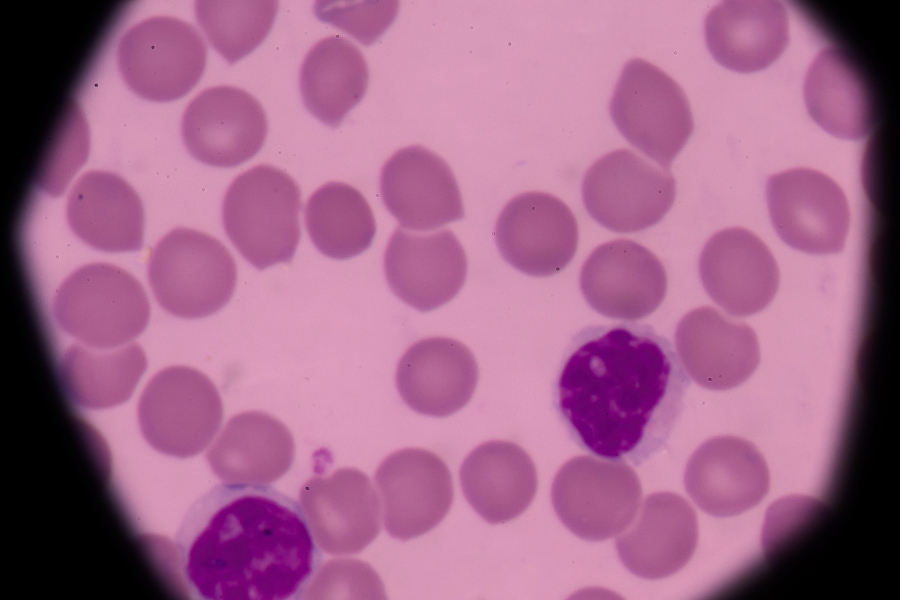
New research published in Cell Press by BC Children’s Hospital Research Institute (BCCHR) investigator Dr. Megan Levings and her team shows how using a standard approach to tracking immune cells is needed for both scientific research and the clinic.
T cells are a key component of the body’s adaptive immune system dedicated to handling harmful pathogens and for building long lasting memory of those threats. To engage perceived threats to the body, T cells must first go through a process of ‘activation’ wherein the cells are exposed to a small piece of the perceived threat as well as molecular signals that trigger the activation status of the cells.
Once activated, T cells are often the predominant reason your body is able to fight off disease, and just as importantly, remember the disease if it ever comes back.
In this new age of immunotherapies, reliably detecting these activated T cells is critical for understanding immune responses in the lab and for monitoring in the clinic. However, there is currently no standardized method for tracking these incredibly important cells — making it difficult to compare results between different labs, samples or patients.
“Having reproducible methods to measure key immune system parameters is fundamental to scientific research,” says MD/PhD student and first author on the paper Torin Halvorson. “As the role of pathogen-specific T cells is becoming increasingly relevant in medicine, and as we seek to move toward routine clinical measurement of these T cells to track patients’ immune responses over time, ensuring that we are accurately measuring these cells across diverse contexts and patient populations is essential.”
Having reproducible methods to measure key immune system parameters is fundamental to scientific research
– Torin Halvorson


Tracking these activated T cells is also tricky as the process of collecting and analyzing them can, by its very nature, lead to activation. Furthermore, if cells are collected from human blood draws, there can be a significant difference between samples — known as batch-to-batch variability. When growing cells in the lab, the medium used to grow them, the length of time for which they are stimulated, and the method of analysis can all contribute to discrepancies between samples.
These variations can have a significant impact. When studying the effect of COVID-19 vaccines, activated T cell counts from different studies often varied by orders of magnitude.
It is for these reasons that Dr. Levings and other researchers from the pan-Canadian team set out to develop a standardized method to identify activated T cells. To demonstrate how this can be done, the team looked at two different disease models: SARS-CoV-2 (the virus that causes COVID-19) and a common viral infection called cytomegalovirus (CMV).
T cell responses during SARS-CoV-2 infection are incredibly important for reducing the severity of the disease. Activated T cells play a key role instructing other immune cells to create antibodies specific to the virus and to keep it contained or neutralized.
T cells also play an important role in managing CMV —a very common virus that infects around 80 per cent of the population and typically causes a persistent, but asymptomatic disease. T cells specific to CMV are essential for keeping the disease in check, and can account for up to one in 10 of all T cells present within a person’s immune system. If this population of CMV-specific immune cells falls, however, such as in the case of immunosuppressed transplant patients, the virus can come roaring back, causing significant disease and even death.
By investigating these different pathogen responses across several Canadian research centres, the team were able to develop an optimized method of tracking activated T cells. After honing their methods, the research team found that a specific statistical technique and a set list of cell surface markers to analyze, were the most reliable methods of tracking these cells in a reproducible manner.
If this technique is adopted within the research and clinical community, we can more easily compare different studies and more reliably determine the impact of these critical immune cells.
– Dr. Megan Levings

“If this technique is adopted within the research and clinical community, we can more easily compare different studies and more reliably determine the impact of these critical immune cells,” says Dr. Levings. “As the clinical relevance of immune cell-based therapies becomes more apparent in diseases such as cancer, organ transplantation, and diabetes — ensuring that everyone is working from the same page will accelerate our ability to find the treatments and cures we so desperately need.”