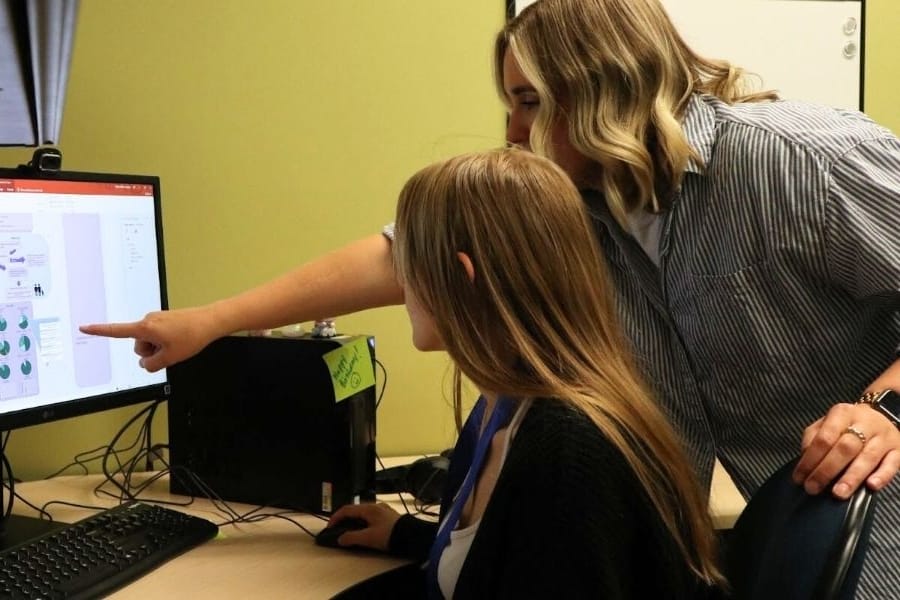
seed2STEM is a research summer program that aims to increase participation in science, technology, engineering, and mathematics (STEM) among Indigenous youth. The program, developed at UBC by the International Collaboration on Repair Discoveries (ICORD), introduces students to careers in STEM through paid placements in research labs across Metro Vancouver and Kelowna. To reduce barriers to participation, students receive comprehensive support including transit passes, meals, access to youth support workers, and more.
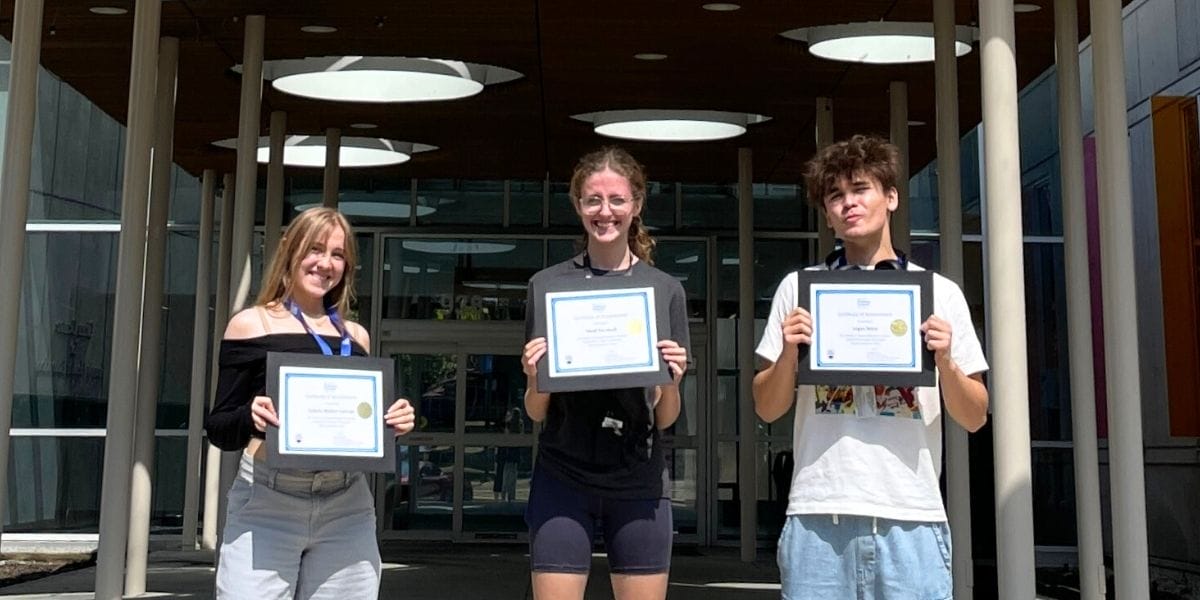
seed2STEM students (from left to right): Dakota Walker-Laberge, Madison Perreault, and Logan Mora
For the first time, BC Children’s Hospital Research Institute (BCCHR) is participating as one of the host institutes in the program, welcoming four students for career placements. During their six-week internship, students have had the opportunity to conduct scientific research, engage in weekly research-focused group activities, learn from Indigenous and professional guest speakers, and participate in field trips to scientific and cultural sites.
Dakota Walker-Laberge had just graduated high school when they joined the seed2STEM program earlier in the summer. “When I walked into the meeting room at Blusson Spinal Cord Research Centre, I felt welcomed instantly. The people running it are very kind and welcoming,” says Dakota.
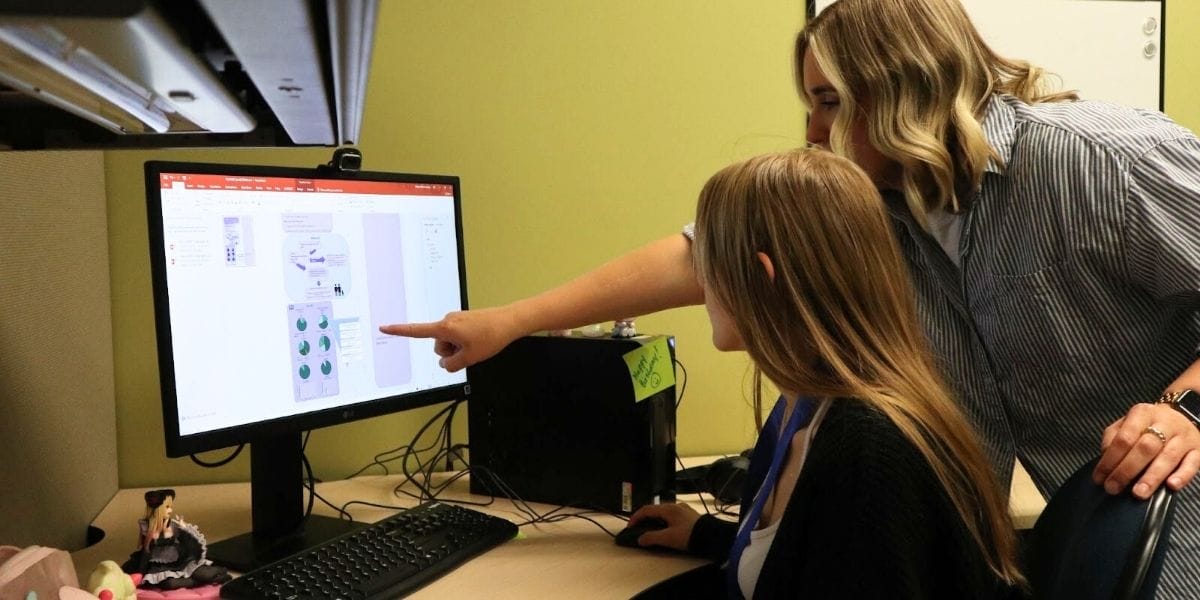
Dakota Walker-Laberge with her supervisor, Courtney Cook, of the Elliot Lab.
Through the mentorship, hands-on research, and community support at seed2STEM, students gain the confidence to envision themselves as future scientists, researchers, and health professionals. Logan Mora shares, “seed2STEM has given me a clearer idea on what I want to do in my post-secondary education. I want to study kinesiology at UBC.”
Where groundbreaking research begins
Logan shares that their most memorable project was assisting in a scoping review for developmental coordination disorder (DCD) that incorporates Indigenous ways of knowing. “I found it intriguing because there is little to no media covering DCD, despite how impactful it can be for a child’s development.”
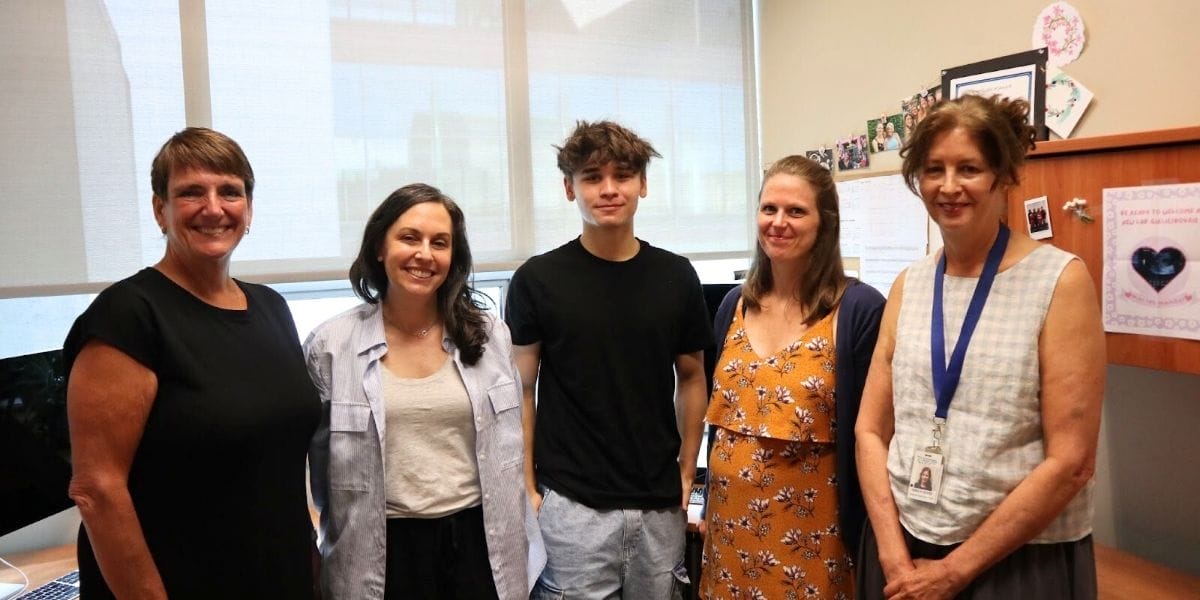
Logan Mora with the Zwicker Research Team.
Esa Grandy-Bighorn, who is currently in his second year at seed2STEM, shares the firsthand experience they had while working in the biomedical engineering lab. “I was working on a project that studies the effect of a nurse’s shift schedule on REM sleep using EEG technology.” In his current placement, he is exploring a different type of research, supporting a literature review examining the relationship between self-compassion and chronic illness in young people.
Meanwhile, Madison Perreault’s highlight of the program was working with live mice to better predict and prevent pancreatic cancer. “We did the removal of tumours from the mice, and used lab techniques to scan for specific proteins. It was both intense and fascinating to see real-world applications of science, and it made the idea of working in health care feel more real and achievable.”
‘Go for it’
For many of the students, seed2STEM is more than just a summer program — it is the first step into spaces where Indigenous voices are heard, valued, and amplified.
I didn’t realize how few Indigenous people are in STEM fields. STEM was originally a white man’s world, then us women slowly trickled in, then people of colour as well, and now it’s time for Indigenous knowledge to take its place in STEM.
– Dakota Walker-Laberge

Dakota says, “Go for it. I didn’t realize how few Indigenous people are in STEM fields. STEM was originally a white man’s world, then us women slowly trickled in, then people of colour as well, and now it’s time for Indigenous knowledge to take its place in STEM.”
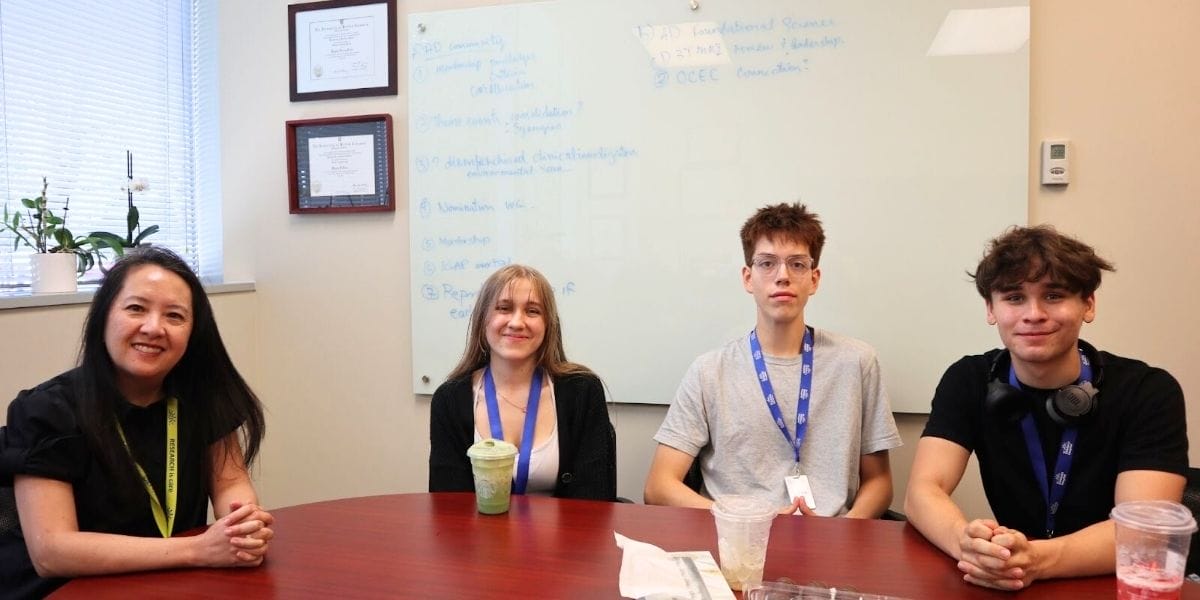
BCCHR Senior Executive Director Dr. Quynh Doan and seed2STEM students (from left to right): Dakota Walker-Laberge, Esa Grandy-Bighorn, and Logan Mora.
Esa also emphasizes how the experience allowed him to discover new career pathways and true interests, “I learned that I wanted to go into psychology or kinesiology. I learned that I could intersect STEM with social sciences. The program exposes you to possible careers you could be going into — it exposes you to a number of doors to be opened.”
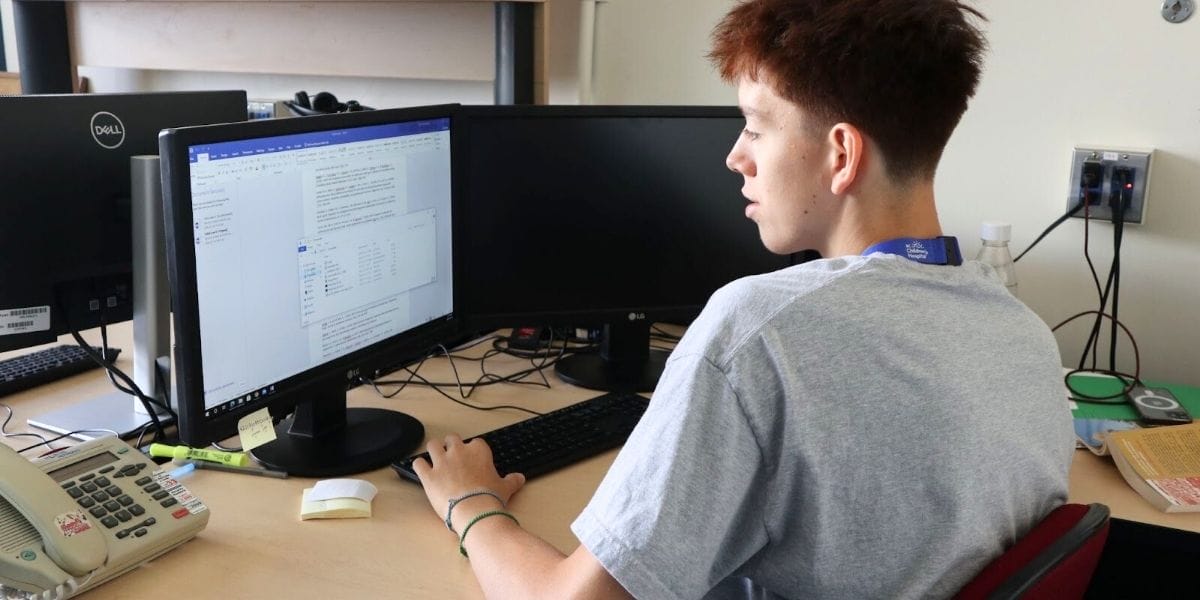
Esa Grandy-Bighorn conducting a literature review for the Boerner Research Team.
The 2025 seed2STEM program runs until Friday, August 15, 2025. Whether through field trips, literature reviews, or hands-on laboratory work, the program allows students to gain a deeper understanding of what careers in STEM can look like — making them future leaders and catalysts for change.
Learn more about seed2STEM at the program’s official page.