In a recent study, published in JAMA Network Open, researchers at BC Children’s Hospital Research Institute (BCCHR), The University of British Columbia (UBC), and the BC Centre for Disease Control (BCCDC) found that most children with chronic medical conditions face a significantly higher risk for hospitalization due to respiratory syncytial virus (RSV) in their first two viral seasons than children without underlying conditions. The findings help inform which children would benefit the most from preventative treatment for the virus.
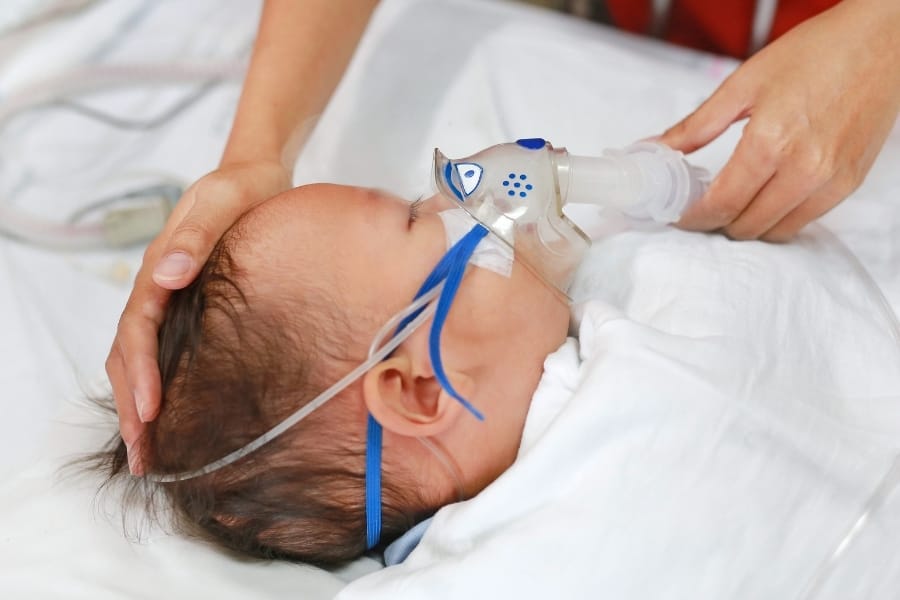
RSV seasons are defined between October 1 and March 31 based on the epidemic trends in BC. Each year, many young children and infants are admitted to hospital due to RSV — the leading cause of lower respiratory tract infections. For the past three decades, the only available preventative has been an antibody that must be administered monthly throughout the RSV season. Around one per cent of all children will require hospitalization due to the virus within their first year of life.
In 2023, new products were approved for the use of RSV prevention in children: RSVpreF, a vaccine administered during pregnancy, and nirsevimab, a single-dose long-acting monoclonal antibody administered to the infant. As guidelines for these new products are being set and refined, this study adds an important element to determining who is most in need of RSV prevention.
RSV is one of the most serious diseases for vulnerable young babies.
– Dr. Pascal Lavoie


“RSV is one of the most serious diseases for vulnerable young babies,” says Dr. Pascal Lavoie, senior author and investigator at BCCHR. “BC publicly funds RSV antibody immunizations for children younger than two years of age at moderate- and high-risk of severe RSV infection. This study helps us determine which children would benefit the most from these preventative interventions based on their risk profile and the effectiveness of the intervention. Any improvement in our understanding is essential to determining the best approach to RSV prevention efforts.”
The research team looked at more than 430,000 children born in BC between April 1, 2013 and March 31, 2023. Of all children born in that decade, they found that 4,567 children (1.1 per cent) were hospitalized due to RSV at least once during their first two viral seasons.
Within this cohort, 25,452 children were diagnosed with 1,116 distinct chronic conditions. When comparing the rates of hospitalizations within the first 24 months, researchers found children with chronic medical conditions were hospitalized for RSV at twice the rate of children without underlying conditions. For some of these children, this increased risk persisted through their first two seasons. The risk was particularly elevated among children with chronic conditions affecting the lungs, heart, and digestive system, associated with a premature birth under 28 weeks gestation, or in children with Down syndrome. Children with chronic medical conditions also required longer stays in hospital and pediatric intensive care units, and more mechanical ventilation over their first two seasons, compared to children with no underlying health conditions.
We now have two more tools: a vaccine that can be given during pregnancy to boost the infant’s protection at birth, and a long-acting antibody that can be given directly to the baby. Most infants won’t need both, but it’s important to identify which children will benefit most from each approach.
– Dr. Pascal Lavoie
“RSV prevention options have evolved significantly in the past two years,” says Dr. Lavoie. “We now have two more tools: a vaccine that can be given during pregnancy to boost the infant’s protection at birth, and a long-acting antibody that can be given directly to the baby. Most infants won’t need both, but it’s important to identify which children will benefit most from each approach.”
The National Advisory Committee on Immunization (NACI) recommends that provinces work toward universal RSV immunization for all infants, depending on what’s available and how much it costs. They also emphasize prioritizing infants at higher risk of severe RSV illness during their first or second RSV season.
“Our findings help identify which children may need antibody protection during their first and second RSV seasons, even if their mother received the RSV vaccine during pregnancy,” says Dr. Lavoie. “In keeping with the recommendations from NACI, these updated risk assessments are already helping to ensure that children in BC will be best protected for the next viral respiratory season.”