
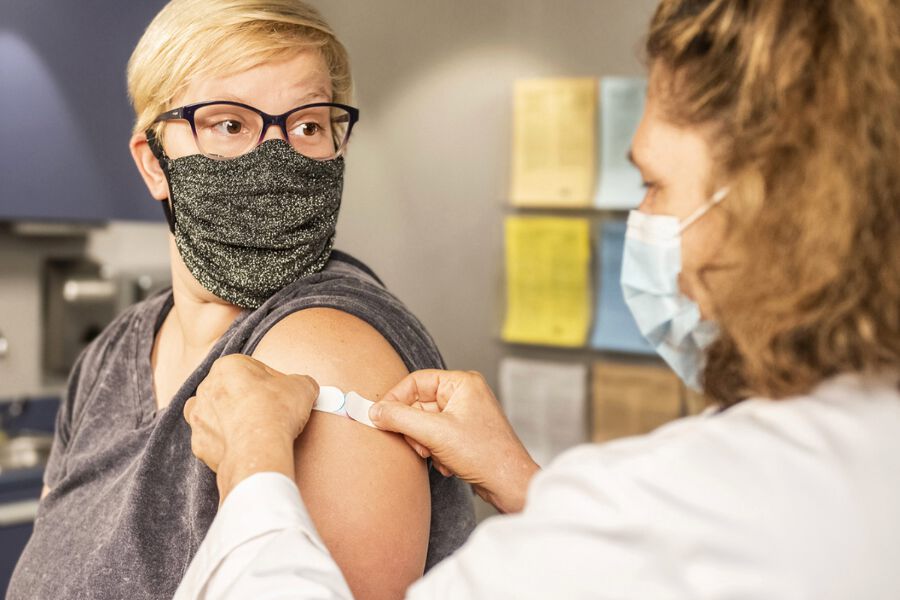
In Canada, currently approved COVID-19 vaccines — from Moderna and Pfizer-BioNTech — have demonstrated remarkable efficacy based on two doses taken at specified intervals. But what happens if you contract COVID-19 in between shots?
Dr. Manish Sadarangani, investigator at BC Children’s Hospital, Associate Professor, Department of Pediatrics, University of British Columbia and Director, Vaccine Evaluation Center, weighs in on the second dose and explains why some people are harder to vaccinate.
Is it important to receive the second shot before the four-week interval elapses?
If you receive your second shot outside the four-week timeframe, even by a couple of weeks, the delay will likely not be detrimental.
Because of the pandemic’s widespread effects, we want to fully vaccinate Canadians as quickly as possible, while of course maximizing the effect of the first shot.
What happens if I get COVID-19 in between shots?
It’s unlikely you would contract COVID-19 after the first shot due to the first shot’s efficacy, although it’s important to remember that it takes approximately two weeks for protection to start after getting the first dose. If you are exposed to the virus in the first few weeks after receiving the first shot, there’s a possibility you could contract COVID-19.
If you do get COVID-19 in between shots, you should still get the second shot once you have recovered.
Why are some people harder to vaccinate?
Very few vaccines are 100 per cent effective as everyone’s immune system is different. Seniors are likely to respond less well to vaccines. And if you have health problems that may suppress your immune system, the vaccine may not work as well, which is why these people should remain in close consult with their family doctors or specialists.
There’s also the environmental factor. Even if you have a good immune response to the vaccine, if you have high exposure to the virus, there’s a possibility you may still become infected.
Will these vaccines prevent transmission of COVID-19?
From a purely scientific perspective, we don’t know because transmission prevention was not part of the clinical trials. But once we vaccinate enough people, we’ll start to see a decline in transmission if the vaccines prevent transmission.
What’s the main difference between the Moderna and Pfizer-BioNTech vaccines?
Scientifically, the two vaccines are very similar—that is, they both were approximately 95 per cent effective in clinical trials and this level of protection should last for at least three months for both vaccines. Until we have more data, we won’t know how long immunity lasts after vaccination and whether or not additional booster shots will be required to keep us protected.
The main practical difference is their stability—essentially, how long they can last outside of the freezer.
The Pfizer-BioNTech vaccine must be kept at minus 80 degrees Celsius and used relatively quickly when removed from the freezer. The Moderna vaccine is more stable and can withstand higher temperatures for longer. Subsequently, the Pfizer-BioNTech vaccine will be used more frequently in urban communities, while the Moderna vaccine will be used in more rural settings where more travel is involved.
Credit: UBC News Story