An interest in science and humanism spurred Dr. Steven Miller to study medicine.
“Physicians are in a privileged position to provide care to patients and their families in critical moments in their lives,” he says.
As a medical student, Dr. Miller pursued his interest in global health and travelled to Ghana for a public health research elective. While in Ghana, he was assigned to the pediatric ward of a large hospital where he witnessed many children presenting to hospital in coma. He still vividly remembers watching their recovery from being bedridden with malaria or meningitis to playing with a football in the yard mere weeks later.
“Seeing their recovery was phenomenal,” Dr. Miller remarks. “It was nothing I had ever witnessed before.”
That experience led him to study pediatric neurology. While training in neurology at the Montreal Children’s Hospital, he attended rounds by a founder of the then new discipline of neonatal neurology.
“It was the first time I saw basic science and clinical care so tightly interwoven and thought, ‘This is the field to pursue’,” he says. “That opened the door to the developing brain — which I still see as miraculous — how the brain changes in newborns and its capacity for resilience.”
Building a career in pediatric neurology
Following his fellowship and residency in his native Montreal, Dr. Miller moved to San Francisco to complete a master of advanced science in clinical research and a postdoctoral fellowship in neonatal neurology and brain imaging at the University of California, San Francisco (UCSF). He was joined by his wife, Dr. Mina Matsuda-Abedini, while she pursued training in pediatric nephrology.
From there, they were recruited up the West Coast to BC Children’s Hospital in 2005 where they practiced until 2012.
For the past decade, Dr. Miller served as head of neurology and head of The Garry Hurvitz Centre for Brain & Mental Health at SickKids and the University of Toronto. He led an active clinical research program focused on improving the brain health of critically ill newborns, such as those born preterm or with congenital heart disease, and took particular joy in mentoring trainees and early career faculty.
Over this time, Dr. Miller maintained his connections with the BC Children’s Hospital Research Institute as an affiliate investigator and continued to collaborate on multi-site research studies.
Back at BC Children’s
Dr. Miller returned to BC Children’s in April of this year as chief of pediatrics. He continues as an adjunct scientist at SickKids Research Institute as well as scientific co-director of CHILD-BRIGHT, an innovative pan-Canadian network that aims to improve life outcomes for children with brain-based developmental disabilities and their families.
“I find that BC Children’s Hospital and Research Institute are distinguished by their people and their wonderful spirit of collaboration,” enthuses Dr. Miller, who is also a professor in pediatrics at the University of British Columbia.
He’s motivated by the opportunity to improve the care BC Children’s provides, noting the critical connections between the hospital, a leading children’s health-focused research institute, a global research-intensive university and the provincial government are already in place.
“I find it really exciting when we can bring family-centered patient care, research, education and advocacy together to improve child health. And all of the components we need for that are right here.”
As head of pediatrics, Dr. Miller wants to develop programs that help researchers, clinicians and educators work even more closely together to advance health care for children.
Making a difference in pediatric neurology care
Dr. Miller has made many significant contributions to the understanding of everyday influences on neonatal brain development and has used his research findings to inform care. He has contributed to several clinical practice guidelines and enjoys seeing research advances informing new clinical care pathways.
Children’s Healthcare Canada recently recognized Dr. Miller with the 2021 Individual Leadership Award. He was lauded for his tireless work to improve the health of vulnerable children, and for being a longtime champion of equity, diversity and inclusion strategies to promote the careers of those around him.
The studies he’s collaborated on over the last decade while in Toronto continue. For example, he partners with Dr. Ruth Grunau on early brain development and the influence of exposures to pain, analgesia and sedation. He’s also involved in studies of fetuses and newborns with congenital heart disease, and the influence of heart disease on brain development and neurodevelopmental outcomes.
The changing landscape of brain research
When Dr. Miller started in neonatal neurology, the focus was on dramatic clinical events such as long seizures and cardiac arrests that caused overt brain injuries.
Advanced MRI subsequently opened the window to study the developing brain, expanding research from newborns through the life course. Now, a key area of study is the importance of the home environment.
“One of the postdoctoral trainees I supervised in neonatal neuroscience focused our attention on the home and social disparity. She would comment, ‘We’ve got all the ’omics: transcriptomics, genomics, epigenomics, metabolomics, we just need a “homics” for scientists to take the importance of the home environment more seriously,’” he says.
“I look forward to working with an interdisciplinary research team on our campus here in Vancouver to advance our understanding of these important issues related to the baby brain.”
The future looks bright
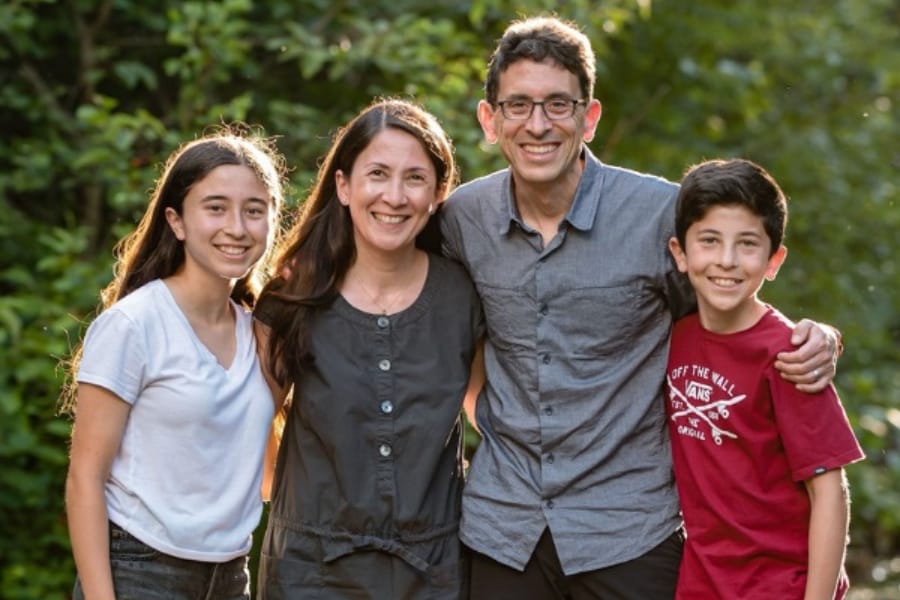
Dr. Miller’s wife, Dr. Mina Matsuda-Abedini, a pediatric nephrologist, is also returning to BC Children’s and the Research Institute. She, along with their 13-year-old son are moving to Vancouver in July. Meanwhile, their 18-year-old daughter will start studying life sciences at McGill.
While Dr. Miller misses spending time with his family, he is happy to tell his wife about his great days at work on his walks home.
“My colleagues here at the hospital and the Research Institute have so many good ideas and are so driven to do well by the children in our care,” he says. “I’m also impressed by their commitment to fostering the success of their colleagues who are at earlier stages of their careers,” he adds. “That, too, has been hugely motivating and something that leaves me optimistic for our future.”