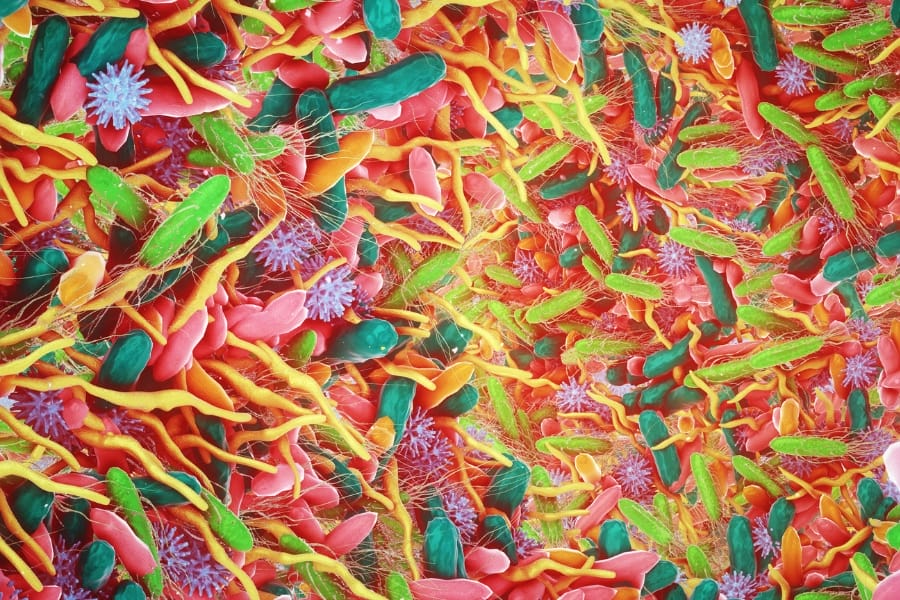
Children’s immature immune systems make them more susceptible to gut bacterial infections, and more and more kids are being diagnosed with inflammatory bowel disease (IBD), a chronic disease linked to gut bacteria. These are two of the reasons why BC Children’s Hospital investigator and CH.I.L.D. Foundation Chair in Pediatric Gastroenterology Dr. Bruce Vallance and his research team study how pathogenic bacteria expand within the gut and cause disease.
Dr. Vallance and colleagues have long wondered what enables bacterial pathogens, which we ingest in small amounts, to survive within, and expand inside our intestines.
“These bacteria need to find a place in our intestines to take hold, establish, and expand, and then they need to overcome all the different defences that normally protect our gut,” says Dr. Vallance, who’s also a professor in the Division of Gastroenterology in the Department of Pediatrics at the University of British Columbia (UBC).
In a paper published yesterday in PNAS, Dr. Vallance, along with lead author and UBC graduate student Qiaochu Liang, UBC research associate Dr. Hongbing Yu, and the rest of his research team, showed that the sugar sialic acid, which makes up part of the protective intestinal mucus layer, fuels pathogenic disease-causing bacteria.
Qiaochu Liang, lead author and UBC graduate student

“This means that in the future, we can potentially target this sugar or how pathogens sense it, to prevent clinically important disease,” says Dr. Vallance.
The study
For this study, the researchers examined Citrobacter rodentium, an intestinal bacterial pathogen of mice that’s used to model infections with human E. coli, and found they had genes involved in consuming sialic acid, a sugar that’s a component of mucus in the gut. They removed these genes from the pathogenic bacteria and found if they didn’t access this sugar, their growth was impaired.
The researchers found that upon consuming these sugars, the bacteria produced two special virulence proteins that help the bacteria cross the colonic mucus layer and stick to the underlying epithelial cells.
The importance
With the advent of more and more antibiotic resistance in bacteria, these bacterial infections are going to become a growing problem again. Without new antibiotics, we need to come up with novel ways to fight these bacteria, like starving them.
– Dr. Bruce Vallance


“In the past, our ancestors were constantly assaulted by dangerous bacteria,” says Dr. Vallance. “With the advent of more and more antibiotic resistance in bacteria, these bacterial infections are going to become a growing problem again. Without new antibiotics, we need to come up with novel ways to fight these bacteria, like starving them.”
Aside from causing infections, similar dangerous bacteria can be found in the intestines of some patients who suffer from inflammatory diseases, such as IBD. These bacteria may start out being harmless, but as the inflammatory diseases progress, the bacteria can change over time and actually worsen disease.
“You start off with IBD, your microbes change, they start digging their way into the cells lining your gut, causing more inflammation, and that may be one reason why IBD becomes chronic,” says Dr. Vallance.
“Specific nutrients such as sialic acid or other sugars might be Achilles heels for them in terms of things you could target to remove dangerous bacteria from the intestine.”
What’s next
Targeting sialic acid could be a way to prevent life-threatening diarrheal diseases in children in developing countries, as well as help treat patients with IBD, celiac disease, irritable bowel syndrome, short bowel syndrome and other inflammatory diseases.
Dr. Vallance and his team are now examining the role other sugars in the gut may play in feeding pathogenic bacteria. They’re also looking for resident good bacteria (probiotics) that could outcompete the dangerous bacteria, stealing the sugars away from them.
Dr. Hongbing Yu, UBC research associate

They also plan to explore potential interactions between resident and pathogenic bacteria. Pathogenic bacteria can’t access the sugars on their own and thus, some of the normally harmless resident bacteria must serve as accomplices.
“Basically, these accomplices cut the sugar off the mucus, and then either they hand it to the dangerous bacteria or the dangerous bacteria have come up with a way of stealing it from them,” he explains.
A better understanding of these interactions could provide new ways to block pathogenic bacteria.
This study was funded by a Canadian Institutes of Health Research Project Grant and a grant-in-aid from Crohn’s and Colitis Canada.