Intergenerational Day, June 1, was launched in B.C. in 2010 out of the momentum created by World Elder Abuse Awareness Day and spread quickly across Canada. We talk to a researcher at BC Children’s Hospital about why it’s important to recognize the special bond between grandparents and their grandchildren.
Dr. Mathilde Duflos originally intended to study the relationships between parents and children when she started her master’s degree in developmental psychology in France in 2016, but she swiftly recognized there was a lack of research on the relationships between grandparents and their grandchildren and has been examining these connections ever since.
Intergenerational relationships have been shown to reduce ageist stereotypes, provide youth with additional trusted adults and facilitate transmission of important historical information.
“It’s a big thing in society today to reduce stereotypes so that everyone can feel included,” says Dr. Mathilde Duflos, BC Children’s Hospital researcher and a licensed psychologist in France.
Dr. Duflos has completed a systematic review of studies examining emotional closeness between grandparents and their adolescent grandchildren, and research on French grandparents and their grandchildren aged 18 to 25. More recently, she investigated how grandparents and grandchildren displayed solidarity with one another on TikTok during the COVID-19 pandemic.
Grandparents and grandchildren on TikTok
In their TikTok video study, Dr. Duflos and a colleague found grandchildren shared videos that emphasize their role in protecting their grandparents when remaining outdoors, taking extra sanitary measures or preparing meals and care packages. While they differed in beliefs and opinions, both the older and the younger generations showed they value physical touch, family celebrations and big life events. Additionally, both parties participated in TikTok activities, such as dance challenges.
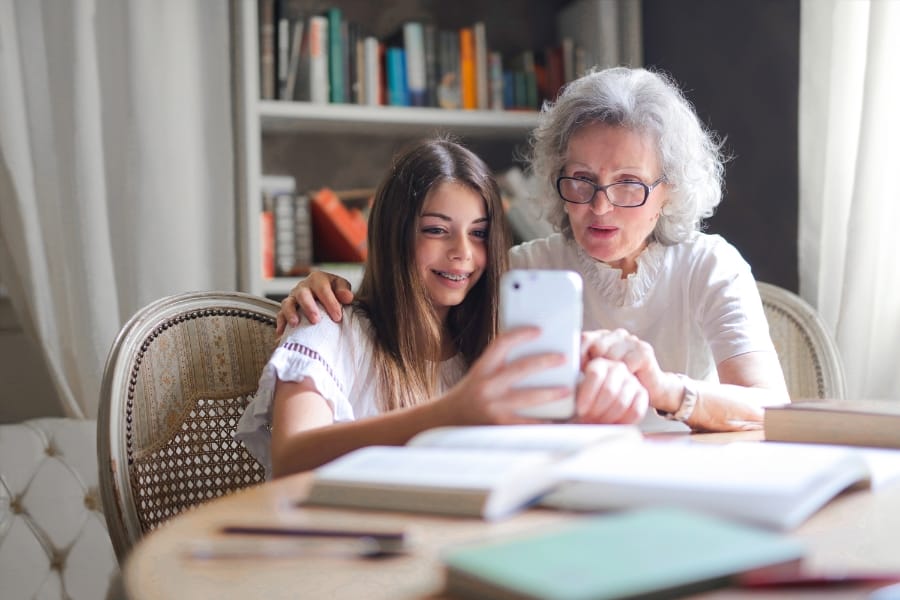
Fortunately, she’s found that intergenerational bonds can be nurtured effectively via social media and teleconferencing platforms. Working with communications scholars, Dr. Duflos found that verbal expressions of affection create strong bonds. Saying ‘I love you’ maintains connections.
Learning from the older generation
While grandchildren wanted to be seen as caretakers of their grandparents during the pandemic, Dr. Duflos’ other work found teenagers expected their grandparents to act as role models and advisers.
“We all need to find someone we can talk to without the fear of being rejected or the fear of judgement. Sometimes it’s an older person because they’re not necessarily in our peer circle and they’re not our parents.”
She’s found that young people want to learn about their ancestry and family histories.
“Grandparents are a living book,” says Dr. Duflos.
How grandchildren influence time spent outdoors
Most recently, as a postdoctoral student in Dr. Mariana Brussoni’s lab, Dr. Duflos has studied grandparents and grandchildren, aged three to five years, and outdoor play. Dr. Duflos wanted to see whether grandparents’ emotional ties to their grandchildren increased their motivation to participate in outdoor activities.
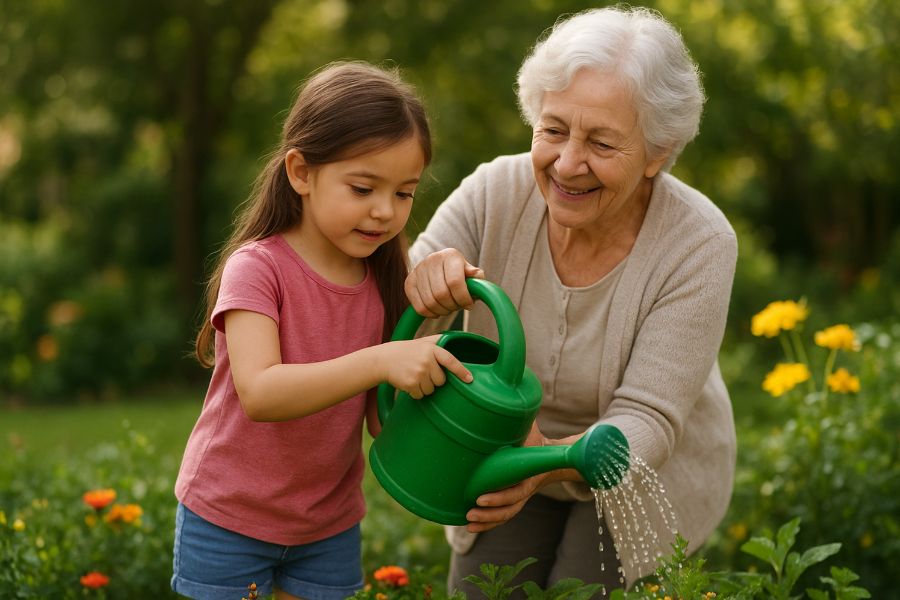
She found many grandparents in B.C. care for their grandchildren one day a week to support parents who are struggling to afford child care. The older generation finds joy in being silly and seeing the world through their grandkids’ eyes. Grandparents tend to feel motivated to get in better physical shape to play outdoors with their grandchildren, but they can also feel too unfit to contend with their grandkids’ energy levels. Grandparents also reported that the wildfires and flooding last year made outdoor play more difficult.
“Usually they say it’s a really great moment to share things together, to be in nature together, to teach their grandchildren,” Dr. Duflos says.
“Younger children are not in school, their parents are usually working, so it’s a really good opportunity to create their own relationship.”