
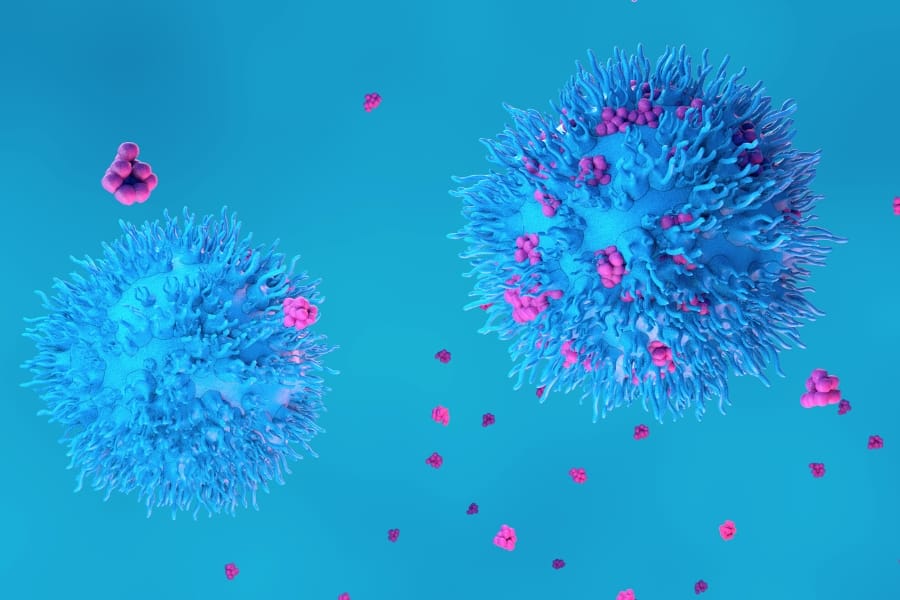
Dr. Megan Levings and her team have recently published two papers on the very different functions and uses of regulatory T cells (Tregs). Tregs are immune cells that help to rein in immune responses to ensure that they don’t go too far and begin harming healthy tissues in their pursuit of foreign invaders. Researchers are still uncovering the many ways in which Tregs can be used to improve health, but the promise of these fascinating cells was heralded this year by the Nobel Prize in Physiology or Medicine 2025.
A better class of inhibitor
In one of these studies, published in Cell Reports Medicine, the team of BC Children’s Hospital Research Institute (BCCHR) researchers compared different types of anti-inflammatory inhibitors and their impact on Tregs’ suppressive capabilities.
Janus kinase (JAK) inhibitors are used in medicine to shut down the chemical signals our bodies use during inflammatory immune responses. JAK inhibitors are commonly used for the treatment of chronic inflammatory conditions, such as rheumatoid arthritis or ulcerative colitis. These drug works by blocking many different immune cells across the board, including Tregs, to reduce inflammation.
Dr. Megan Levings was the principal investigator on two different papers this year exploring the potential benefits of T regulatory cells as a treatment for a variety of different immune-related disorders.

Dr. Levings and her team investigated how different types of JAK inhibitors effect Tregs. They were specifically interested in whether an inhibitor of one type of JAK kinase, known as tyrosine kinase 2 (TYK2), might be better for Tregs compared to other inhibitors. Importantly, this TYK2 inhibitor, called BMS-986202, spares the chemical signalling pathways needed to maintain Treg function. They found that while the JAK inhibitor completely prevented Treg function, BMS-986202 reduced inflammation and actually improved Treg ability to suppress inflammatory signals.
“Finding therapies that block inflammation while sparing or even enhancing Treg function could greatly improve the treatment of many autoimmune or autoinflammatory diseases,” says Dr. Levings. “This study shows that factoring in the impact on Treg function can lead to safer and more robust anti-inflammatory treatments.”
An important step to a diabetes cure?
In the second paper, published in Science Translational Medicine, the team demonstrated that engineered Tregs could induce long-lasting tolerance and protect transplanted tissue from host immune system attack. This important paper, cited by the Nobel Prize committee in their scientific summary, shows that engineered T cells can provide a missing link during transplantation and “teach” the host immune system to tolerate transplanted cells. Without this type of mechanism, kids receiving a transplant are reliant on immunosuppressive medicines that weaken the immune system and leave the child vulnerable to other infections.
For this study, the team were testing whether chimeric antigen receptor (CAR)-expressing T regs could protect transplanted islet cells in the context of type 1 diabetes (T1D). T1D occurs when the body’s immune system mistakenly destroys insulin producing cells, resulting in an inadequate supply of the hormone, which, in turn, can lead to spikes in blood sugar and requires constant around-the-clock maintenance. Researchers have been attempting to achieve a potential cure to the condition by transplanting islet cells and enabling them to remake insulin in the body, sparing these children from a lifetime of painful jabs and constant worry.
The study showed that when the Tregs were designed to recognize cell surface markers specific to the transplanted islet cells, they were able to instruct other immune cells to steer clear. When the CAR Tregs were transplanted with the islet cells they were able to protect them and prevent them from being attacked by other immune cells. Furthermore, this tolerance persisted even after the engineered Tregs were gone.
One immune cell to control them
As more discoveries are made on the awesome potential of these regulatory immune cells, it feels as though we are entering a new era.
“With a potential role to play in diabetes, transplantation, or really any disease involving an over-eager immune response, it feels like the dawn of the Treg era,” says Dr. Levings.
“The more rules and limits of the immune system we uncover, the more important it seems to have the master regulator, Tregs, on our side.”