
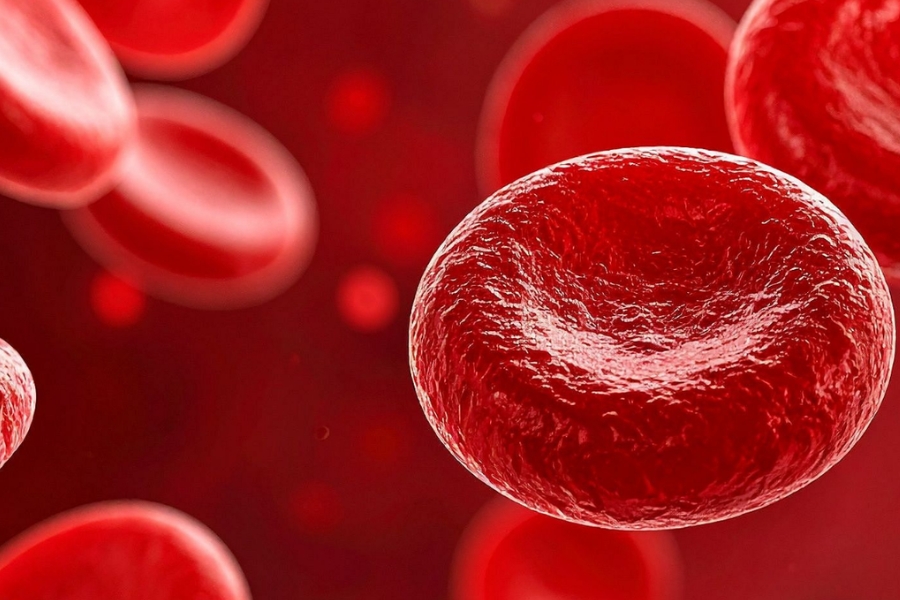
Infants born before 37 weeks’ gestation or weighing less than 2,500 grams are particularly vulnerable to anemia, a condition that occurs when the blood doesn’t carry oxygen effectively. Severe anemia can affect how well their bodies function, and some babies require transfusions because their natural oxygen-carrying capacity cannot safely be restored quickly. BC Children’s Hospital Research Institute (BCCHR) researchers are helping clinicians reevaluate early use of erythropoiesis-stimulating agents (ESAs), medications that increase red blood cell (RBC) production, and may help manage anemia and reduce avoidable transfusions and complications in selected preterm and low-birthweight infants.
Rather than replacing a necessary blood transfusion, ESAs are intended to support the infant’s own production of red blood cells over time, potentially reducing the need for later transfusions.
– Dr. Souvik Mitra


“RBCs contain hemoglobin, the iron-rich protein that carries oxygen through the bloodstream from the lungs to the rest of the body’s organs and tissues,” says Dr. Kia Anarna, who led this systematic review on research investigating early use of ESAs. This work was done during her neonatal fellowship under Dr. Souvik Mitra, an investigator at BCCHR and neonatologist at BC Women’s Hospital + Health Centre. “Producing and maintaining enough RBCs can be a task that these babies’ bodies may not yet be ready to manage.” The review was recently published in Cochrane Database of Systematic Reviews, and has already been used to help inform and update the Canadian Paediatric Society (CPS) national guidance on minimizing blood loss and the need for transfusions in newborns.
Preterm infants can be more vulnerable to anemia of prematurity due to several factors. For instance, their RBCs have a shorter lifespan than those of adults, their blood volume must expand rapidly to match their growth, and they may be born before some of the iron transfer that typically occurs during the third trimester of pregnancy is complete. Their bodies may also carry low levels of erythropoietin, a hormone that stimulates the production of RBCs in the bone marrow. In preterm infants, this production may not be enough. In addition, babies in the neonatal intensive care unit (NICU) often need frequent blood tests to monitor their health.
Blood transfusions can be lifesaving in babies with severe anemia, but they’re still medical interventions with risks, so neonatal teams adopt procedures such as using umbilical cord blood for early tests when possible, smaller sample tubes, and non-invasive monitoring where appropriate.
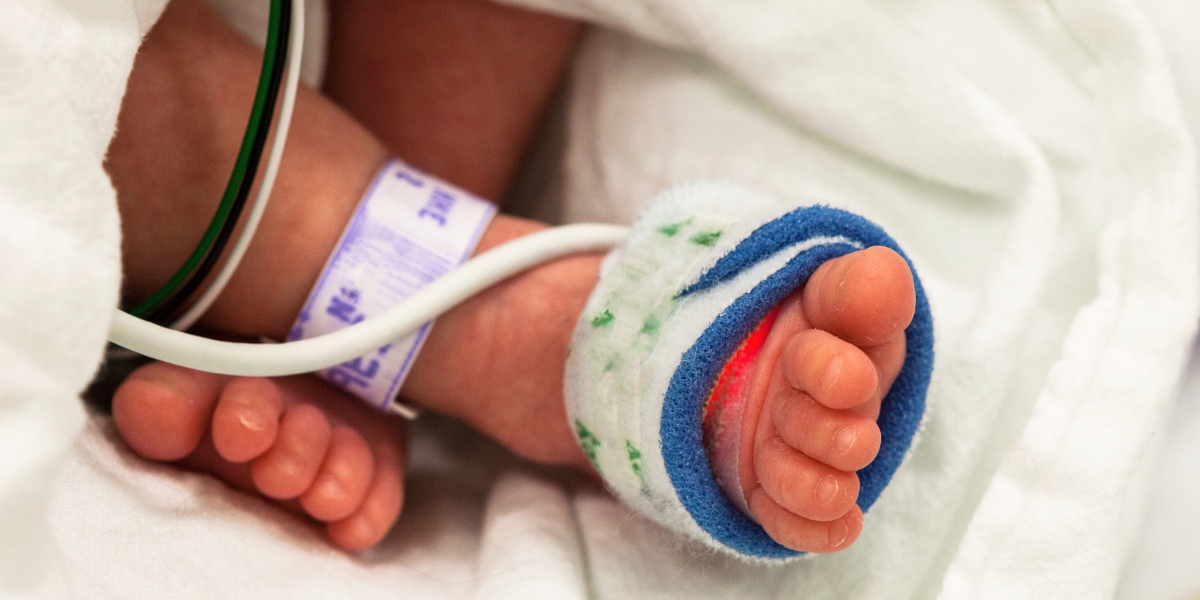
To better protect vulnerable newborns, NICU teams use non-invasive monitoring and micro-sampling techniques to minimize iatrogenic blood loss — medically induced blood loss from frequent diagnostic checks.
ESAs offer a complementary approach. “Rather than replacing a necessary transfusion, they’re intended to support the infant’s own RBC production over time, potentially reducing the need for later transfusions,” says Dr. Mitra. In the review, the researchers examined two ESAs: erythropoietin, a manufactured version of the body’s natural hormone, and darbepoetin alfa, a modified, longer-acting related medication that may be given less frequently because it stays active longer.
“ESAs have been studied in preterm infants for decades, but they have not been routinely used as part of NICU care,” says Dr. Mitra. While clinicians had long known that ESAs could reduce the need for transfusions, earlier evidence raised concern that this benefit might come with other risks, particularly retinopathy of prematurity, an eye disease that can affect preterm infants if the blood vessels in their retina are not fully developed. In severe cases, it can lead to vision loss.
Other serious complications concerning prematurity include necrotizing enterocolitis — a life-threatening inflammation of the intestinal tissue lining — and intraventricular hemorrhaging — a form of bleeding inside the brain.
Since earlier guidance on ESAs stemmed from evidence more than a decade old, newer research has created a need to reevaluate how these medications might fit into NICU transfusion care. Recent studies have examined ESAs not only as a way to reduce transfusion exposure, but also in relation to broader outcomes, such as the above serious conditions and later neurodevelopment. Although biological theories suggest erythropoietin may have effects beyond blood production — including reducing inflammation, supporting cell repair, and protecting the intestinal lining — those possibilities still need to be examined further.
“This systematic review was designed to reassess the full body of evidence and clarify the benefits and harms of early ESA administration — within the first eight days — in preterm or low-birthweight infants,” says Dr. Anarna. The goal was not to assess whether ESAs worked, but rather to examine the evidence more carefully and determine which findings remained convincing across the available studies. The authors reviewed 37 randomized studies involving 6,724 infants and compared the two types of ESAs, erythropoietin or darbepoetin, with placebo or no intervention. The review focused on particular outcomes that matter in neonatal care and to families, including survival during the initial hospital stay, moderate-to-severe neurodevelopmental impairment, and exposure to transfusions with potential complications.
“ESAs may reduce the need for blood transfusion in preterm infants, which has been a consistent finding in our review,” says Dr. Mitra, noting the reduction as one of the review’s most robust findings. Their analysis also suggests that early use of ESAs may reduce the likelihood that a preterm or low-birthweight infant receives at least one transfusion.

Optimizing early anemia management can help clinical teams better support vulnerable preterm infants while minimizing risks associated with transfusion exposure.
The review also helped clarify the long-standing concern around retinopathy of prematurity. Early use of ESAs had little to no effect on its occurrence, and evidence did not demonstrate that they increased the risk. “This was one of the most important safety findings because concern about possible eye-related harm had been one of the reasons ESAs weren’t routinely used in many NICUs,” says Dr. Anarna. The review also found that ESAs don’t impact survival during the initial hospital stay, so they shouldn’t be presented as lifesaving medications.
“It’s important to note that the review doesn’t show that ESAs prevent every major complication of prematurity, nor does it establish that every preterm infant should receive them,” says Dr. Mitra. Instead, it gives clinicians stronger evidence to reconsider ESAs as a possible option for selected infants, while recognizing that decisions still depend on local practice, treatment burden, iron support, and family priorities.
The updated CPS guidance statement, co-authored by Dr. Mitra, now refers to the use of ESAs as a conditional recommendation. Clinicians are advised to consider early use of ESAs to reduce the number of transfusions in selected high-risk, very preterm, or very low-birthweight infants — tailoring their use to any specific unit protocols or unique clinical circumstances, all while prioritizing shared decision-making with families. For example, a NICU that already has low transfusion rates may weigh the added benefit of ESAs differently from a centre where transfusion exposure remains higher.
What previously appeared to be a trade-off between fewer transfusions and a possible increased risk of retinopathy of prematurity has now changed to fewer transfusions, with no evidence that early treatment increases the risk of developing this condition. This changes the perceived balance of benefit and harm, but it doesn’t show that this treatment is worthwhile for every infant.
ESAs are one possible tool within broader transfusion-minimization care, alongside established approaches, such as delayed cord clamping, restrictive transfusion thresholds, careful blood sampling, and appropriate iron support. The updated evidence gives clinicians a stronger basis for discussing ESAs in selected cases, while still weighing treatment burden, monitoring, local practice, and what matters most to each family.

Shared decision-making enables clinicians and parents to align medical evidence with family values and individual treatment priorities.
During the treatment, families may have different priorities regarding exposure to donated blood, repeated ESA injections, and the uncertainty of some outcomes. “Making room for their priorities is key because the same evidence may not carry the same meaning for every family,” says Dr. Mitra. “Their decisions reflect different experiences, concerns, and priorities.”
Family-centred decision-making will continue to be supported by clinicians, who are still responsible for explaining the evidence clearly and providing recommendations to ensure that babies receive the necessary care. “Where more than one reasonable approach exists, understanding what matters to a family can become part of determining the most appropriate path.”
For Dr. Anarna, seeing her work contribute to such changes has been especially meaningful. “How often does a trainee’s work translate into national guidelines and international discourse?” she says. “I feel really humbled and grateful.”
Looking forward, further research will be required to determine which infants are most likely to benefit from ESAs, whether erythropoietin or darbepoetin is the preferable medication, which dose and duration should be used, how treatment should be supported with iron supplementation, and whether broader use of ESAs is actually feasible, cost-effective, and acceptable to both families and health-care providers.
How often does a trainee’s work translate into national guidelines and international discourse? I feel really humbled and grateful.
– Dr. Kia Anarna