Dr. Annalijn I. Conklin is a scientist at the Centre for Health Evaluation & Outcome Sciences (CHÉOS) and an associate professor at the University of British Columbia in the Faculty of Pharmaceutical Sciences. They are a former CIHR Postdoctoral Fellow at UCLA’s WORLD Policy Analysis Center following the completion of their PhD from the University of Cambridge. They also hold a bachelor of science (honours) from the University of Toronto, a research master of science from the University of Edinburgh, and a master of public health from Columbia University.
Their research focuses on the broader social-level factors, such as social ties and financial circumstances, which impact an individual’s ability to be healthy and choose healthy dietary patterns, with a particular focus on women’s health. Dr. Conklin is also a panellist at this year’s Women in Science event, Feb. 9, 2023.
I knew very little of women in science when I was growing up. Early on in my education, the only woman in science I was aware of was Marie Curie, a physicist and chemist, and the first woman to win a Nobel Prize. Her perseverance and dedication made her a role model, but I had few others to draw on.
The gender bias I learned about and witnessed is one of the reasons I’m so passionate about gender justice in science and medicine.
– Dr. Annalijn I. Conklin


Gender bias in science
During my first master’s program, my supervisor was a woman with her own lab and a team of mostly women. I received a lot of support in my training and found it encouraging to see what a woman in science could achieve. Despite my positive experiences working with women in science, I witnessed a lot of discrimination based on female sex and other social identities.
I also learned about many historical figures who were kept from success due to both individual and institutional gender bias, including Rosalind Franklin. Rosalind was instrumental in the discovery of the double-helix structure of DNA, but her work was downplayed, and she was actively discouraged from publishing by her male peers. Instead, James Watson and Francis Crick were credited for the discovery, even though their work was made possible by Rosalind’s X-ray diffraction data.
The gender bias I learned about and witnessed is one of the reasons I’m so passionate about gender justice in science and medicine.
The hardest lessons are valuable too
One major roadblock I experienced was the complete lack of supervision and support for my final thesis project while working to obtain my master of public health degree. I was forced to find a different supervisor, switching from a leading Black professor to a junior female professor. I received some negative reviews for my final grade, which led me to appeal, but my appeal was not granted.
During my postdoctoral training at UCLA, I faced a lack of commitment, oversight and knowledge of my research methods from my supervisor, a female dean, which caused significant delays and hindered my productivity and ability to publish. I resolved these challenges by seeking support and mentorship from other female faculty and by spending my time working on a separate independent project that led to a published paper.
Both these experiences taught me valuable lessons about hierarchy, power in academia and perseverance when facing significant challenges.
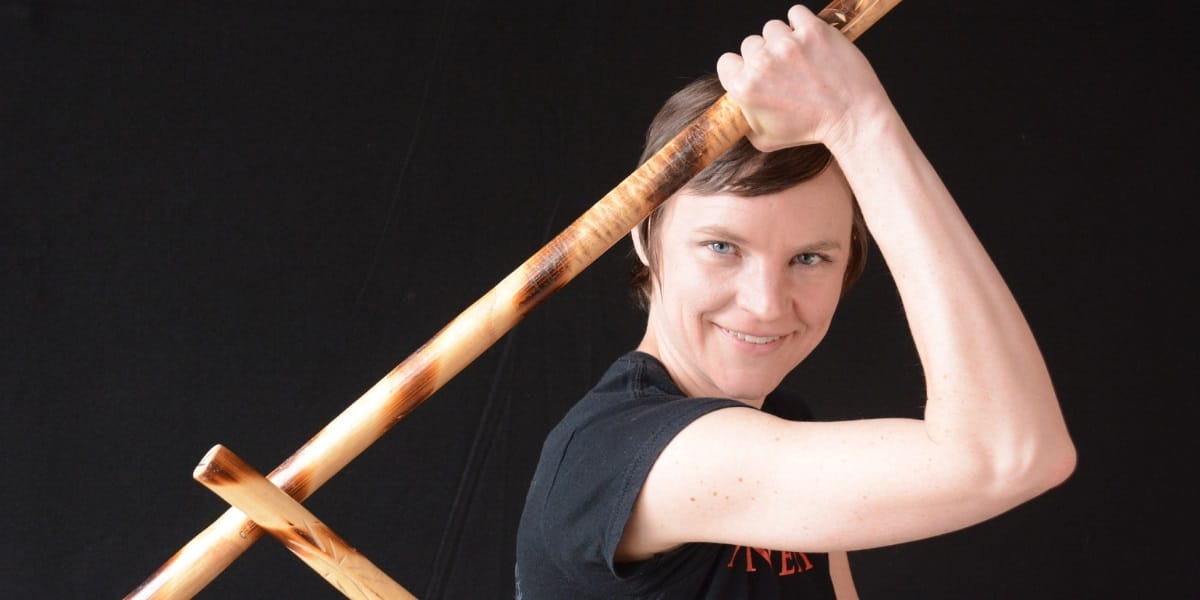
Dr. Annalijn I. Conklin’s other passion — Filipino Martial Arts. Perseverance through challenges, staying true to yourself, being open to trying new things and learning from your mistakes and failures will help you find your passion.
Making an impact through research and mentorship
The most exciting impact my research has had resulted from a paper I developed with my Cambridge supervisor that examined price trends of each food group. The findings were implemented by The Food Foundation in the U.K. to be used as a policy monitoring tool, which is still being used today. My colleagues at Cambridge continue the analysis with updated food price data to help inform policy to address issues such as food insecurity.
While many aspects of my work are rewarding, the most gratifying impact of my work is training graduate and undergraduate students. I love teaching and sharing my knowledge and being part of creating the next generation of women in science.
Encouraging future generations of women in science
Schools, parents and society in general all play a role in encouraging girls and young women to pursue education and careers in science. Girls need to be given the opportunity to play games that involve math and science skills and attend events and exhibitions featuring women in science, so they can hear their stories and learn they belong in the sciences, too.
For those who decide to pursue a career in science, follow your passion and stay true to yourself in the career you want to pursue. Pick mentors that you know will give you their time and support rather than basing your decision on awards, accolades or number of publications. Talking to potential mentor’s lab members or grad students can give you great insight to help you make that decision. It may take some time to discover your passion, but if you keep trying new things, and you’re open to learning from mistakes and failures, you will find it.
Registration is open to high school students, university students, the health science community and the general public. The curriculum and discussion will be targeted for a grade 10–12 education level. The event will be hybrid with the option of attending in-person or virtually.

Dr. Annalijn I. Conklin with most of their female graduate students at Christmas time