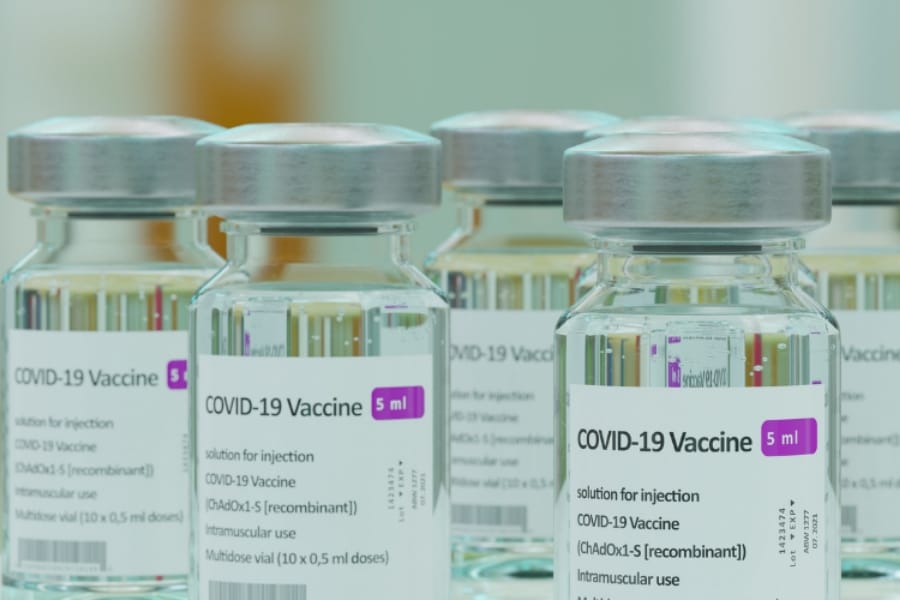
The first peer-reviewed study in North America examining the timing between the first and second doses of COVID-19 mRNA vaccines shows that a longer dose interval leads to a stronger immune response. The study is funded by the Government of Canada through its COVID-19 Immunity Task Force (CITF).
Principal investigator Dr. Brian Grunau, assistant professor at the University of British Columbia’s department of emergency medicine and scientist at the Centre for Health Evaluation and Outcome Sciences, indicates that these results — published yesterday in Clinical Infectious Diseases — could inform ongoing international COVID-19 vaccination efforts.
The peer-reviewed study compared blood test results from 186 paramedics, some of whom were vaccinated within the earlier recommended interval of less than four weeks, and others who received their second doses after six to seven weeks.
“We found significantly higher levels of antibodies in individuals who had longer vaccine intervals, and this was consistent regardless of which mRNA vaccine was administered,” said Dr. Grunau.
mRNA vaccines include the Pfizer-BioNTech Comirnaty vaccine and the Moderna Spikevax vaccine. Although antibody levels are only one way to measure the body’s immune response, they play a very important role.
Trade-off between vaccination strategies
These findings have implications for the ongoing global vaccination effort, as half the world’s population has yet to be vaccinated. Widening the recommended vaccine dosing interval has the potential to lead to a stronger long-term immune response in individuals and will also facilitate faster community-level access to the first vaccine dose.
“This longer interval strategy enables early access to first doses in the population and ensures the best protection possible with the two-dose series,” added Dr. Grunau.
Although measures of immunity are correlated with the risk of contracting COVID-19, this study did not assess actual breakthrough infections.
Informing immunization strategy decisions
Study participants are enrolled in the larger COVID-19 Occupational Risks, Seroprevalence and Immunity among Paramedics (CORSIP) project, a national study examining how the pandemic has impacted paramedics. The team is co-led by Dr. Grunau and Dr. David Goldfarb, clinical associate professor in the department of pathology and laboratory medicine at UBC and medical microbiologist and infectious disease specialist at BC Children’s Hospital and BC Women’s Hospital + Health Centre, as well as Dr. Tracy Kirkham and Dr. Paul Demers from the University of Toronto. They began recruiting paramedics less than 10 months ago, but researchers continue to provide data in real-time to the CITF to determine if there are implications for policy decisions.
“While the constant stream of new information can make things difficult when making public health decisions, it has been rewarding for us to see our efforts translate into clinically relevant findings,” said Dr. Goldfarb.
“These results support the decisions across many jurisdictions in Canada for first doses fast with an extended dosing interval,” said Dr. Tim Evans, CITF Executive Director. “The results are also very important in informing the roll out of vaccines in other countries where extending the dose interval may help to promote vaccine equity.”
In addition to Dr. Grunau and Dr. Goldfarb, the Vancouver team includes:
- Dr. Pascal Lavoie
- Dr. Mohammad Ehsanul (Ehsan) Karim
- Dr. Paul Demers
- Dr. Vilte Barakauskas
- Dr. Ana Citlali Marquez
- Dr. Agatha Jassem
- Scott Haig
A version of this story was originally published by the Centre for Health Evaluation and Outcome Sciences.
Do you have a question about this article or other BCCHR news?
Contact BCCHR Research Communications.