Determining whether a patient has a predisposition to cancers or other harmful conditions can be a game changer for clinicians considering the benefits and risks of invasive procedures.
About a decade ago, clinical medical geneticist Dr. Cornelius Boerkoel met a patient with characteristics of a disorder that could predispose him to certain types of cancer. The patient’s features suggested, but did not prove, the disorder was present — so Dr. Boerkoel pursued genetic testing. He discovered the patient carried a genetic variant that hadn’t previously been reported, and he was unable to determine whether this variant predisposed his patient to the disorder.
The genetic testing led to a conundrum. If the patient did have the disorder, the patient would have to undergo intensive and invasive cancer screening. However, specialists were reluctant to perform these procedures if they weren’t sure the patient carried a genetic predisposition to these cancers.
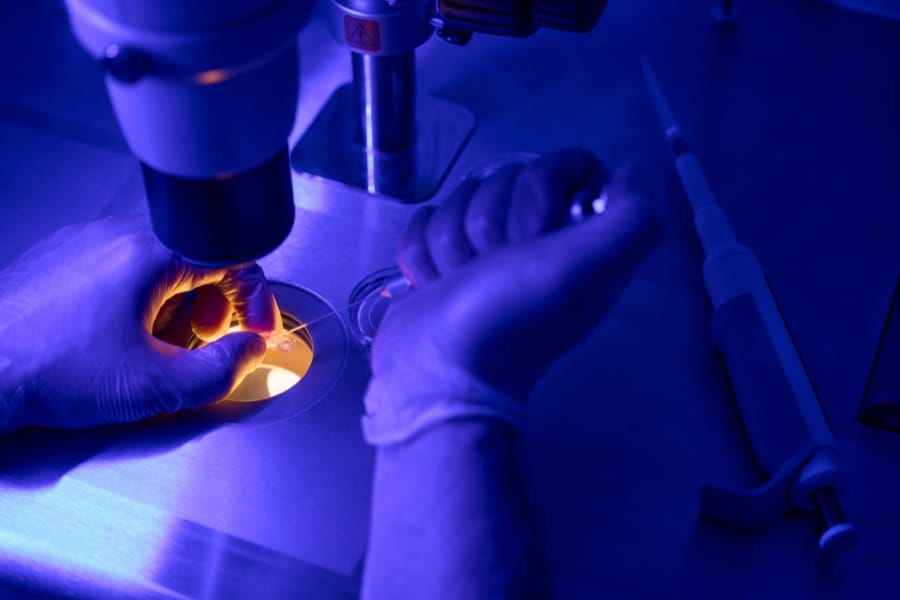
Once the patient’s son began displaying similar features, Dr. Boerkoel turned to the Rare Disease Discovery Hub at BC Children’s Hospital Research Institute to determine whether the genetic variant could lead to this condition. Using research-based RNA analysis, the team demonstrated that the variant appeared to be deleterious and both father and son were most likely at risk for cancer.
Confirmation of such a predisposition would be devastating to many — but not in this case.
“The relief on the father’s face after a decade of worrying was striking,” Boerkoel recalled. “To actually have a definitive answer and to be able to say to his doctors that he needed cancer screening, here’s what the risk is, this is the name of the disorder, and here’s the protocol that’s been developed for cancer surveillance, it gave them a clear answer.”
The Rare Disease Discovery Hub is dedicated to improving care for children with rare diseases by finding the causes of difficult-to-diagnose complex conditions. By discovering the root cause, the Hub’s multi-disciplinary, translational research program also seeks to understand how these diseases work.
“We want more clinicians to bring cases to our attention so that we can help more families,” said Dr. Stuart Turvey, clinical immunologist, who co-leads the Hub with clinical geneticist Dr. Anna Lehman.
The Hub supports clinicians by providing greater access to research expertise. The Hub team members help with Clinical Research Ethics Board requirements, much of the family engagement and enrolment process, biological sample collection and shipment, logistics, tracking, and providing access to scientists who can conduct advanced testing. Team members can also conduct genomic analysis and other ’omics investigations.
The Rare Disease Discovery Hub offers two main phases of support. In the first phase, the Hub provides access to a bioinformatician to reanalyze any genomic data already available for undiagnosed patients in whom a single gene disorder is strongly suspected, with the aim of identifying variants that should be further tested in research. In the second phase, the Hub facilitates investigations of these variants and the Hub Advisory Committee assists with identifying the best experimental design and potential collaborators.
Since its inception in May 2019, the Rare Disease Discovery Hub has received 81 physician inquiries about patient eligibility, 55 referrals and has enrolled 38 families. Of the 38 families enrolled in the Hub, 13 have been or will be connected to specialized researchers at BC Children’s or around the world to continue targeted investigations, and an additional 25 have been or will be analyzed directly through the Hub.
Several of these cases have led to meaningful discoveries for affected children and their families. In other cases, international collaborations have provided clinicians with crucial information about other children with the same rare disease as their own patient. Clinicians have also used the Hub resources and infrastructure to study genetic diseases caused by more complex mechanisms. Without the Hub, this information would not have been available to families or the clinicians caring for them.
“The Hub is a venue to pursue precision medicine,” Dr. Boerkoel said.
The Hub fills a significant gap in studies investigating the origins of disease when better testing exists, but is not available as routine clinical care.
“It also facilitates transdisciplinary conversations, which are a key component of a world-class tertiary care centre,” said Dr. Boerkoel.
Clinicians and groups with cases are encouraged to contact the Hub about any potential cases. All clinical domain areas are welcome. For more information, visit The Rare Disease Discovery Hub or contact the Hub research coordinator, Areesha Salman, at Areesha.Salman@bcchr.ca.