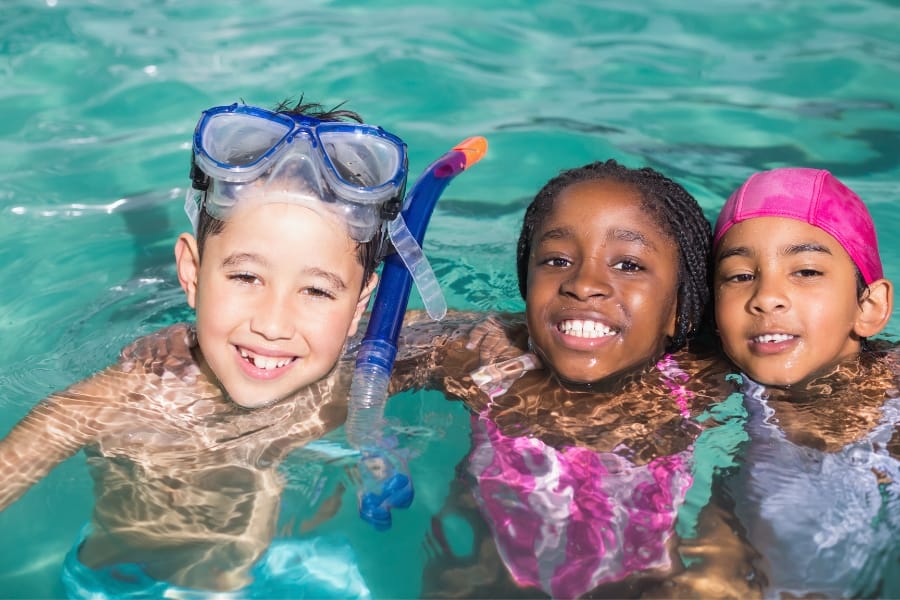
Summer is here — and Canadian families are flocking to beaches, lakes and pools to beat the heat.
But, when the right precautions aren’t taken, swimming and other water activities can be risky, especially for babies and young children who can drown in as little as an inch of water — in a matter of seconds.
Dr. Ian Pike, investigator at BC Children’s Hospital, director of the BC Injury Research and Prevention Unit (BCIRPU) and professor of Pediatrics in the University of British Columbia’s (UBC) Faculty of Medicine, debunks some of the myths about drowning and shares some evidence-based advice to keep you and your kids safe this summer.
Dr. Ian Pike is the Director of the BCIRPU which conducts a comprehensive program of injury surveillance and research that contributes to improved understanding and prevention of injury.

What are some of the big misconceptions when it comes to drowning?
Unlike what we see on television and in the movies, drowning most often does not involve a lot of splashing and noise. In reality, drowning is quite silent — oftentimes, the person is struggling just under the surface of the water, unable to call out for help.
Another big misconception is that drowning takes time. Drowning usually happens quickly. In children, it can be a matter of seconds.
What does the research say about the biggest drowning hazards?
Most drownings happen in natural bodies of water: lakes, rivers and oceans. But for children, the biggest drowning hazards are actually in and around their own home — think paddling pools, backyard pools and even buckets of water.
While we fortunately do not see a large number of child deaths from drowning each year, we do see many cases of near-drownings, which can have lifelong health effects, like brain damage.
Of course we want children to have fun, and water is one of the best things to play with on a warm day, but all of it needs to be done within close supervision of an adult.
What steps can parents take to keep kids safe?
Be within arm’s length of your child at all times. As an adult, you are your child’s lifeguard.
Don’t get distracted. Put your phone or book down and play with your child in the water. Enjoy the fun with them.
Sign your child up for water safety lessons at a young age. All children should have a basic comfort in the water and know how to get to safety, or what to do to keep themselves at the surface until help arrives.
Know how to administer artificial respiration and CPR for children. This will give you the confidence to know what to do if something goes wrong.
If you are in, on or around open water or boating, make sure your child is wearing a PFD or lifejacket. They don’t restrict a child’s ability to swim and enjoy the water — and, if anything goes wrong, you know they’ll be at the surface.
Water wings vs. PFDs vs. lifejackets. What’s the difference?
Water wings, and other popular floaties for kids are simply toys. And while they can be fun for very young children, they are not a substitute for a safety device. We recommend wearing a PFD or lifejacket when in, on and around the water.
A PFD — or personal floatation device — is designed for recreational use and is often lighter and less bulky. However, a PFD offers less floatation and thermal projection than a lifejacket. Most importantly, a lifejacket is designed to turn you onto your back and keep your face out of the water, even if you’re unconscious.
When selecting a PFD or lifejacket, check the fit first and be sure to read the label because knock-offs do make their way onto store shelves. Make sure your PFD or lifejacket meets Canadian standards and has been approved by Transport Canada, Canadian Coast Guard or Fisheries and Oceans Canada.
Credit: UBC news story