IBVL governance is an ongoing process that supports the development, use, and future growth of the Indigenous Background Variant Library (IBVL). Governance activities include review of policies and processes related to data access, research activities, reporting, and communications. The governance process also supports ongoing dialogue with Indigenous communities and organizations, recognizing that priorities, technologies, and governance needs may continue to evolve over time.
SG-IBVL Governance Committee
The SG-IBVL Governance Committee is Indigenous-led and Indigenous-operationalized, with administrative and operational support from the Silent Genomes team. Membership includes Knowledge Carriers/Elders, representatives from First Nations, Métis, and Inuit communities, Indigenous scholars, and members with lived experience of genetic conditions or relevant community affiliations. Membership typically includes 8 to 12 individuals, with flexibility for overlapping roles and participation of youth and emerging leaders. Additional participants or advisors may be invited on an ad hoc basis depending on agenda topics and expertise.

Mandate
"The SG-IBVL Governance Committee provides cultural oversight, strategic guidance, and decision-making in support of the collaborative expansion, governance, and utilization of the Indigenous Background Variant Library (IBVL). The committee supports respectful and culturally safe approaches to genomic data governance, including policies and processes related to access to data for clinical diagnosis and related research. The mandate of the committee also includes supporting transparency, accountability, Indigenous data sovereignty, and the engagement of future generations of Indigenous scholars, Knowledge Carriers, and community members".
Terms of Reference
Terms of Reference, SG-IBVL Governance Committee.pdf
Building Indigenous Governance of the IBVL
Governance of data generated within the Silent Genomes project was initially established through the Silent Genomes Indigenous Rare Disease Diagnosis (S-GIRDD) Steering Committee, which included Indigenous patients, community members, and representatives of Indigenous organizations, including the First Nations Health Authority and Métis National Council. The committee developed its Terms of Reference, established the variant release process for IBVL users, and created a review process for reports and manuscripts related to the generation and use of IBVL data.
As the Indigenous Background Variant Library became available to approved health care professionals, the S-GIRDD Steering Committee transitioned into the SG-IBVL Governance Committee to support the longer-term governance and stewardship of the IBVL. This transition reflected a shift from project development toward ongoing Indigenous governance for the continued use and future growth of the IBVL.
Committee Members
- Susan Dowan (Lead)
-
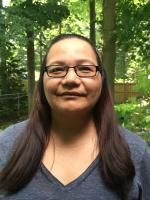 Susan Dowan
Lead
Susan Dowan is a mother of five and grandmother of one, and is of Cree background originally from Manitoba. She successfully graduated with a degree in Aboriginal Studies from the University of Toronto in 2004 and has worked with in various Indigenous organizations in Eastern Ontario. Her career journey includes advocacy and support services in the areas of Child Welfare; Violence against Indigenous Women and Children-Crisis prevention Services; Truth and Reconciliation; and Traditional Indigenous Healing. Susan is also the mother of a son born with a rare genetic condition known as PRUNE1-associated disorder. Her son was recorded as 5th case worldwide. During his diagnostic odyssey, her son experienced numerous hospital admissions at the Hospital for Sick Children in Toronto. He remained undiagnosed until a re-analysis of his Whole Exome Sequencing data revealed his diagnosis. Susan and her family effectively advocated on behalf of her son to find his diagnosis. Her goals were to create understanding of her son's health struggles and medical journey, to open doors to research, and to positively impact future generations of children with undiagnosed rare disorders.
- Joe Keesickquayash
-
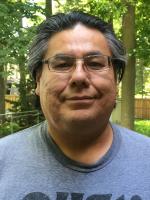 Joe Keesickquayash
Joe is the father of Edward who was born with a rare genetic condition known as PRUNE1-associated disorder. Edward was recorded as the fifth case worldwide. During his diagnostic odyssey, Edward experienced numerous hospital admissions at the Hospital for Sick Children in Toronto and Peterborough Regional Health Centre in Peterborough, Ontario. Joe was hopeful that a diagnosis would be found to understand his son's medical journey. After his second birthday Edward remained undiagnosed until a re-analysis of his Whole Exome Sequencing data revealed the diagnosis was PRUNE1-associated disorder.The journey to find a diagnosis for Edward was challenging. Despite the challenges, Joe remains hopeful that the experience with Edward’s journey will facilitate further opportunity for Whole Exome research among Indigenous families of children with undiagnosed disorders. Joe is optimistic that this experience will help future generations of children and parents of children with undiagnosed rare disorders.
- Bonnie Davis
-
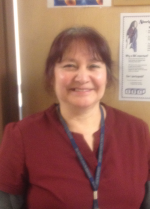 Bonnie Davis
A. Darlene Davis is a band member of the Six Nations of the Grand River. She is wolf clan. She graduated as a Registered Nurse in Hamilton in 1974. She has held many positions over the last 46 years and has been doing community health research for Six Nations Health Services for the past 21.5 years affiliated with McMaster University and the Population Health Research Institute. She has worked in a hospital setting, in a medical clinic, in a public health clinic and currently in White Pines Wellness Centre. Some of her research involvement since March, 1999 includes: The Study of Health Assessment and Risk Evaluation in Aboriginal People with the main paper accepted in the medical journal called The Lancet in 2001. Completed Action to control cardiovascular risk in diabetes, a clinical trial of United States and Canada. Completed Diabetes Reduction Assessment with Medications, Heart Outcomes Prevention Evaluation Study with Medications. Completed the Canadian Alliance for Healthy Hearts and Minds clinical Study involving 8 First Nations across Canada. Completed the Healthy Roots Pilot Study involving “Traditional Foods”, and currently working with the Aboriginal Birth Cohort Study and the Healthy active living for families with young children study. Team member of the Alliance working group and the Silent Genomes Indigenous Background Variant Library steering committee. All for Health.
- Lisa Mayotte
-
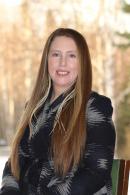 Lisa Mayotte
Lac La Ronge community member
- Julie Morrison
-
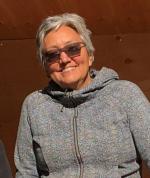 Julie Morrison
Gitxsan Community Member
- Peter Hutchinson
-
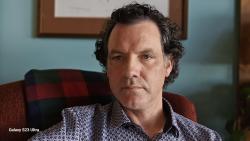 Peter Hutchinson
Métis Nation of BC (MNBC)
Dr. Peter Hutchinson is an Assistant Professor in Indigenous Studies at the University of British Columbia Okanagan, within the Irving K. Barber Faculty of Arts and Social Sciences. His research focuses on the intersection of culture and health promotion, exploring how cultural practices can enhance well-being in Indigenous communities. Dr. Hutchinson has worked at the Canadian Partnership Against Cancer, where he worked to deliver cultural safety training, worked on creating sustainable funding for First Nations, Inuit, and Métis cancer care and screening programs, and facilitated knowledge mobilization across cancer care specific to First Nations, Inuit, and Métis health.
More recently, he collaborated with the University of Saskatchewan, aiding in infrastructure development to support Indigenous Research Methods and further cultural safety training. His current work involves engaging with Indigenous communities and health service providers to examine the decolonization of health services and address racialized experiences within healthcare.
Dr. Hutchinson’s research interests also encompass chronic disease awareness among the Métis Nation of BC, where he led initiatives that utilized data linking between the MNBC citizenship registry and BC Ministry of Health records. He also worked closely with Métis harvesters to document the connection between cultural activities and health, emphasizing the need for tailored survey questions that reflect specific activities and regional contexts. This project also produced videos highlighting the significance of land connection for health. Currently, Dr. Hutchinson is currently collaborating with Indigenous communities in British Columbia and Alberta, focusing on innovative health promotion strategies rooted in cultural understanding and community engagement.
- Eduardo Vides (Advisor)
-
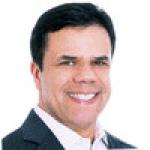 Eduardo Vides
Advisor
Eduardo Vides has worked continuously at different capacities for and with Métis organizations over the last 12 years, on Métis topics such as health governance, social determinants of health, health surveillance, policy and research. Eduardo has assisted Metis leaders in their health sector work and he also has served on several advisory committees and working groups representing the Métis National Office. Eduardo is also an international health consultant, who has collaborated with and worked for various Latin-American organizations including Pan-American Health Organization (WHO/PAHO), governments, Academia and Indigenous organizations and communities. Dr. Vides is an International Graduated Physician. He earned a medical degree from the Autonoma of Guadalajara University (México), a MPH from the University of London (UK) and a MHA from the EAN University (Colombia).
- Syexwaliya (Elder)
-
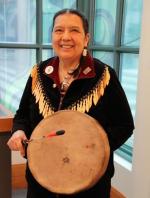 Syexwaliya Ann Whonnock
Elder, Squamish nation
Syexwaliya is a Knowledge Carrier & Elder Advisor from Squamish Nation with strong Indigenous worldviews, ancestral knowledge and traditional teachings, widely respected and acknowledged for her work and energy commitment to her community.
2025 Summary of Key Activities, Decisions, and Outputs
2025 Annual Communique of the SG-IBVL Governance Committee.pdf
Documentation and Resources
IBVL Resource Document (English)
IBVL FAQ (English)
Request form for manuscript review (English)