"We call upon the federal government, in consultation with Aboriginal peoples, to establish measurable goals to identify and close the gaps in health outcomes between Aboriginal and non-Aboriginal communities…"
Truth and Reconciliation Commission of Canada: Calls to Action, #19
Precision Diagnosis for Indigenous Families with Genetic Conditions ('Precision Diagnosis Study')
Updated: March 23, 2026
The precision diagnosis activity (a component of Activity 2), has now completed recruitment and delivering results to all families who enrolled. For some patients we have been able to provide a partial or complete diagnosis. In addition, there are some families who have received a 'negative result' suggesting that at this time the team has confirmed that a genetic cause could not be identified. For others, the search is still ongoing. Some cases have required additional genetic testing and laboratory studies to better understand which DNA variants caused the disease.
We remain committed to continuing this work and to finding answers wherever possible. At the same time, the team is revisiting earlier cases to follow-up on conditions that may have broader importance for communities. This includes working together with communities and researchers to better understand these conditions and improve future care.
We are deeply grateful to the patients and families who chose to take part in this work. Your trust, time, and willingness to share your experiences have made this possible. We also want to thank community members, clinicians, and project staff who supported families throughout this journey, as well as friends and partners who continue to support us.
Activity 2 Newsletter for Study Participants
Issued: August 18, 2023
- Precision Diagnosis Study: Activity Overview
-
The Precision Diagnosis Study is Activity 2 of the larger Silent Genomes Project. The goal of this study is to increase access to genetic technologies and diagnosis for Indigenous families with undiagnosed genetic conditions by offering genomic testing in a culturally safe way. Genetic conditions are health problems caused by changes ('variants') in DNA, the genetic material we inherited from our parents, which tells our bodies how to work. Genetic conditions occur in all populations around the world, but we are only inviting families that self-identify as Indigenous (First Nations, Métis, or Inuit) to participate in this study, in an effort to improve access to accurate genetic diagnosis (‘precision diagnosis’) and genetic health care.
As with many other areas of healthcare, Indigenous families and communities often face greater barriers to accessing genetic diagnosis and genetic health services compared to non-Indigenous families. Since precise and timely diagnosis of genetic conditions often leads to better medical care for patients and increased knowledge and well-being for families, improving access to precision diagnosis for Indigenous families is one step towards increasing equity and closing the existing gap in health outcomes between Indigenous and non-Indigenous communities.
Through this study, state-of-the-art genomic testing (called 'whole genome sequencing') has been offered to Indigenous families across Canada with a suspected genetic condition that has not been diagnosed through other medical tests. Whole genome sequencing is a new technology that can search all of a person's genetic material at once, to look for any DNA variants that might explain the cause of their health condition (i.e., diagnose their genetic condition). Currently, access to whole genome sequencing is not widely available through the Canadian health care system.
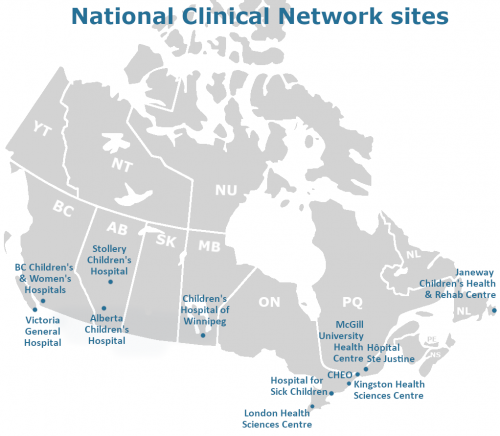
Study enrollment took place through a network of genetic health centres, referred to as the 'National Clinical Network', located at several different sites across Canada. Individuals with a suspected genetic condition, who are interested in joining the study and meet all the study criteria, were referred to the nearest enrollment site by their doctor. Most often, the referring doctor was a specialist (e.g., geneticist, pediatrician or neurologist) who manages the individual's health care, very familiar with their health condition, and has already carried out other medical investigations that have not found an explanation for the condition.
- Who is doing this study?
-
The Precision Diagnosis Study (Activity 2 of the Silent Genomes Project) is co-led by Dr. Anna Lehman (clinical genetics doctor in Vancouver, BC) and Dr. Maja Tarailo-Graovac (genetics researcher in Calgary, AB). Dr. Laura Arbour (clinical genetics doctor in Victoria, BC) is the co-Lead for the overall Silent Genomes Project.
There was a 'National Clinical Network' of several different enrollment sites across Canada where eligible families could join this study. The central study coordination site was in Vancouver, BC, with each site across Canada having its own local team of study doctors (geneticists), genetic counsellors, and/or research assistants.
Please see the list of current and past Activity 2 contacts on Our Team page.